
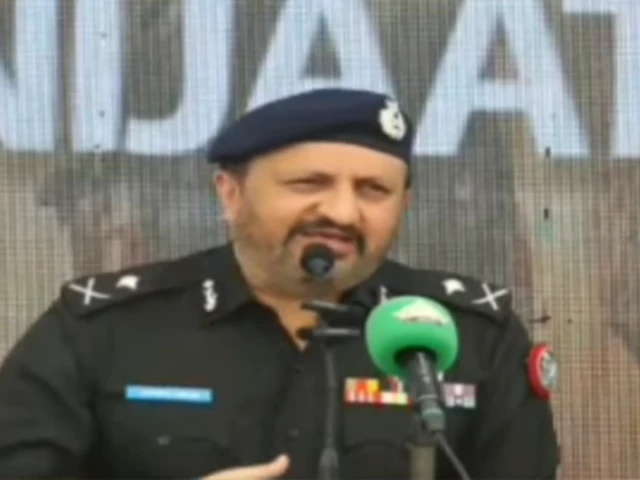
Sindh Inspector General of Police Javed Alam Odho speaking to the media PHOTO: SCREENGRAB/EXPRESS
KARACHI:
Sindh Inspector General of Police Javed Alam Odho said on Friday that police carried out 113 encounters in the past month, killing 27 dacoits, injuring 82 others and arresting 123 suspects, including those who surrendered voluntarily.
Speaking to the media, Odho said the katcha belt had long been a major challenge, with kidnapping for ransom, honey trapping and organized armed crime increasing.
He said the ongoing operation against dacoits in Katcha areas would continue until the criminal networks were dismantled and state power was fully restored.
He explained that criminal groups lure their victims by offering them false sales offers or using women’s voices to trap individuals before kidnapping them. People from Khyber Pakhtunkhwa, Balochistan and Punjab were also targeted and brought to the riverine areas, he added.
Odho said gangs had occupied state land, using it as operational bases, while ransom money was used to buy weapons.
“Previously, they only had AK-47 rifles, but later acquired weapons of war. In some cases, they were better equipped than police officers and even had ammunition capable of penetrating armored personnel carriers,” he said. He added that the groups were openly challenging state authority through video statements and threats against police officers.
Read: Key dacoits surrender during Operation Katcha
“Our effort was to give the bandits a befitting response, either by eliminating them or forcing them to surrender,” he said, adding that government support had strengthened police operations.
“Our effort was to give the bandits a befitting response, either by eliminating them or forcing them to surrender,” he said, adding that government support had strengthened police operations.
He said 15 abductees from different economic backgrounds had been recovered, some of whom had been held captive for three years in inhumane conditions.
Odho said many suspects were now trying to make contact with authorities. “In most cases, fear and pressure factors have arisen. Many dacoits are reaching out and wanting to submit to the law,” he said.
He added that while some were willing to lay down their arms, others remained defiant. “Those who surrender will receive justice, while those who refuse will be dealt with firmly,” he said.
The IGP said policing was inherently complex and errors, whether intentional or not, could occur.
He stressed that officers cannot be removed simply because of pressure from gatherings or protests. “If the allegations are proven, strict action will be taken,” he added.
Odho said some hostages were still in the custody of the dacoits, but the exact number was not certain. “Even now, three or four hostages could still be held, but the situation will become clear once the operation is over,” he said.
He added that the number of hostages and dacoits had reduced. “Either they will surrender or we will deal with them firmly,” Odho said.
The IGP said the police had now reached previously inaccessible areas. “It will no longer happen that an area remains a ‘no-go zone’,” he said, calling the decline in criminal activity in the Katcha belt a “moral victory” for the police.
“God willing, the ancient reputation of katcha will be restored and people will come and experience the region for themselves,” he added.
Learn more: 38 dacoits go to Kashmore, Sukkur
He confirmed that a notice had been issued to the Senior Superintendent of Police, Hyderabad in connection with a case involving journalists in interior Sindh, with the Deputy Inspector General of Hyderabad conducting an investigation.
Speaking on the role of media, Odho said the performance of police, especially in Karachi and Katcha areas, had not been fully reflected in media coverage. “Media support is essential. The fight against crime cannot achieve results without media cooperation,” he said while inviting journalists to visit operational areas.
Describing the tri-border region where Sindh, Punjab and Balochistan meet, Odho said it was very sensitive due to the movement of arms.
Working with intelligence agencies and the federal government, police are trying to curb the flow of heavy weapons, he added. “We have intelligence on those who possess heavy weapons. We will collect them, clear the area of deadly weapons and ultimately make it weapons-free,” he said.
Odho said coordination with other forces had improved significantly, citing joint operations with Punjab Police and Rangers.
He said institutional ties would further strengthen cooperation, adding that although operations were focused on the Katcha belt, routine policing continued elsewhere.
Infrastructure development, including bridges at Kashmore and Ghotki, would improve access and assist the police, alongside plans for schools and social services in riverside settlements, Odho said.
The inspector general said a dedicated Katcha force would be reestablished to control the roughly 400-kilometer stretch, supported by aerial surveillance and interprovincial coordination.


