
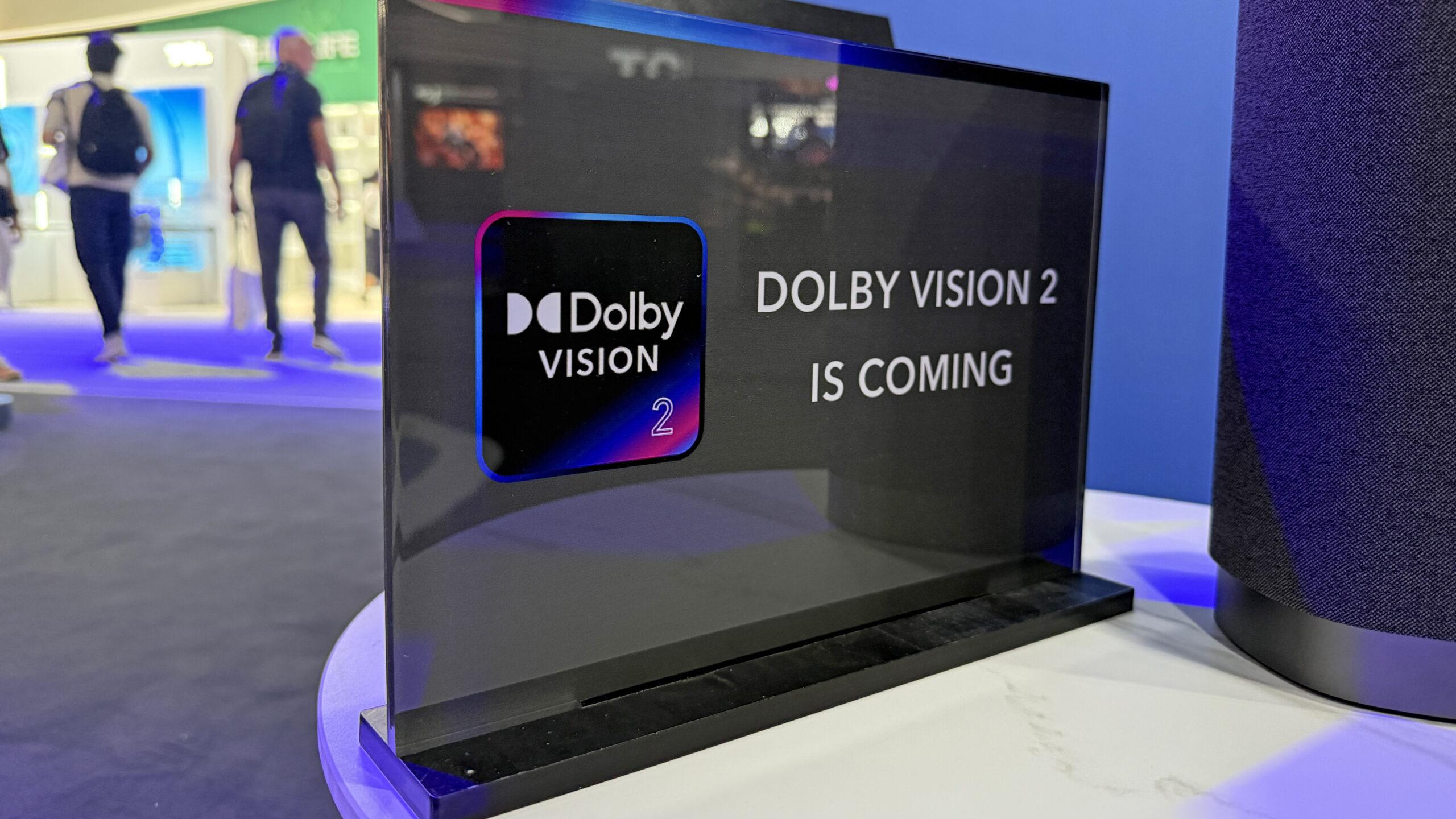
This week, before IFA 2025, Dolby announced Dolby Vision 2, the new generation version of its advanced HDR format. It is available in two flavors: Dolby Vision 2, and Dolby Vision 2 Max, which adds even more improvement in the quality of the images, and will only be taken care of on televisions that respond to certain performance marks, certified by Dolby.
Obviously, the big question is which television will support it and if current televisions could be updated with it, if they have the right specifications.
So we approached the manufacturers of the best televisions for official comments, and we talked to people in the industry to get behind the scenes. For the most part, televisions manufacturers are cage, but we have concrete answers, and some unofficial information from those who know it.
What television manufacturers will support Dolby Vision?
Hisense
Let’s start with Hisense, because it is the official launch partner with Dolby for Dolby Vision 2. It is confirmed that at least a small part of its current elite televisions, including the Hiense UX116 RVB LED television (which we recently tested) will have support. The number of current televisions will be updated is not clear, but I expect the emphasis to be more on its inclusion in future televisions.
LG
LG is also notable, because it is only the television manufacturer to officially say that it is not Working on the support of Dolby Vision 2. LG told Techradar “We are currently not intended to support Dolby Vision 2 HDR”. Not only that, but LG told us that “our understanding is an upgrade (any brand) is not possible because Dolby Vision 2 improvements are linked to hardware, not just software.”
I will come back to this comment on the upgrade of existing televisions later, because it does not seem to be exact (as you can perhaps guess from Hisense plans).
Samsung
Samsung has not provided an official answer to the question of the support of Dolby Vision 2, but I understand that he does not plan to change his long -standing position on HDR – Expect that Samsung remains with HDR10 + in the foreseeable future.
Tcl
TCL also did not provide an official answer to the question of the support of Dolby Vision 2, but there was a subtle Index on its position on its stand in IFA. See if you can spot it in this image.
I understand that if Dolby Vision 2 supports key streamers, we must expect what happens on future TCL TVs without too much delay.
Sony
Sony said to me: “Dolby is one of our important partners. Our current televisions are compatible with Dolby Vision and Atmos. So, are we in discussion with Dolby? Yes, but for the moment we don’t really have a clear statement to make on Dolby Vision 2.”
More to come …
Several other manufacturers of televisions did not respond when writing the editorial’s moment, and I could not obtain clues from the industry about their plans.
What about updating existing televisions?
I tried to search the LG declaration on the upgrade which is not possible, and it seems that there may be some confusion. Dolby refused to officially respond to this assertion, but my understanding of discussions with people in the industry is that it should be theoretically possible to upgrade a few Existing televisions, but it’s a small list, and it’s still not 100%.
The LG declaration that Dolby Vision 2 requires a hardware upgrade seems to be true, but the equipment in question is integrated into the Pentonic 800 processor of Mediatek for televisions, which is already used in several televisions available for purchase today (including in Hisense, not surprising). As you have just read above, Hisense plans to add a support to at least one existing TV that uses this Mediatek chip.
But it also seems possible that even if a TV uses this chip, there could be another part of its specifications or performance that would block the Dolby Vision 2 certification, so having the chip guarantees nothing. And the chip is only in a limited number of televisions, all released in the past six months.
However, even beyond knowing whether it is technically possible to upgrade existing televisions, there is also the question of motivation. An initiate of the television industry I spoke to which I said that even if the televisions can be improved, we should generally not expect that television manufacturers put time, money and efforts when there is no Dolby Vision 2 content, and we do not do it when this content will arrive.
By reading between the lines, I also assume that there is a financial element – the manufacturers of televisions would prefer that you buy a new set to get Dolby Vision 2, I expect that
Which is a bit of a shame, because it would be great to have Dolby Vision 2 on cheaper televisions, in particular, because it is an impressive upgrade on budget screens.


