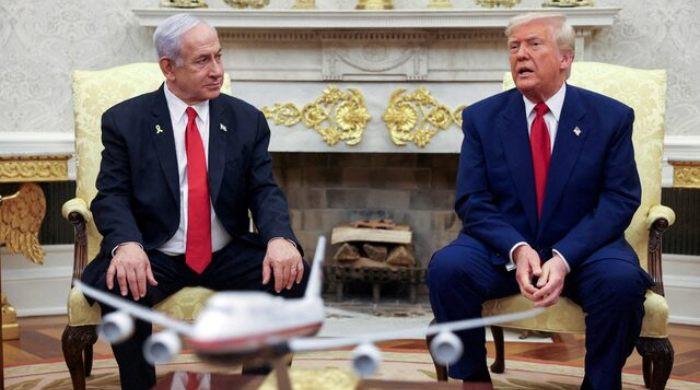
- Trump is again annoyed by Netanyahu, but the breakup is unlikely.
- Analysts see Trump’s support in Israel despite disagreements.
- Israel kept Washington in the dark about Qatar strikes, according to officials.
Washington: Less than four months ago, President Donald Trump met the head of Qatar, praising his opulent palace and signing a radical defense agreement with the Gulf Monarchy, a key ally that hosts the largest American base in the Middle East.
Israel’s surprise attack on Hamas leaders in Doha on Tuesday tour of this relationship, angry with Trump and attracting a fierce condemnation of Doha and Western allies.
Ordered by Israeli Prime Minister Benjamin Netanyahu and targeting the political offices of the Palestinian group, strikes killed a Qatari security officer and five others, but did not kill Hamas leaders. Trump said he was “very unhappy with all aspects” of the Israeli operation.
But for the whole indignation, it is unlikely that strikes will change the president’s fundamental approach to Israel, analysts and American officials. If anything, the attacks highlighted the cold calculation under the Trump-Netanyahu relationship.
Israel has shown that he is not afraid to act against American interests. Prime Minister Benjamin Netanyahu’s administration did not officially warn Washington of his imminent bombing campaign on Tuesday, US officials announced.
This lack of warning recalled the attack on Israel in September 2024 against Hezbollah, when Israel injured thousands of group members with trapped viewers, without informing the president of the time, Joe Biden.
Trump, for his part, sometimes expressed dissatisfaction with Netanyahu. But his administration strongly supported the Israel campaign to weaken Hamas and allowed him to take the lead on key issues such as the Iranian nuclear program.
“On this one, I think Trump is annoyed by Netanyahu’s tactics,” said Aaron David Miller, senior member of the Endowment for International Peace and Veteran US Peace Negotiator.
But, added Miller, “the instinct (of Trump) is that he agrees with the notion of Netanyahu that Hamas cannot simply be dug as a military organization. It must be fundamentally weakened.”
Request for comment, the White House referred Reuters The Trump’s remarks on Truth Social Tuesday evening, during which he said that the bombing had not advanced the interests or Israeli.
“However,” wrote Trump, “eliminating Hamas, who took advantage of the misery of those who live in Gaza, is a worthy objective.”
Washington’s Israeli Embassy did not respond to a request for comments.
No likely break
Some analysts have refused to exclude the possibility that Netanyahu can still exhaust Trump’s patience if he makes more surprises in Washington.

In practice, this could mean a withdrawal from the political coverage of the current invasion of Israel from Gaza, which caused indignation among European and Arab nations as the conditions of famine spread.
The military campaign of Israel in the Palestinian enclave was triggered by an outburst led by Hamas in southern Israel on October 7, 2023.
“While his Arab friends complain about what Israel does – and they do it now – he can tell them a credible plan for the next day in Gaza and with an alternative to Hamas who directed him and I will say to Bibi that you did enough,” said Dennis Ross, a former Middle East negotiator for democratic and republican administrations.
The Israel strike in Doha will probably attend Trump’s hopes for more Gulf States joining the Abraham agreements, a historic agreement negotiated by its first administration in which several Arab countries have exerted diplomatic links with Israel.
However, a break between the two men seems unlikely, argued Michael Oren, the former Israel’s ambassador to the United States, saying that Trump appreciates the strength and transactions that put an end to the wars.
“If Netanyahu can continue to call on these two sides of this president, he will be fine. I am not concerned about the relationship,” said Oren.
Hot and cold
The Trump-Netanyahu partnership has seen ups and downs, recognize administration officials.
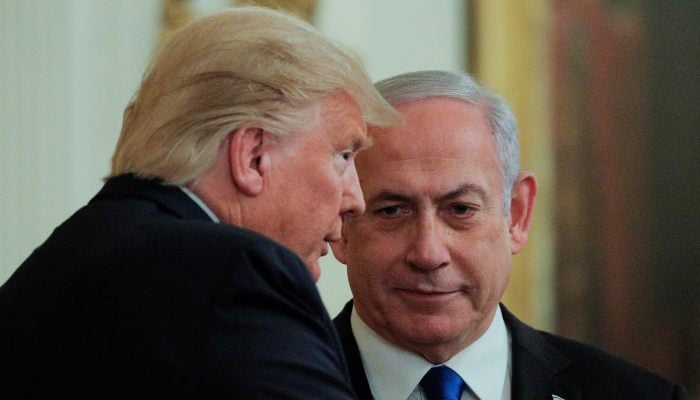
“It’s hot and cold from the campaign,” said a senior White House official.
In May, Trump went to Saudi Arabia, Qatar and the United Arab Emirates during his first major foreign trip, jumping Israel, which many analysts considered a snob. The Republican President returned in office in January promising to invigorate relations with Netanyahu who had deteriorated under his Democratic predecessor.
During this trip, Trump agreed to raise sanctions against the new Syrian government at the request of the Saudi Crown Prince Mohammed Bin Salman. This decision alarmed Israeli officials who question the reasons for Syrian President Ahmed Al-Sharaa, a former Al-Qaeda commander.
But just a month later, the Trump-Netanyahu Alliance seemed back on the right track. After Israel launched an air war against Iran in June, Trump – who campaigned on the end of foreign conflicts – even surprised some of his own political allies by sending B -2 bombers to partially destroy the main nuclear installations in Iran.
If this created good will in Netanyahu administration, it did not benefit the interests of Trump’s foreign policy, at least in the short term.
A few days later, Trump deepened Iran and Israel for having broken a ceasefire for American negotiation. In July, the United States seemed to criticize an Israeli strike in Damascus, which destroyed part of the Syrian Ministry of Defense. And on Tuesday, Israel informed the United States shortly before Qatar’s strike, but there was no coordination with Washington approval, said two US officials.
“The United States can seek to cajolate and push Israel to make decisions,” said Jonathan Panikoff, a former national American intelligence officer in the Middle East. “But Netanyahu will continue to act in a way that he considers as in the best interests of Israel alone.”