
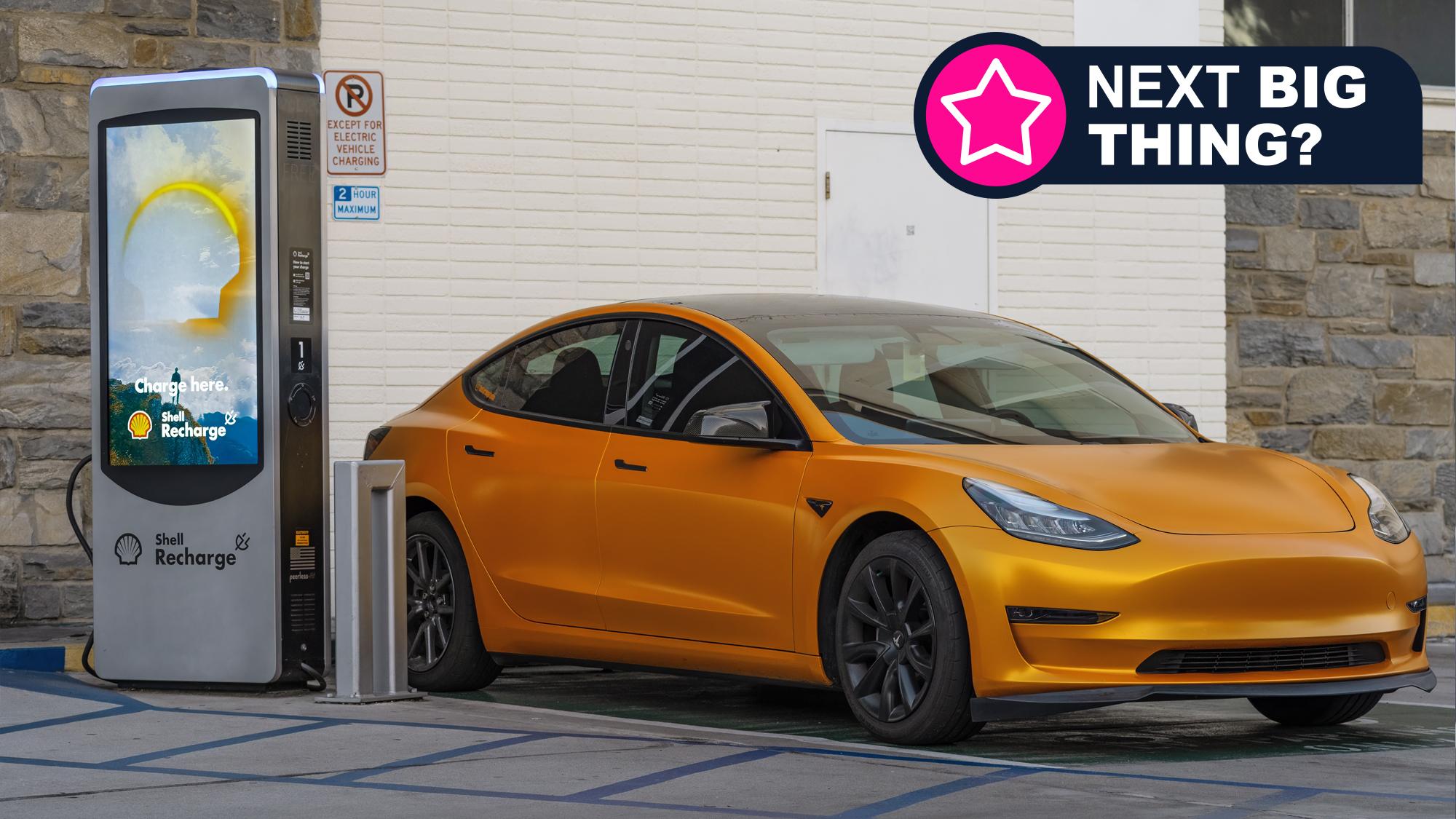
The pivot of the internal combustion engine helps reduce local emissions, but it also reaches the results of large oil companies. Shell knows this and has developed its EV public loading network in 30 markets worldwide over the past decade.
But in addition to ensuring that drivers can complement in its service stations, the oil company is also looking for means of reducing the time that owners of electric vehicles must wait to charge.
According to the company.
To go to the bottom of this technology, we must go to the bottom of the developments of thermal fluid, which could well give certain readers of flashbacks to authoritarian science teachers, therefore the excuses for this.
In short, the Shell EV-Plus thermal fluid has an owner’s liquid gas technology (GTL). These are electrically non -conductive fluids that facilitate heat transfer by filling all the tiny gaps in the battery, “maximizing direct contact between the fluid and each cell of the battery”, explains Shell.
The performance of the EV battery, health and lifespan have a lot to owe thermal management and progress in battery management and AI software have enabled many manufacturers to develop a growing amount of range and faster load speeds of their models.
But Shell says that it can demonstrate charging times from 10% to 80% less than 10 minutes with a 34 kWh battery that uses the company’s thermal fluids. It apparently reduces the thermal constraints “very significantly”, which makes it possible to tolerate much higher cell load currents.
Practical load for victory
The company makes no mention of the type of power it offers to its batteries to reach such a load rate (it claims that it can add around 15 miles per minute of load), only that it can “open the door to a new generation of more durable, efficient and profitable battery vehicle solutions”.
Zeekr already offers the types of charging speeds with its golden battery that is found in the ZEEKR 7X model. It has already been shown to get a load of 10 to 80% in about 9 minutes and 45 seconds.
However, we still do not know what the health of these batteries will look like after many years of ultra-fast load. Shell claims that its technology will allow these exhilarating load speeds in more compact battery solutions, all without compromising the integrity of cells and lifespan.
It is a noble effort, if not a solution for the moment, because the faster loading speeds and the long -term health of the battery are essential to convince customers to go to electricity – and finally by using a new brilliant load network of Shell.
After all, nobody wants to wait 45 minutes to continue their trip and the residual values EV took great success thanks to the uncertainty on the state of load of the battery (SOC) after several years of ownership.


