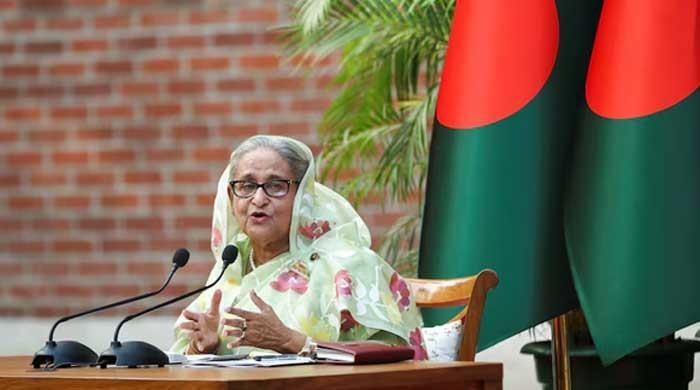
DHAKA: Once Bangladesh’s largest political party, the Awami League has been banned since its leader, Sheikh Hasina, was toppled in a mass uprising last year.
Now her supporters – encouraged by Hasina’s calls to “resist” on social media – are organizing flash mob protests defying the ban as the country prepares for elections from which the party is excluded.
In the capital, Dhaka, Mohammad Kashem, a 45-year-old cleaner, said he witnessed about 25 Awami League loyalists being chased, beaten and arrested by police at one such rally.
“This is happening everywhere in Dhaka,” Kashem said. AFPsaying videos of these spontaneous protests constantly appear on social media.
“We see it every day on Facebook.”
The elections, expected in February 2026, will be the first since Hasina went into exile in India as mobs stormed her palace, ending her 15-year rule.
She has since defied court orders to attend her ongoing trial on charges amounting to crimes against humanity, for allegedly ordering a deadly crackdown during the revolt.
His party and its supporters have since been driven underground.
More than 800 people have been arrested in the flash mobs, officials say, which have shaken the interim government of Nobel laureate Muhammad Yunus as he oversees the South Asian nation of 170 million until elections.
‘Abandoned’
Yet they protest. Some gatherings bring together only a handful of young men. Others shoot more than 100 while chanting slogans.
“Sheikh Hasina is coming!” they shout, waving small signs or unfurling banners. “Bangladesh smiles!”
They gather for a few minutes before disappearing into the crowd.
Sometimes several flash protests break out simultaneously in different parts of Dhaka. In one day, police arrested 244 people, authorities said.
The risks are high. During the rally that Kashem witnessed, several demonstrators were beaten.
“Stupid boys,” Kashem said. “Heavyweight leaders have abandoned them…and yet they are risking their lives.”
The protests have angered Yunus’ government.
“The fascists have become reckless, because they see that the country is heading towards elections and the trial (of Hasina) is moving quickly,” Yunus’ press secretary Shafiqul Alam told reporters last month.
“The government has decided to strengthen surveillance of lightning processions and other illegal gatherings.”
Hasina continues to speak out on social media, launching attacks against Yunus and calling on her loyalists to “resist.”
Bangladeshi newspapers, citing a senior leader of the hidden party, reported at least 20 flash marches over the past month.
Dhaka police spokesperson Md Talebur Rahman could not confirm the number of protests, but said “more than 800 people” had been arrested in connection with them.
Political analyst Zahed Ur Rahman, a member of the government’s electoral reform committee, said Hasina was risking the safety of protesters to stay relevant.
“She is trying to gain sympathy by widely sharing the beatings, chases, dispersals and arrests of her party members,” Zahed said. AFP.
“Appropriate action”
Human Rights Watch condemned the “draconian” ban on the Awami League.
“The caretaker government should not engage in the same partisan behavior that Bangladeshis had to endure under Sheikh Hasina, from filling prisons with political opponents to shutting down peaceful dissent,” said Meenakshi Ganguly of HRW.
But analysts say the protests could complicate election preparations.
Inspector General of Police Baharul Alam said “different interest groups” were trying to derail the elections, including the “defeated axis”.
Tajul Islam, chief prosecutor in Hasina’s in absentia trial, said a judicial investigation was underway into the Awami League.
“Once the investigation report is ready, appropriate action will be taken,” Islam said.
The Awami League remains defiant.
Senior leader Khalid Mahmud Chowdhury, whose current whereabouts are unknown, insists the protesters took to the streets out of “love” for Hasina.
He said AFP that he rejoiced in the trouble they had caused.
“Have you noticed how these activities have deprived the government of sleep?”