
ISLAMABAD:
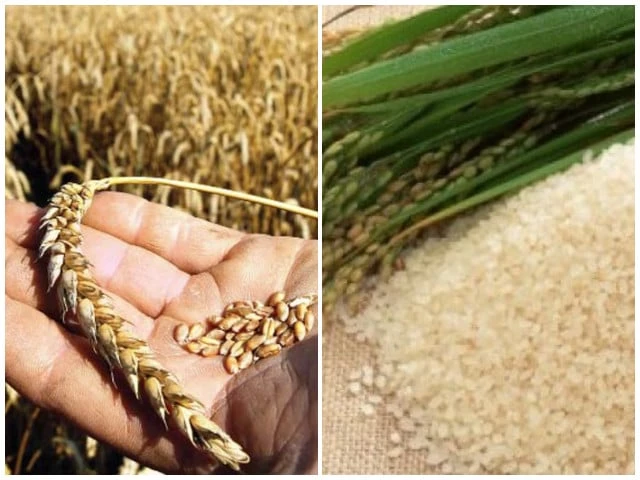
The government has set a wheat production target of 29.68 million tonnes for the 2025-26 Rabi season.
The Federal Committee on Agriculture (FCA), chaired by Federal Minister for National Food Security and Research, Rana Tanveer Hussain, reviewed the performance of 2025-2026 Kharif crops and approved the production targets for the upcoming Rabi crops.
The meeting was attended by provincial agriculture ministers, secretaries and senior officials of federal and provincial ministries.
The Ministry of National Food Security and Research has proposed a wheat production target of 29.68 million tonnes from an area of 9.65 million hectares.
Production targets for grams, potatoes, onions and tomatoes were set at 393, 8,916, 2,788 and 659,000 tonnes respectively.
The ministry also finalized the wheat policy to ensure that farmers receive fair support prices, enabling them to cover production costs and earn reasonable profits.
The minister said the policy reflects the government’s commitment to protecting the interests of farmers and achieving self-sufficiency in basic food crops.
The committee also examined the availability of seeds for Rabi crops. Director General of Federal Seed Certification and Registration Department (FSC&RD) informed that availability of certified seeds for Rabi 2025-26 will remain satisfactory.
Regarding water availability, the IRSA advisory committee does not foresee any water shortage for Punjab and Sindh during Rabi 2025-26. The provinces were allocated 33.814 million acre-feet (MAF) of water.
During the meeting, the Committee was informed that sugarcane production for 2025-26 is provisionally estimated at 84.7 million tonnes from an area of 1.146 million hectares, an increase of 5.5% in area and 5.9% in production compared to the targets set by the FCA.
Rice production for 2025-2026 is estimated at 9.417 million tonnes from an area of 3.039 million hectares, an increase of 21.9% in area and 2.7% in production compared to the targets set. Similarly, mung bean production for 2025-26 is estimated at 150.8 thousand tonnes from an area of 170.6 thousand hectares, an increase of 22.9% in area and 1.2% in production compared to last year.
In line with the government’s agenda to promote the agricultural sector, Rana Tanveer Hussain appreciated the efforts of the State Bank of Pakistan to improve the flow of agricultural credit. The SBP has set an indicative agricultural credit disbursement target of Rs. 2572 billion for FY 2025, which is 16.3% higher than the disbursement of Rs. 2250 billion. Currently, 47 financial institutions provide agricultural loans to farmers, including 5 large commercial banks, 13 medium-sized domestic private banks, 6 Islamic banks, 2 specialized banks (ZTBL and PPCBL), 11 microfinance banks and 10 MFIs/RSPs.
During FY2025, lending institutions disbursed Rs. 2577 billion, achieving 100.2% of the overall annual target and registering a growth of 16.3% compared to Rs. 2215 billion disbursed during the corresponding period last year. The Committee was also informed that the supply of urea and DAP fertilizers is expected to remain stable during the upcoming Rabi season (November-December 2025).
Federal Minister Rana Tanveer Hussain said the government, under the leadership of the Prime Minister, is fully committed to strengthening the agriculture sector, ensuring food security and raising the living standards of farmers through better pricing mechanisms, access to credit and availability of quality inputs. He stressed that the agricultural sector is the backbone of the national economy and its stability directly contributes to national growth, rural prosperity and job creation.
The minister appreciated that despite the challenges posed by floods, climatic variations and global market fluctuations, all provinces showed commendable performance by achieving better than expected results during the Kharif season. He also recognized the joint efforts of provincial ministries and farmers for their dedication and resilience in maintaining productivity under difficult circumstances. Rana Tanveer Hussain said the Ministry of National Food Security and Research would continue to implement reforms aimed at modernizing agriculture through research, innovation and sustainable practices.
The objective of the Federal Agriculture Committee is to review crop productivity in the provinces, assess the challenges facing the agricultural sector and finalize production targets and policy directions for the upcoming agricultural seasons.
The Department of Metrology informed that overall below-normal rainfall is expected in most parts of the country in November and December, while near-normal rainfall is expected in January 2026. The Department clarified that rumors circulating on social media regarding an extremely cold winter are baseless and false.
In his concluding remarks, Rana Tanveer Hussain reiterated the government’s determination to ensure food security through coordinated federal-provincial efforts. He said farmers constitute the backbone of the country’s progress and their prosperity remains a top priority of the government. The minister also highlighted the importance of rapid policy implementation, better irrigation management, mechanization and increased investment in research and development to ensure sustainable agricultural growth.


