
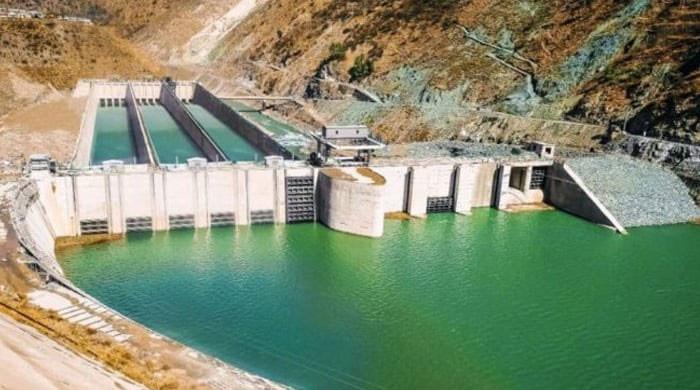
After years of drought, the monsoon of 2025 brought abundance. Pakistan’s tanks were full. Tarbela, Mangla and Chashma were filled almost to capacity at the start of Kharif.
However, the Indus River System Authority has announced a shortage of 8% for the Rabi season. The contradiction, full reservoirs and yet shortages, reveals the real water crisis in Pakistan. The problem is not scarcity but poor management. This is a crisis of governance, not hydrology, and it stems from the broken promise of the 1991 water allocation agreement.
When the four provincial chief ministers signed the agreement 34 years ago, they were in the process of designing a national strategy for water security. The document establishes a framework for managing the Indus Basin through six linked principles: equitable allocations, surplus sharing, storage development, ecological protection, provincial autonomy and operational discipline. The project’s creators understood that even as rivers ebbed and flowed, institutions could provide stability through predictable rules and shared responsibility.
Article 2 sets the provincial shares. Article 4 sets the rules for sharing excess water. Article 6 required new tanks. Article 7 recognized the importance of environmental flows to protect the Sindh Delta. Articles 8 to 12 gave provinces the freedom to develop their own water resources. And Article 14(c) made irrigation the highest operational priority, stipulating that “existing reservoirs would be exploited as a priority for the irrigation uses of the provinces”. Food had to come before electricity production.
But over the years, only clause 2, the distribution table, has remained the center of attention, which is often the cause of interprovincial friction. The rest is ignored. No major reservoirs have been built since Tarbela and the total storage capacity has fallen from about 20 maf (million acre-feet) to about 13.5 maf. Without additional storage, excess floodwater cannot be captured or shared. Article 4, supposed to distribute abundance, remains dormant.
The Article 7 commitment to the Delta has been ignored. The flows downstream of Kotri have declined from around 50 maf in the late 20th century to less than 20 maf today, and that too mainly at Kharif. For most of Rabi, the Indus below Kotri is dry. Salt water is invading mangroves and farmlands, displacing fishing communities and turning one of South Asia’s richest ecosystems into a desert.
Clause 14(c), which guarantees priority to irrigation, has fared no better. Tarbela’s tunnels and outlets operate largely on hydroelectric timetables. With major works on the tunnels, the full capacity of the dam cannot be released even when it is full. In 2024-2025, constraints on Tarbela’s low-level outlets have limited IRSA’s access to deep storage. Last year, similar operational constraints helped turn a projected shortage of 16 to 18 percent into bigger impacts than the headline numbers suggested, a trend that threatens to repeat itself. Reservoirs are overflowing as farmers at the end of the canal wait for water. This directly violates the intent of the Agreement. When the priority for irrigation is reversed, food security is threatened.
An 8% deficit in Rabi may seem small, but its consequences are serious. Wheat, grown this season, feeds 250 million Pakistanis. An irrigation deficit at planting time means lower yields, higher prices and tighter food supplies months later. The system is technically capable of avoiding this outcome but is not governed to do so. Full dams have become symbols of abundance that hide a failure of management.
Pakistan does not suffer from a lack of water. It suffers from poor governance and insufficient implementation. The 1991 Agreement provided a comprehensive framework which, if followed, would have balanced competing needs and reduced the cycle of floods and droughts. The agreement gave the provinces significant autonomy: Punjab and KP could build small dams of less than 5,000 acres without federal approval; Balochistan could develop its right bank independently; provinces could upgrade their canal networks with lined canals and precision irrigation to further expand their allocations.
Yet this freedom has remained largely unused. Provincial governments have focused on demanding more water from the system rather than developing what they already have the right to develop independently. None of these mechanisms were activated simultaneously. The system was reduced to paper allocations without the development architecture that made those allocations viable.
The pattern repeats itself every year. Monsoon floods fill the dams, but much of the water flows unused to the sea. In winter, flows decrease and the system reports shortages. Each cycle deepens provincial distrust and erodes confidence in federal coordination. The agreement aimed to avoid this by institutionalizing cooperation rather than crisis management. It offered a path from “not enough water” to “not enough governance”. And governance can be fixed.
Implementing the spirit of the agreement now requires more political will than engineering skills. The framework already exists. What is needed is respect. The Council of Common Interests should reaffirm the priority of irrigation under clause 14(c) and hand over operational oversight of discharges from Wapda reservoirs to IRSA, thereby ending the gap between allocation authority and operational control.
Federal and provincial governments must accelerate storage projects to recover capacity lost to siltation. Ecological flows downstream of Kotri should be restored. Provincial irrigation departments must invest in small dams, canal upgrades and efficient irrigation within their allocations. Real-time data on entries and releases should be made public so that transparency replaces suspicion.
This year’s monsoons gave Pakistan an opportunity. Nature has done its part by filling the reservoirs. The question is whether governance will do its job. If the deal is treated as a living framework rather than a relic, this Rabi season could mark a turning point. Three decades of experience have shown that Pakistan’s challenge is not how much water flows in its rivers but how it is managed. The agreement endures because it is based on consensus. This same consensus must now be used to implement it.
If Pakistan implements the agreement as planned, this year’s floods could become the foundation for long-term stability. Otherwise, full reservoirs will again lead to empty canals, and the country will once again learn that its real shortage is not that of water but that of governance.
The author is a former Minister of Irrigation and Finance of Punjab, with extensive experience in the provincial and federal legislatures of Pakistan.
Disclaimer: The views expressed in this article are those of the author and do not necessarily reflect the editorial policies of PK Press Club.tv.
Originally published in The News


