
ISLAMABAD:
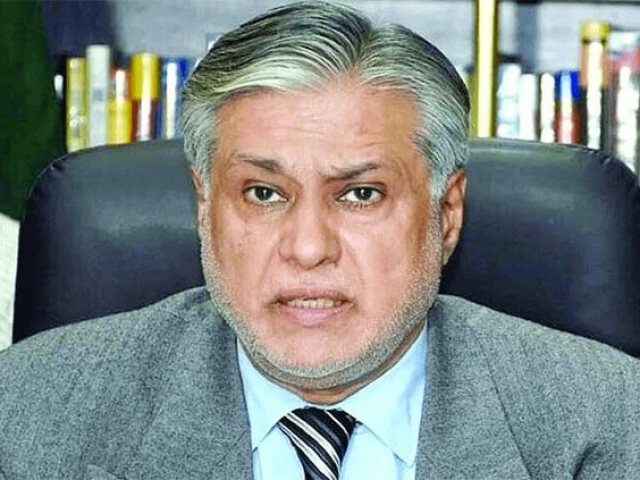
Deputy Prime Minister and Foreign Minister Ishaq Dar on Wednesday proposed the creation of a new regional body to replace the long-dormant South Asian Association for Regional Cooperation (SAARC).
Speaking at the opening session of the 5th Islamabad Conclave organized by the Islamabad Institute of Strategic Studies (ISSI), Dar warned that South Asia could no longer afford to remain trapped in “zero-sum mentalities, political fragmentation and dysfunctional regional architecture”.
He said Pakistan sought “open and inclusive regionalism” and signaled support for emerging multilateral platforms outside SAARC.
Dar said earlier this year that Pakistan, Bangladesh and China had established a trilateral mechanism to foster mutual collaboration in areas of common interest.
“This concept can be extended and replicated. As I have said before, groups with variable geometry – on issues ranging from economics to regional priorities – cannot and should not be hostage to anyone’s rigidity,” Dar said, in a veiled reference to India.
The recent trilateral meeting between Pakistan, China and Bangladesh in Kunming, the first of its kind, was a key milestone in the ongoing consultations.
Senior diplomats from the three countries have been exploring the contours of a new group, with a view to possibly inviting other South Asian states, including Sri Lanka, the Maldives and Afghanistan.
India would also be invited to join the proposed forum, sources said, but New Delhi is unlikely to participate given its growing strategic divergence with Pakistan and China.
SAARC, once considered the “EU of South Asia,” has been effectively defunct since 2016, when India boycotted the summit Islamabad was to host. Bangladesh, under Sheikh Hasina at the time, also followed suit.
Since then, no summits have taken place and recent actions, including India’s withdrawal of SAARC visa exemptions for Pakistani businessmen, have further weakened the organization.
Officials familiar with the behind-the-scenes discussions said Pakistan and China had concluded that the region could no longer wait for SAARC to be revived and that “like-minded countries must move forward.”
Observers note that India’s unease with broader regional groupings has increased in recent years.
India also faced an embarrassing moment last week when nine SCO members refused to support its stance on Pakistan. New Delhi refused to sign the final statement because it did not contain language aligned with its narrative on the Pahalgam attack.
In his speech, the foreign minister urged South Asian states to free themselves from the “burden of history” and continue cooperation in the areas of security, economy, climate adaptation and connectivity. He cited the recent 92-hour crisis between India and Pakistan as evidence of the region’s fragility.
Dar said Pakistan envisions a South Asia where “connectivity replaces divisions” and disputes are resolved peacefully, while adding that a just solution to the Jammu and Kashmir issue remains “indispensable” for lasting peace.
He also welcomed new formats of cooperation, notably the Pakistan-China-Bangladesh trilateral mechanism, which he said could be extended to broader “variable geometry” coalitions on trade, technology and infrastructure.


