
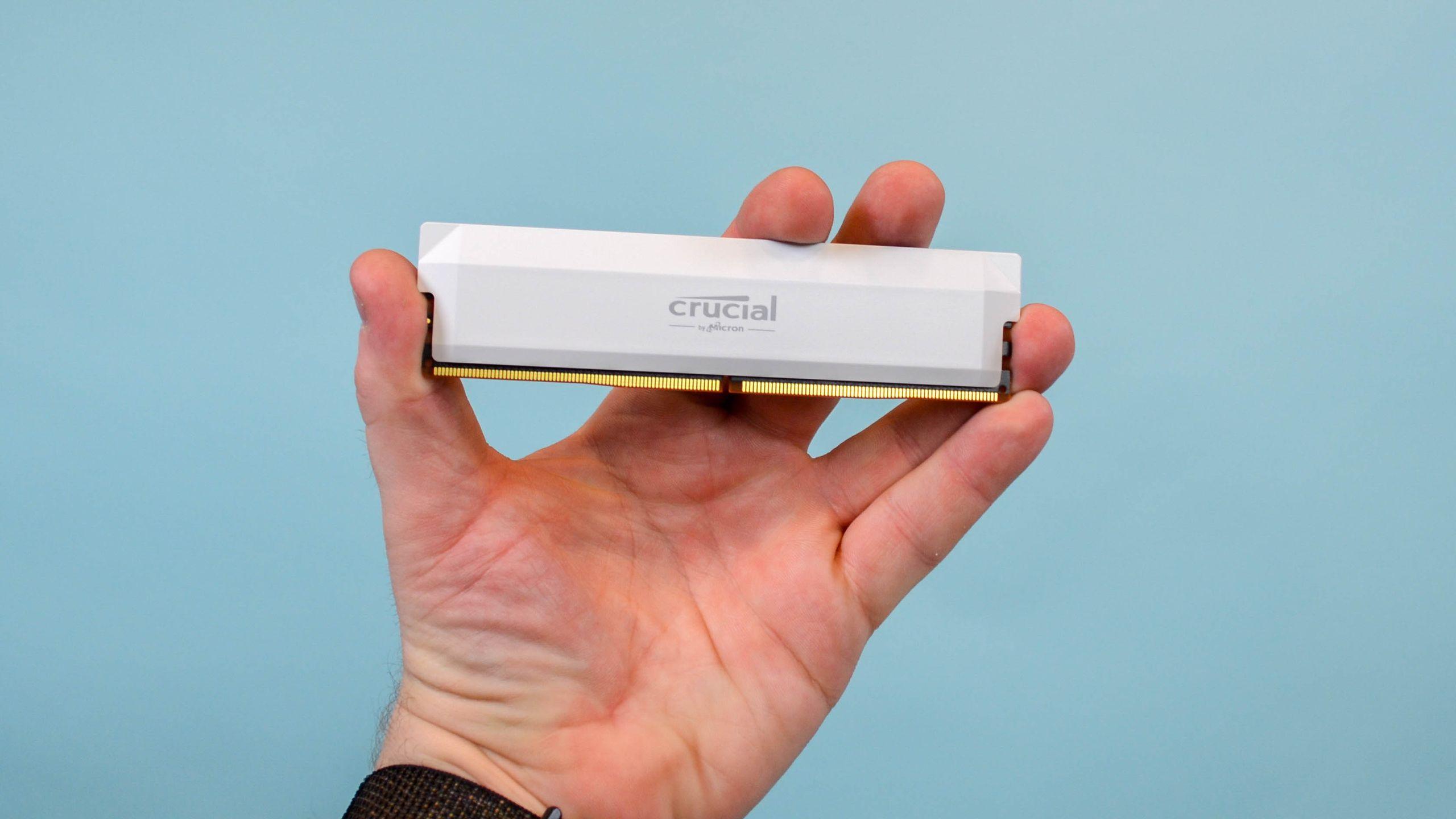
- Micron has pulled the plug on its Crucial consumer RAM
- It instead focuses on manufacturing RAM modules for data centers
- On top of that, there are other stories of problems in the memory world, as well as rumors of price hikes for AMD Ryzen processors.
Forecasts for PC component prices are growing bleaker by the day, and now a new gloom is settling over the massive pile of doom – the darkest news being that Micron is shutting down its consumer RAM division.
This means the end of the road for Micron’s Crucial RAM sticks, which have long been popular in the PC world.
As PC Gamer reported, Micron released a statement saying, “AI-driven growth in data centers has led to an increase in demand for memory and storage. Micron has made the difficult decision to exit Crucial’s consumer business to improve supply and support for our larger, strategic customers in faster-growing segments.
In other words, the company is focused on making much more cost-effective memory modules for data centers.
Micron notes that it will “continue shipments of Crucial consumer products through the consumer channel through the end of the second fiscal quarter (February 2026).”
After February next year, whatever is left on shelves or in warehouses will still be able to be sold, but after that there will be no more Crucial RAM.
Want more nuggets of doom RAM? I know no, not really, but here goes: what about Samsung’s refusal to sell RAM? It sounds ridiculous, but it’s true, and as PC World reports, it’s because Samsung Semiconductor Global (which makes Samsung’s memory chips) isn’t selling to Samsung Electronics, which wants RAM for its Galaxy smartphones (as well as its tablets, laptops, etc.).
I say “don’t sell,” but the nuance here is that Samsung Electronics wanted a contract that guaranteed supply and pricing for a full year ahead, and that longer-term deal was rejected, with Samsung Semiconductor insisting on renegotiating quarterly (possibly including large price increases during the year).
Then there’s TeamGroup, a large memory maker with many versions of PC RAM sticks, which, as Tom’s Hardware pointed out, said the contract price of DRAM has almost doubled recently – and that supply is expected to get worse in 2026. According to TeamGroup, things may not return to normal for memory until 2027, or even 2028.
Changing tack now, there is also a rumor that processor prices will increase, at least on AMD’s side.
OC3D reports that its industry sources claim that AMD Ryzen processors were boosted in early December and that this applies to all processors from the Ryzen 9000 series onwards.
Now, we haven’t seen any price increases for Ryzen CPUs this week – beyond the disappearance of Black Friday sale prices, which complicates the issue here somewhat – but as OC3D makes clear, this is the cost throughout the supply chain (at distributors).
The effect will therefore not be felt immediately for consumers, but it is underway for the products on retailer shelves. (Even if this report must be taken with a lot of seasoning, of course – and all the points discussed here, which remain rumors for the moment).
Analysis: Crucial considerations if you’re considering a new PC or component upgrade
If the hypothesis is correct, in early 2026 we could see price increases for Ryzen CPUs, in addition to price increases for AMD Radeon GPUs, and there are also separate rumors about Nvidia graphics cards. GPUs are of course affected by the increasing cost of memory because they use video RAM, so this makes perfect sense.
Why CPU prices might rise is another question, and one that OC3D doesn’t attempt to address (which makes the report a bit sketchy).
Yet even if Ryzen CPUs aren’t facing these rumored hikes, GPUs and memory certainly are. Memory also means storage – SSDs – but we see the current effects of memory supply issues most clearly when it comes to RAM sticks, the price of which has skyrocketed. Recently, we’ve seen a doubling and even tripling of the cost of many PC RAM kits, with even Black Friday bringing little to no relief.
What is my current buying advice given all of this? It’s like you should pull the trigger on a GPU now, or during a holiday sale, which may be the last chance to get a decent price (relative to MSRP). It’s a similar case for SSDs, whose prices have already seen substantial increases – but I have a feeling things could change. considerably worse for these drives, and there will almost certainly be significant further price increases in 2026 for storage.
With RAM, the horse has already fled in the face of the enormous price increases that have marked the history of recent months. However, given that the worst recent news is in RAM – and with the exit of the Crucial brand raising questions about how other memory makers might treat their consumer offerings – that may not be a good thing. terrible idea to buy system RAM now, at least not compared to, say, mid-2026, provided you can still find something that doesn’t look terribly bloated (some prices are truly ridiculous now, and you should never pay exorbitant amounts, of course).
But what about entire systems? If you’re already dead set on building a new desktop PC, you may want to grab the components sometime soon, aside from the RAM as shown – it might be a good idea to consider recycling the system memory of your current PC, if possible, for now until prices improve. It may not be until 2027, or even 2028, as noted above.
However, right now, if you want a new PC, building isn’t really the way to go: the best option is to buy a pre-built desktop. Indeed, there is still a stockpile of relatively affordable pre-built PCs – built from components purchased in bulk before the RAM price spike took effect – and that really is the best route to take for many.
Either way, there are many benefits to buying rather than building, in terms of overall warranty coverage and customer support, as well as eliminating the chance of problems (frying key components during build assembly, for example).
In short, if you’re in the market for a new desktop PC, you need to get it now – and think carefully about a pre-built one – or be prepared to spend the next year with your existing computer and wait until 2027 for an upgrade (which is exactly what we’re hearing from PC makers themselves). And for GPU and storage upgrades, again, the best time is probably now or within the next month.
I have a feeling we’re going to hear more PC component woe stories before the end of 2025. As the AI market continues to grow, consumers will continue to face challenges, and I don’t see anything other than one more “boom” for AI in the near to medium future.
The best graphics cards for every budget
Follow TechRadar on Google News And add us as your favorite source to get our news, reviews and expert opinions in your feeds. Make sure to click the Follow button!
And of course you can too follow TechRadar on TikTok for news, reviews, unboxings in video form and receive regular updates from us on WhatsApp Also.


