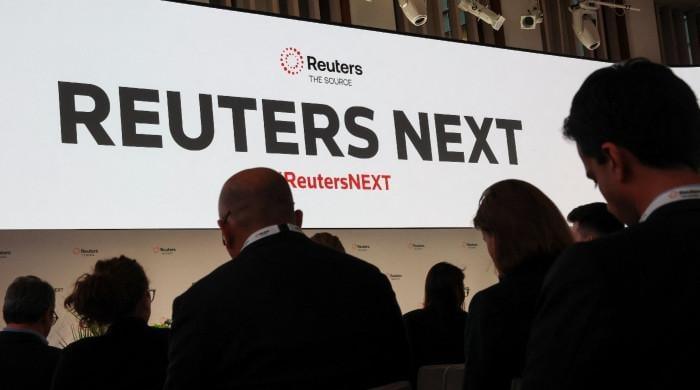
NEW YORK: The transformative effects of artificial intelligence dominated discussions at the Reuters NEXT conference in New York, with speakers focusing on how it could upend work – and job growth – sidestepping concerns about an AI bubble.
Artificial intelligence represents the biggest technological upheaval in the global economy since the rise of the Internet a quarter of a century ago. That has generated billions of dollars of investment and dizzying stock gains, but also a shortage of memory chips, regulatory scrutiny and growing anxiety over job cuts.
The numbers are staggering. In the first half of 2025, AI-related capital spending contributed more to GDP growth than consumer spending, according to JP Morgan Asset Management. Investment consultancy Bespoke Investment Group recently estimated that about a third of the increase in global market capitalization since the introduction of AI assistant ChatGPT comes from 28 AI-related companies.
Reuters NEXT business leaders focused largely on how AI would transform work, although some cited the threat to jobs. “All of (our clients) are focused on slowing headcount growth,” said May Habib, CEO and co-founder of startup AI Writer. “This has been happening in the last few weeks. You close a client, you call the CEO to kick off the project, and you’re like, ‘Great, how soon can I destroy 30% of my team?’
Fears of job disruption
Fears about job losses caused by the AI boom are supported by a report from the US Federal Reserve showing data and surveys that show artificial intelligence is already replacing entry-level positions and forcing companies to scale back their hiring plans. A Reuters/Ipsos poll from August showed that 71% of respondents feared that AI would “permanently put too many people out of work.”
Adopting a more optimistic tone that has become one of the themes of the Reuters NEXT conference, economist Joseph Lavorgna, an adviser to the U.S. Treasury secretary, said the focus should be on how technology could enhance work rather than replace it. “AI is an incredible tool that I think complements the existing workforce,” he said. “We need policies that encourage businesses to invest, and AI complements this. »
Still, employment data is hard to ignore. Recent college graduates have seen a sharp increase in unemployment, with the current unemployment rate at 9.5% for those between 20 and 24 with a bachelor’s degree, according to the U.S. Department of Labor, compared to 4.4% nationally.
Joe Depa, EY’s chief innovation officer, compared these changes to previous technological disruptions, such as the development of the Internet, but “the difference this time is that the disruption is faster.” Depa said “adaptability is the new job security,” with his greatest concern regarding the middle management class.
Tracey Franklin, Moderna’s chief people and digital technology officer, said what’s changed is how companies are starting to assess employment needs in tandem with technology needs, rather than separately.
“We bring teams together and really look at what is their IT portfolio, what is their human capital strategy, how can we bring them together to achieve their business goals. So we have these integrated conversations that we didn’t have before,” she said.
Skepticism and concern
The Reuters/Ipsos survey also shows that 61% of respondents are concerned that data center power consumption will only increase. Jeff Schultz, senior vice president of portfolio strategy at Cisco Systems, noted that the infrastructure to run AI and the necessary chips already consume a lot of power, and the network traffic needed for agentic AI is much higher and more stable than the sporadic demand from AI chatbots.
But backlash is growing against energy-hungry data center clusters that have contributed to rising utility prices. This is evident in places like Virginia and Pennsylvania, even among supporters of President Donald Trump, who has championed the development of AI and is considering ways to restrict regulations at the state level.
There was notable apprehension among Reuters NEXT speakers from the media and creative industries, due to concerns that AI-generated content could replace the creative work of writers or actors.
“When it comes to talent, there’s a lot of controversy, whether it’s acting, music, etc., and that’s where I think we really have to be very aggressive in protecting creative talent and making sure they’re not replaced,” said longtime media executive Shari Redstone.
Sarah Jessica Parker, longtime star of the TV series “Sex and the City,” said she thinks people still value the tactile human experience — citing the unpredictability and spontaneity of the performance.
“We still rely – the majority of us – on human exchange,” Parker told Reuters Editor-in-Chief Alessandra Galloni. “Even on film, even though I know there are so many things now that you can fix and make prettier or tighter or better, there’s still that human element when we talk about the films that we love…I’m not sure AI will be able to replicate that living nerve.”