
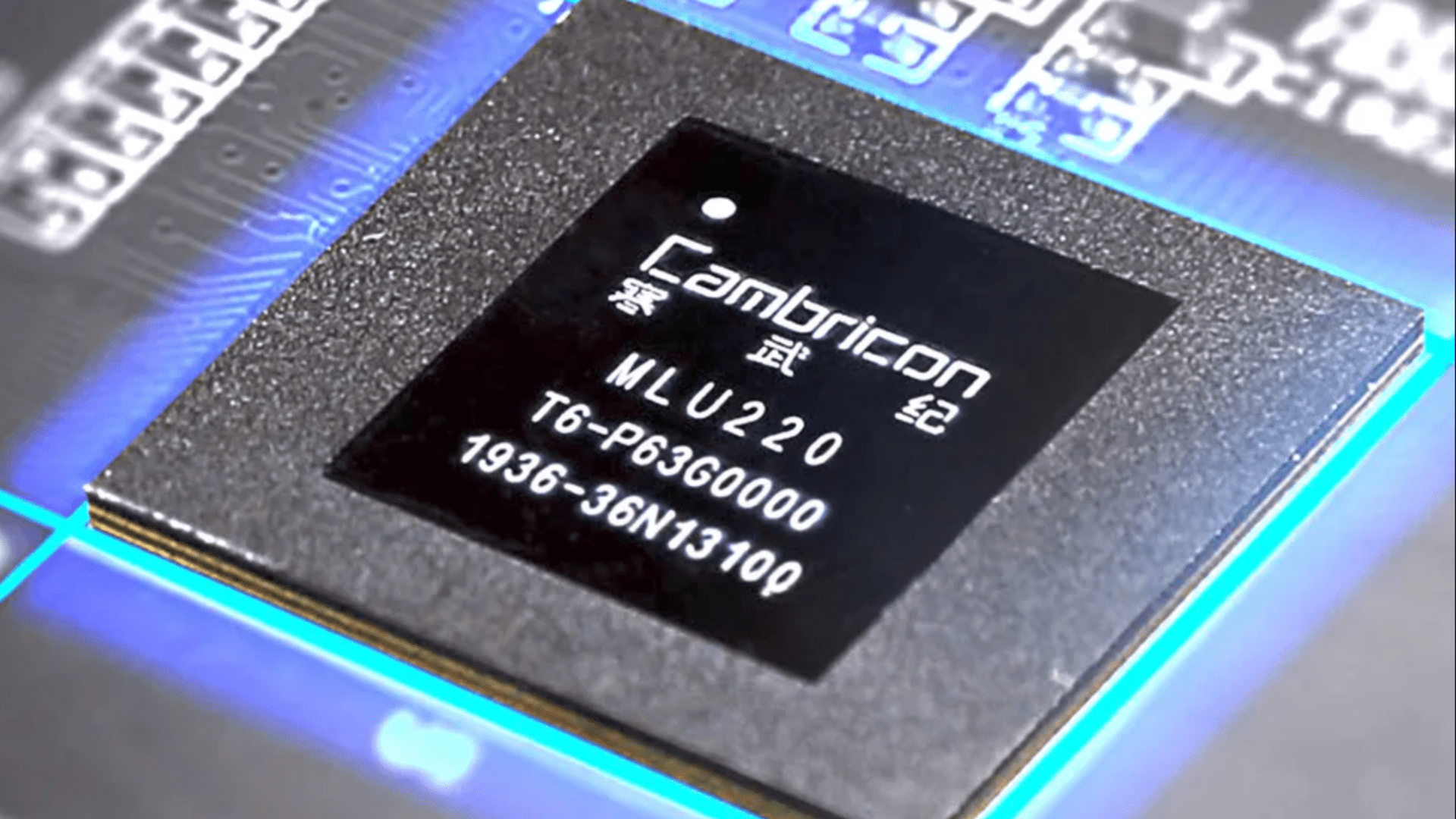
- Cambricon plans to produce 500,000 AI accelerator chips next year
- Siyuan 590 and 690 models account for 300,000 units
- Current yield rates remain extremely low, at just 20%.
Chinese chipmaker Cambricon Technologies aims to triple AI chip production by 2026, seeking to fill the void left by Nvidia’s withdrawal from the Chinese market.
Bloomberg reports that the company intends to produce around 500,000 AI accelerator chips next year, including 300,000 units consisting of its main Siyuan 590 and 690 models.
This represents a large increase from the approximately 142,000 units expected in 2025, but Cambricon nonetheless faces significant manufacturing challenges.
Manufacturing Challenges and Yield Limitations
The reported yield rate for its 590 and 690 chips stands at just 20%, meaning that only one in five chips produced is usable.
Even with access to Semiconductor Manufacturing International’s capacity, actual production could be much lower than forecast.
In comparison, TSMC’s 2nm technology, which is seven generations ahead of SMIC’s capabilities, achieves 60% efficiency, showing the efficiency gap.
Memory shortages, including HBM and LPDDR components, further threaten the ability to meet production targets, potentially slowing delivery to data center customers.
Cambricon’s move comes as Chinese companies like Alibaba and ByteDance increasingly favor local suppliers.
They are supported by the Chinese government’s incentives to strengthen China’s semiconductor independence.
Cambricon’s reported revenue for the latest quarter increased fourteen-fold, reflecting strong domestic demand and investor confidence.
However, this project will put Cambricon in direct competition with tech giant Huawei, which plans to double its chip production, increasing pressure on Cambricon.
The two companies compete for similar wafers and manufacturing resources, creating bottlenecks that could limit the speed and scale of production.
Cambricon’s strategy relies heavily on SMIC’s 7nm “N+2” process node, but it remains unclear whether it can support large-scale manufacturing.
Trade restrictions and chip embargoes over the past year have restricted access to high-end AI hardware, making domestic alternatives essential to national AI ambitions.
The gap between China’s current semiconductor technology and its Western competitors like Nvidia, AMD and Intel remains considerable.
Cambricon’s GPU chips still lag far behind in performance and efficiency compared to the world’s leading products.
CPU workloads in Chinese data centers could continue to rely on existing infrastructure while AI accelerators evolve.
Integrating these new chips into workstations will likely be tested as companies adapt to local hardware limitations.
In a neutral assessment, Cambricon’s expansion shows the growing strategic importance of domestic AI chip production.
Strong government support and growing domestic demand are driving its momentum, but inefficiencies and competition for resources could limit its full potential.
Follow TechRadar on Google News And add us as your favorite source to get our news, reviews and expert opinions in your feeds. Make sure to click the Follow button!
And of course you can too follow TechRadar on TikTok for news, reviews, unboxings in video form and receive regular updates from us on WhatsApp Also.


