
- Toshiba charts the path to hard drives ranging from 24TB to 55TB and beyond
- Storage giant targets 40TB drives next year with new technologies
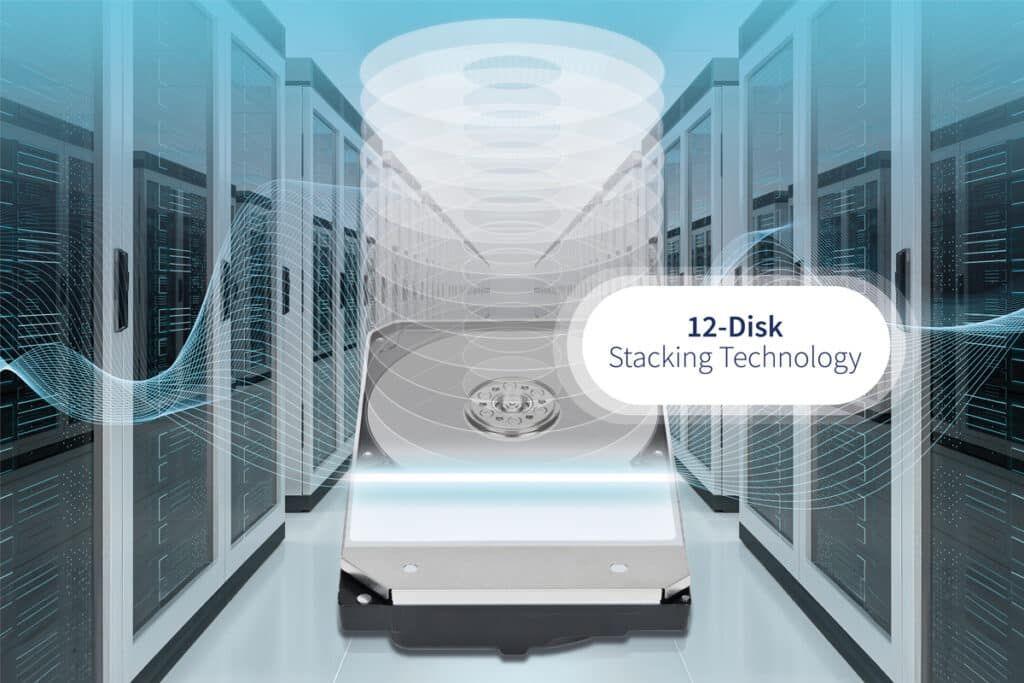
- Twelve-platter design supports Toshiba’s push toward higher capacities
Toshiba has outlined plans to increase hard drive capacity well beyond current limits, with new slides pointing the way to 40TB models and an eventual move to 55TB and beyond.
PC Watch says the company detailed its roadmap at a recent symposium in Japan, outlining advancements in platter counts, recording technologies and materials that will shape its next generation of data center drives.
There has been a steady increase in the size of hard drive storage, from the 10TB models of 2017 to today’s 24TB capacity. Toshiba increased density by moving from CMR designs to its FC MAMR system, increasing the number of platters from seven to nine, then to ten. It then increased density again with improvements to CMR and MAMR, reaching capacities of 22TB and 24TB in 2024.
MAMR and HAMR
In October, we announced that Toshiba had verified a 12-drive stackup design for Nearline drives, a first for the storage industry.
This approach adds two platters to the familiar ten-disc layout and replaces aluminum substrates with glass, allowing for thinner discs, finer tolerances and better durability.
Toshiba partnered the design with MAMR and announced plans to reach capacities of 40TB in 2027.
The new slides, one of which is visible above, expand on this plan. Toshiba still aims to ship a 40TB class drive in 2027 using MAMR with 11 or 12 platters. A separate track, based on HAMR, is expected to exceed 40 TB in 2026 with 11 platters.
MAMR and HAMR are two approaches to energy-assisted magnetic recording that increase storage density beyond what conventional methods allow.
MAMR uses a microwave field to stabilize the writing process so that data can be written to smaller magnetic regions without losing precision.
HAMR relies on a tiny, precisely controlled burst of heat from a semiconductor laser to momentarily lower the resistance of the media, enabling even finer magnetic patterns.
Both methods allow manufacturers to store more data on each platter, although HAMR generally offers higher density gains in the long run.
The roadmap shows goals of 45TB in 2028 and 55TB or more after 2029 as HAMR and the 12-platter stack mature, pointing to what would be one of the largest hard drives on the market.
The company said it believed it would be possible to offer thirteen trays in the same format.
Follow TechRadar on Google News And add us as your favorite source to get our news, reviews and expert opinions in your feeds. Make sure to click the Follow button!
And of course you can too follow TechRadar on TikTok for news, reviews, unboxings in video form and receive regular updates from us on WhatsApp Also.


