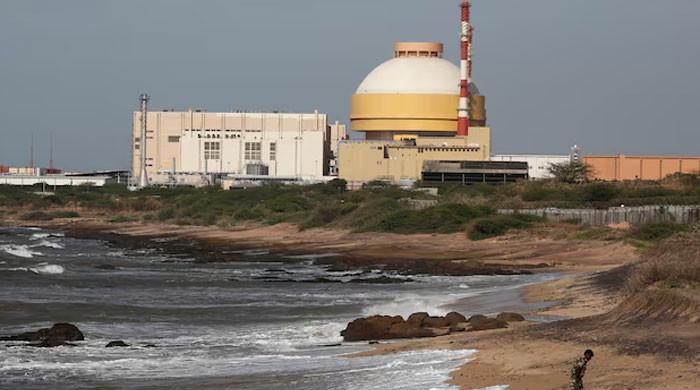
- Private companies can import and process uranium under a new bill.
- Foreign companies participating in joint ventures can apply for a license.
- The new bill requires the approval of both houses of Parliament.
NEW DELHI: India on Monday took steps to end decades of state control over nuclear power, introducing a bill in Parliament that would allow private companies to build and operate plants as the government seeks to put atomic power at the heart of its clean energy policy.
Foreign companies participating in a joint venture with Indian companies could apply for a license if selected by the government.
India’s nuclear sector has been closely watched since its first reactor was commissioned in 1969, shaped by Cold War politics and restrictions imposed on fuel technology after the 1974 nuclear test.
The state-owned Nuclear Power Corp of India Ltd (NPCIL) owns and operates India’s current fleet of nuclear power plants, but Reuters reported last year that India was seeking to invite domestic private companies such as Tata Power, Adani Power and Reliance Industries to invest around $26 billion in the sector.
The new bill, which must be approved by both the lower and upper houses of parliament to become law, would allow any “person expressly authorized by the central government” to apply for a license to enter the nuclear sector, a major change from decades when only state-owned companies could operate reactors.
India plans to expand its nuclear capacity to 100 gigawatts (GW) over the next two decades, more than 12 times the current 8.2 GW.
The new bill, titled Sustainable Harnessing of Advancement of Nuclear Energy for Transforming India Bill, 2025, drops a rule that allows operators to sue suppliers over equipment defects, a provision that foreign suppliers have long opposed. Foreign suppliers include General Electric Co, Westinghouse Electric Co and France’s EDF.
The bill doubles the liability of large reactor operators to 30 billion rupees ($330.75 million), maintains the overall compensation cap at previous levels and proposes a nuclear liability fund to cover accident claims, in line with global standards.
Private companies will be allowed to import and process uranium, according to the bill. The government kept strategic activities such as uranium mining, nuclear fuel enrichment, and fuel reprocessing under government control, and all operators would need a license.