
Links civil servant transfers to constitutional family rights in accordance with the 1998 Marriage Policy
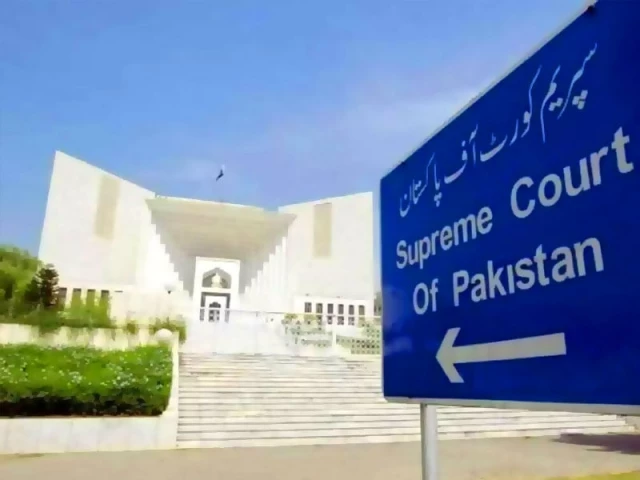
Pakistan’s Supreme Court has ruled that all ministries must follow the 1998 marriage policy, stating that administrative convenience cannot trump the constitutional obligation to protect the family life of civil servants.
The judgment, delivered by a bench comprising Justice Ayesha A. Malik and Justice Munib Akhtar, followed a petition by Mubashir Iqbal Zafar, Deputy Health Inspector (BPS-5), against the Defense Ministry and other respondents.
Zafar had challenged his transfer from Abdul Hakim, Khanewal district, to Dera Nawab Sahib, Bahawalpur district, on February 8, 2021, citing medical and family difficulties. He is diabetic, while his wife, Abdul Hakim, a teacher at a BPS-14 government school in GGES Jinnah Colony, suffers from heart problems and the couple has two minor children. Zafar’s request to stay at Abdul Hakim or be transferred nearby was rejected on March 30, 2021, and the Federal Service Tribunal in Islamabad subsequently rejected his appeal.
The Supreme Court noted that the transfer had been granted in a “routine” manner without any overriding reason of public interest. This, according to the statement, constitutes a violation of the marriage policy and Articles 34 and 35 of the Constitution, which protect family life and promote women’s participation in public service.
Read: SC orders enforcement of marriage policy
Marriage policy requires the state to take into account the challenges faced by married couples and single female employees, and place them in close proximity to their spouse or family, unless there is a strong public interest reason not to do so.
The court recognized that a civil servant “does not have an absolute right to be transferred to a specific location.” However, he stressed that the aim of this policy is to reduce the burden of separation and protect family life, obliging the state to follow it. The court also observed that the government’s “one-dimensional approach” often ignores this goal, treating transfers as routine and expecting employees to adapt without considering their family circumstances.
The judgment says the policy is “designed to reduce hardship, promote family stability and encourage greater participation of women in public service”. It warns against relying on “convenience, tradition or rigid administrative practices” to circumvent this obligation. The Court added that the government must fully follow this policy, both in letter and spirit.
“Instead, we find that the intention is the opposite of that stated in the policy,” Justice Malik noted, adding that administrative measures must be anchored in the best interest of the public, ensuring that governance remains people-centered.
Legal experts hailed the move as an important step towards gender-sensitive and family-centered governance. “This judgment shows that consideration of gender and family is not limited to women but benefits the entire family,” said Nida Usman, lawyer and founder of Women in Law Initiative Pakistan.
Medical difficulties
The court found that the government’s reasoning, according to which Zafar could not remain continuously in the same position, was “unjustified and inadequate” in view of his medical and family situation. In quashing the transfer order, the court ordered all government ministries to treat the marriage policy as a binding directive to avoid “psychological, economic and social strain on families” caused by orders passed “without thought and sensitivity”.
Usman added that Zafar’s relief demonstrates that the gender and family perspective applies not only to women, but to families as a whole.
Justice Ayesha A. Malik has ruled on family and women’s rights, including cases related to Khula and domestic violence.
Learn more: SC empowers women in khula and recognizes psychological violence
In a judgment announced in October in Dr. Seema Hanif Khan v. Waqas Khan (CPLA No. 3268 of 2024), the Supreme Court ruled that lower courts must apply the civil standard of proof and examine evidence of emotional and mental abuse under the Dissolution of Muslim Marriages Act, 1939 (DMMA), noting that such abuse often occurs in private.
The court observed that abuse within the matrimonial home cannot have any witnesses, affirmed that Khula is a personal right of a woman which cannot be granted without her clear consent, and assured that the petitioner would retain her dowry, including gold, silver and property.
It also reinstated the decree dissolving the family court on grounds of second marriage and psychological cruelty, emphasizing the need for objective and respectful judicial reasoning. This decision sets an important precedent for cases involving Khula, psychological violence and women’s autonomy in marriage.


