NEWYou can now listen to PK Press Club articles!
Sen. Ted Cruz, Republican of Texas, has been trying for years to get more regulations surrounding name, image and likeness (NIL) agreements in college sports, saying in 2023 the landscape was “in peril.”
Now, in 2025, Cruz considers college football a “disaster.”
Cruz responded to a post on X, which called the “current landscape of college football…unsustainable.”
CLICK HERE FOR MORE SPORTS COVERAGE ON PK Press Club
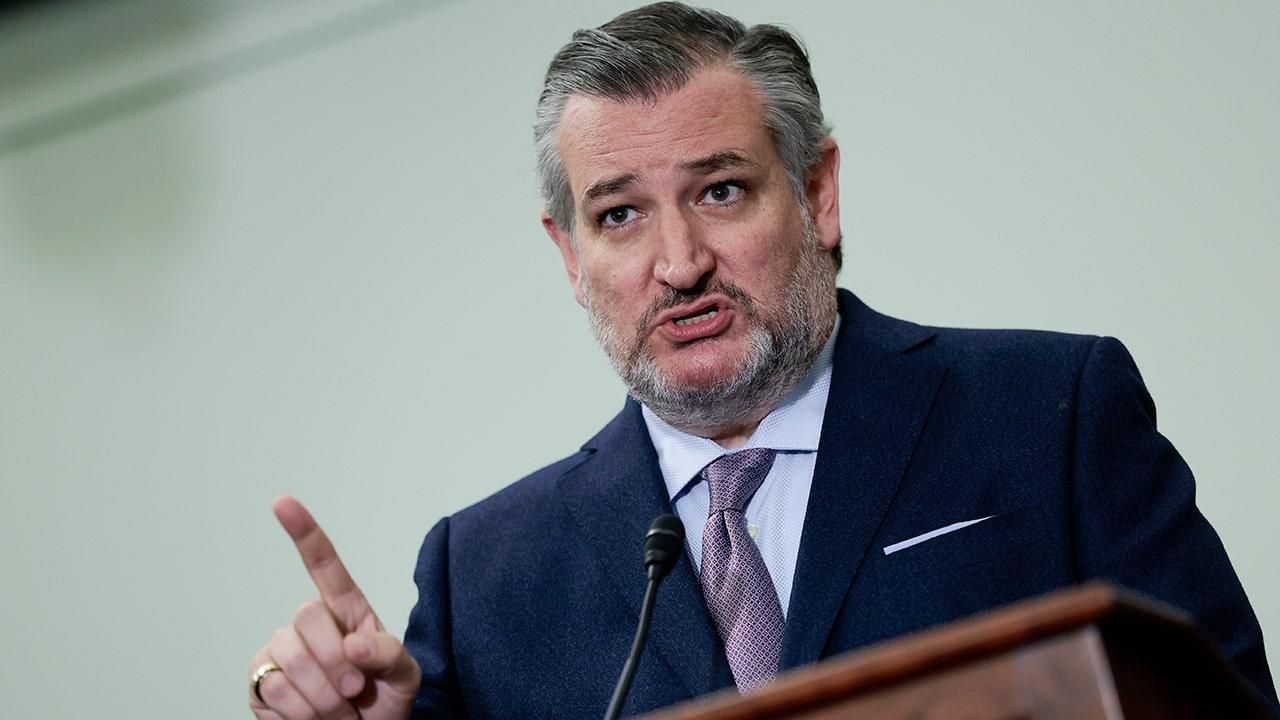
Sen. Ted Cruz, R-Texas, arrives for a hearing at the U.S. Capitol December 17, 2025 in Washington, DC. The Federal Aviation Administration’s hearing with the Senate Commerce, Science, and Transportation Committee, Subcommittee on Aviation, Space and Innovation, focused on assessing progress, ensuring accountability and results. (Heather Diehl/Getty Images)
The post points out that the Iowa State Cyclones, who just lost longtime head coach Matt Campbell to the vacant Penn State Nittany Lions position, have just 17 players left on their roster for next season. Among these players, only one was a starter.
Essentially, the Cyclones will have to field a whole new roster and team and hope they can solidify themselves before 2026.
SCORE ACT RECEIVES SUPPORT FROM MORE THAN 20 CONSERVATIVE GROUPS AS FIGHT AGAINST NIL REFORM HOLDS ON
Cruz criticized the NCAA allowing this.
“An absolute crisis,” he wrote on X. “Congress MUST act. For months, I have worked night and day trying to bring Republicans and Democrats together to save college sports.
“If we don’t succeed, it will be a real tragedy. And it’s happening before our eyes.”
Cruz introduced a bill in 2023, two years after NIL was born, in hopes that stricter regulations would help college sports nationally. Instead, we saw programs paying top players via NIL deals, while the transfer portal allowed players to move between schools each year.
Cruz is a leading legislator in support of the Student Compensation and Opportunity through Rights and Endorsements (SCORE) Act, which would give the NCAA a limited antitrust exemption in hopes of protecting the organization from possible lawsuits over eligibility rules and would bar athletes from becoming employees of their schools.

FILE – Sen. Ted Cruz, R-Texas, speaks at the Conservative Political Action Conference, CPAC, at the Gaylord National Resort & Convention Center, February 20, 2025, in Oxon Hill, Maryland. (José Luis Magana/AP Photo)
“The SCORE Act is the free market, individual liberty, and limited government solution to the ‘name, image and likeness (NIL)’ problem in college sports,'” a letter to House Speaker Rep. Mike Johnson, R-La., read earlier this month.
Groups in favor of the SCORE Act said the bill was the “common sense way” to establish rules and avoid confusion of state laws in the NIL era.
“HR 4312 prohibits litigators from suing under federal or state antitrust law. It also provides that athletes receiving zero compensation need not be employees of those universities, thereby protecting them from mandatory unionization. This means that student-athletes can be treated as small business owners, not union workers,” the letter adds.
Conservative groups have touted the SCORE Act as a better plan than the Student-Athlete Fairness and Enforcement (SAFE) Act, which was overwhelmingly supported by Democrats. The SCORE Act has at least gained some bipartisan support in the House.

Senator Ted Cruz (R-TX) holds a press conference with families who lost loved ones in the January 29, 2025 DCA plane crash, December 15, 2025 at the U.S. Capitol in Washington, DC. The bipartisan press conference addressed language in the National Defense Authorization Act (NDAA), which changes military airspace policy. (Heather Diehl/Getty Images)
The SCORE Act also calls for schools to share revenue, per the terms of the House agreement, up to 22 percent “if these rules provide that such pool limit is AT LEAST 22 percent of the average annual athletic revenue of the 70 highest earning schools.”
Finally, the SCORE Act prohibits schools from using tuition to fund zero payments.