
Both sides share details on N sites, prisoners; Islamabad expresses serious concerns over CIES violations
ISLAMABAD:
Pakistan and India continued key confidence-building measures on Thursday by exchanging lists of each other’s nuclear facilities and prisoners, even as broader bilateral relations remain strained and concerns persist over New Delhi’s actions over shared water resources.
According to the Ministry of Foreign Affairs, the two countries exchanged lists of nuclear facilities and facilities on January 1 in accordance with the 1988 agreement on the prohibition of attacks on nuclear facilities and facilities.
Pakistan officially handed over its list to a representative of the Indian High Commission in Islamabad, while India shared its own list with the Pakistan High Commission in New Delhi.
The annual exchange, a rare engagement mechanism between the two nuclear-armed neighbors, took place despite lingering tensions after the four-day conflict earlier this year and the absence of a structured dialogue process.
The same day, Pakistan and India also shared lists of prisoners under the 2008 Consular Access Agreement. Pakistan provided details of 257 Indian prisoners in its custody, including 58 civilians and 199 fishermen. India was supposed to reciprocate by sharing a list of Pakistani prisoners held in Indian jails.
FO said the exchange was aimed at facilitating consular access and rapid repatriation of prisoners, particularly those who have served their sentences.
The continuation of these routine diplomatic exchanges coincided with a rare public interaction between senior representatives of the two countries in Dhaka earlier on Wednesday.
Pakistan National Assembly Speaker Sardar Ayaz Sadiq and Indian Foreign Minister S. Jaishankar were seen briefly shaking hands on the sidelines of the state funeral of former Bangladesh Prime Minister Begum Khaleda Zia.
The interaction, widely broadcast on social media and regional media, marked the first such face-to-face contact between high-level officials since the recent hostilities.
However, FO sought to downplay any political significance attached to the meeting, with the spokesperson saying he would not go beyond the speaker’s public explanation of the meeting.
While limited diplomatic protocols continued, Islamabad simultaneously expressed serious concerns over India’s alleged violations of the Indus Waters Treaty (IWT), particularly reports that New Delhi had approved the Dulhasti Stage-II hydropower project on the Chenab River in India’s illegally occupied Jammu and Kashmir.
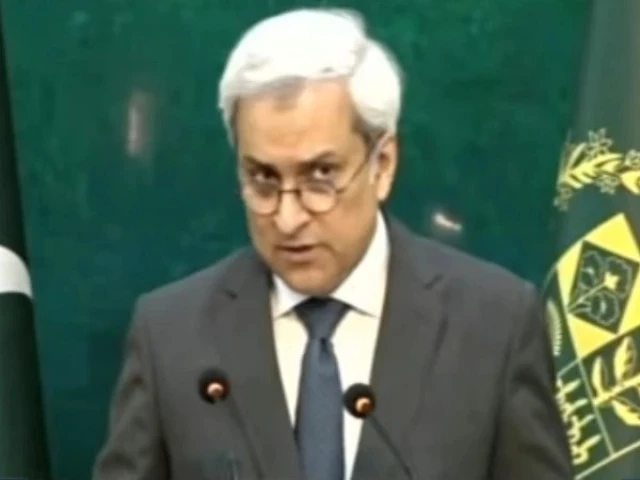
Responding to a question at the weekly press briefing, FO spokesperson Tahir Andrabi said the reports raised “serious concerns” as India had not shared advance information on the project, as required by the 1960 treaty.
He said Pakistan’s Indus Water Commissioner had formally sought clarification from his Indian counterpart regarding the project’s design, scope and potential impact on downstream water flows.
The spokesperson reiterated that India cannot unilaterally exploit its limited quotas under the treaty and stressed that any project on the western rivers is subject to strict requirements for design, operation and information sharing.
He added that the Indus Waters Treaty remained a binding international agreement, noting that recent decisions by the Court of Arbitration had reaffirmed its validity.
The FO briefing also covered a wide range of regional and international developments. Pakistan has expressed deep concern over the resurgence of violence in Yemen, reaffirming its support for the unity and territorial integrity of the country and opposing unilateral actions that could further destabilize the region.
Islamabad also reiterated its full solidarity with Saudi Arabia and supported regional efforts aimed at de-escalation.
Prime Minister Shehbaz Sharif and Saudi Crown Prince Mohammed bin Salman held a telephone conversation during which they discussed regional developments and reaffirmed their commitment to strengthening bilateral relations. The Saudi crown prince has expressed the desire to pay an official visit to Pakistan in the coming year.
The spokesperson also highlighted Pakistan’s strong condemnation of any attempt to undermine Somalia’s sovereignty, particularly rejecting Israel’s recognition of the so-called Somaliland region. Pakistan joined several Muslim countries in issuing a joint statement condemning the move as a violation of international law and the United Nations Charter.
On Afghanistan, the spokesperson said Pakistan’s diplomatic missions were coordinating the safe return of Pakistani nationals after the border closure, adding that Islamabad continued to urge Kabul to ensure that Afghan soil was not used for terrorist activities against Pakistan.


