
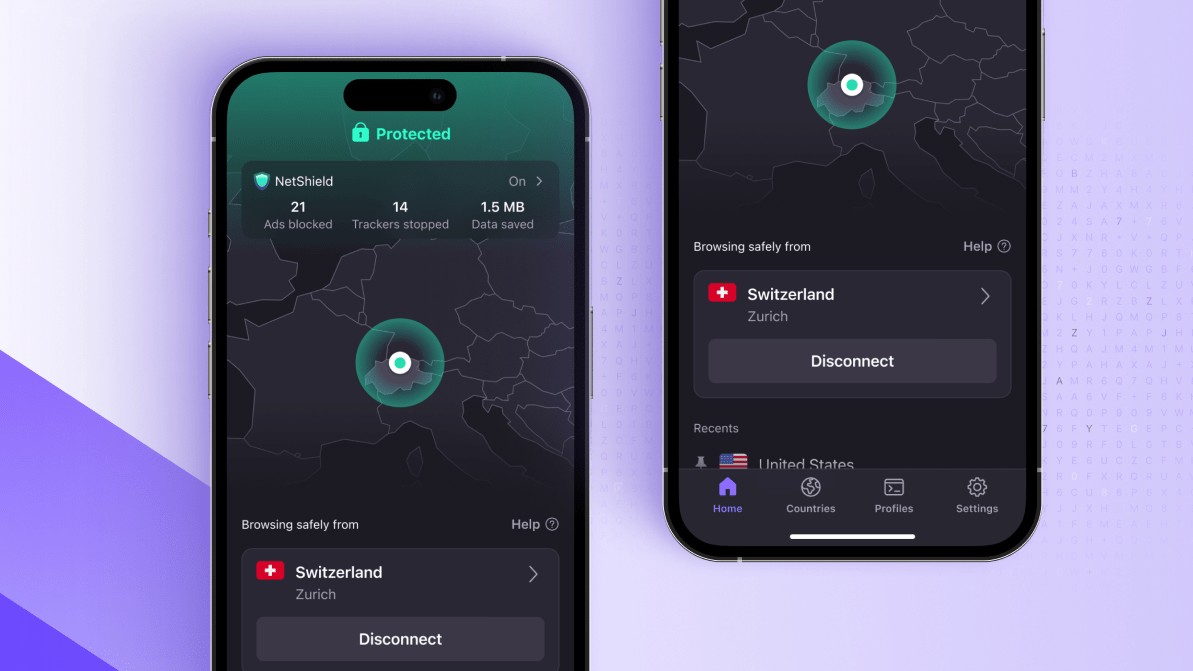
2025 was a “watershed year” for digital privacy, according to Proton VPN CEO David Peterson.
The global landscape has been defined by a proliferation of age verification laws and increasing digital surveillance – trends that Peterson says have revealed “alarming erosions of privacy, even in established democracies.”
So what does this milestone mean for Proton – a company that believes a better world starts with privacy and digital freedom?
Free VPN Advances
The VPN market is known for free apps that collect user data, but Proton has managed to carve out a niche by offering a truly secure, data-unlimited free product. In 2025, the company attempted to further improve this situation by double the number of free server slots to 10.
This expansion aims to increase accessibility in regions experiencing sudden internet restrictions or social media blocks, while alleviating slowness often caused by server congestion.
However, one key limitation remains: unlike the paid version, you still can’t manually choose which specific server you connect to. Privado VPN, which we consider the best free VPN, has 13 free server locations.
Although the free tier is an entry-level version of the company’s paid service, it is a powerful tool for people on restrictive diets. In 2025, Proton reported usage peaks from Afghanistan to Venezuela during internet restrictions.
“We have made significant progress in expanding access to privacy tools for everyone,” Peterson said.
Application development
While Proton is often praised for its mobile app, 2025 has seen a concerted effort to bring feature parity to platforms like Apple TV and Linux. The introduction of NetShield – Proton’s ad and malware blocker – to its Apple TV app constitutes a solid development to counter the phenomenon of increasing invasive tracking found in smart TV ecosystems.
The most requested update of the year was the return of a dedicated Linux command line interface (CLI). Released in early access end of OctoberThe new CLI is a basic rewrite designed for speed and scriptability.
This is currently a fundamental release: the CLI is limited to the WireGuard protocol and lacks some important features like a kill switch or NetShield. If you’re an experienced Linux user, it might be worth considering NordVPN, as it recently released.
If you’re an experienced Linux user, it might be worth considering NordVPN, which recently open-source its Linux GUI. However, Proton maintains the advantage here: unlike many competitors, Proton’s entire suite of applications has been open source and independently audited for years, which remains a major draw for the privacy-conscious Linux community.
Improved infrastructure
Arguably Proton’s most important development during the year was not a visible feature, but a structural one. In October, the company announced that it had started work on a new internal VPN architecture.
The company said it was “rapidly surpassing” the limits of commercially available protocols and claimed the new architecture would help improve speeds, reliability and create stronger anti-censorship capabilities.
It also lays the foundation for post-quantum encryption (PQE), which should future-proof the business and help guard against “harvest now, decrypt later” attacks. These attacks involve the theft of encrypted data with the aim of hacking it once quantum computers become efficient and accessible.
By implementing the PQE, Proton joins other players in the sector. He follows people like ExpressVPNwhich has integrated post-quantum protection into its Lightway protocol, and NordVPN.
What is planned for 2026
In 2026, Proton will build on these foundations by deploying its new architecture across its entire network. Peterson noted that the company is “very excited” about the future of its Linux CLI, which will evolve to meet community demand for precise, scriptable control.
So far, Proton’s efforts appear to be paying off. In our last round of reviews, we placed Proton VPN in third place on our list. best VPN guidebehind NordVPN and Surfshark. As the new architecture begins to take shape, the gap between the top three could become even smaller.
The company will also work to advance its Proton VPN for Businesses product, adding better administrative controls and superior threat detection. Following the Louvre robbery earlier this year, Proton offered cultural institutions two-year access to its professional password management product, Proton Pass, for free.
The road to follow
It’s clear that Proton is focused on creating tools for a more hostile Internet: whether it’s moving to PQE or designing new anti-censorship features. These developments are all a response to a changing world.
According to Peterson, the coming year represents a pivotal moment for digital privacy. There is an “urgent and growing threat from both authoritarian regimes and regulatory overreach in open societies, reinforcing why VPNs are more essential than ever,” he said.
As 2026 approaches, the success of Proton’s new architecture will provide a litmus test. If the company can deliver on its promise of faster, more resilient and “quantum-proof” connections, it could represent an important counterbalance to the continued erosion of online privacy.


