
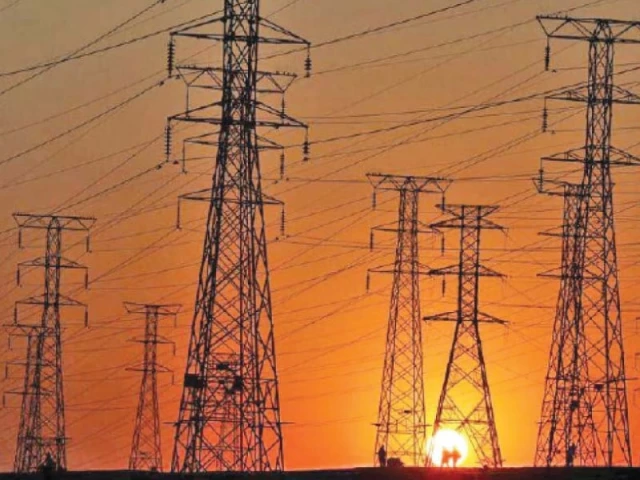
Senator Saleem Mandviwalla criticized Nepra, saying consumers were being charged for electricity neither produced nor used.
The Senate Standing Committee of the Cabinet Secretariat was informed that power consumers were billed Rs 220 billion for 14,000 megawatts of idle power, while a long-pending inquiry report into load shedding in Karachi was sought from the National Electric Power Regulatory Authority (Nepra) within two days.
According to a statement issued by the Press Information Department (PID), Karachi, the committee met at the Sindh Secretariat to review the solar net metering policy and other issues related to Nepra. The meeting was chaired by Senator Rana Mahmoodul Hassan and attended by committee members.
During the meeting, Senator Saleem Mandviwalla criticized Nepra officials, saying consumers were being charged for electricity that was neither produced nor consumed. “You are collecting 220 billion rupees from consumers for electricity that was never produced or used,” he said, adding that the fees were imposed because electricity consumption drops in winter.
Backing his remarks, Senator Abdul Qadir said despite repeated announcements in Parliament that electricity had become cheaper and assurances that audits of Independent Power Producers (IPPs) had been conducted, the situation had not improved. “Despite all these claims, the result is nothing. Electricity remains a problem for 250 million people,” he said.
He said Nepra had pending applications for new power connections amounting to 1,000 megawatts, with no clarity on progress. “Due to high energy prices, our exports are not increasing. You collect Rs220 billion in capacity fees – what are you doing with this money?” he asked.
Senator Abdul Qadir said the IPPs had “held the entire country hostage” and questioned the lack of a forensic audit to determine their real income.
Committee chairperson Senator Rana Mahmoodul Hassan said the committee unanimously recommended a forensic audit of PPIs. “How much new electricity is being added to the system and how many new power plants are being installed? he asked.
Senator Mandviwalla said a forensic audit would clarify how much electricity the IPPs produced, how much they supplied and how much they received from the government as capacity fees.
Senator Abdul Qadir said the audit should also examine the feasibility of the projects, land valuation, project cost, fuel consumption, machinery production and whether annual inspections of the power plant equipment were carried out.
Questioning the composition of electricity tariffs, Senator Mandviwalla asked what charges were included per unit and what role Nepra played. In response, a Nepra official said the tariffs included two elements: capacity charges and energy charges. “The capacity charges include all project costs and are not linked to electricity consumption. They cannot be reduced,” the official said, adding that out of 40 million consumers, only two million were using three-phase connections. He said increasing electricity sales was the only solution to capacity payments.
Senator Abdul Qadir said capacity payments were being made while people were not receiving electricity. He suggested introducing a special scheme for the industry, including sale of electricity at Rs 10 per unit in winter to boost consumption.
The Nepra official said that the governance and shareholding of the distribution companies was not within the authority of Nepra. “Nepra only regulates performance. Governance and sales are the responsibility of the distribution companies,” he said.
Speaking at the meeting, prominent Karachi businessman Zubair Motiwala said electricity bills remained high due to fuel adjustment surcharges and quarterly circular debt adjustments. “Even if the unit price goes down, the bill remains the same,” he said.
He said Nepra had issued several orders against K-Electric, but the courts had issued stay orders for all of them. “The company with the highest number of stay orders in the country is K-Electric,” he said.
Motiwala said the industry could not operate under such conditions and warned that companies would be forced to install alternative electrical systems. He said the country had an installed capacity of 42,000 megawatts, of which only 28,000 megawatts were operational, but consumers were being billed for 14,000 megawatts of idle capacity.
Referring to solar net metering, he said Nepra was now encouraging higher electricity consumption to increase sales. “If this is the policy, then why are peak hour fares still being charged? he asked.
He said circular debt increased by Rs79 billion between July and September. “They say sales have declined, so prices should be increased,” he said, adding that major exporters had already shifted to wind power systems and warning that a time could come when no electricity would be purchased from the grid.
Sindh Assembly member Shariq Jamal said consumers who pay their bills were punished for electricity theft and non-payment by others. He added that even though 12-hour load shedding was officially announced, outages often lasted 18 to 20 hours. “In winter, there are 20 hours of load shedding. What will happen in April and May?” he asked.
He alleged that the managing director of K-Electric had publicly stated on television that he would pay a fine of Rs 50 million but would not supply electricity.
The MPA urged the committee to increase fines on power companies from millions to billions of rupees and called on Nepra to hold public hearings in areas affected by load shedding. “Nepra has the power to convene K-Electric and hear the public,” he said.
Jamal said 30 million rupees were paid to the Sindh government on the same day to exempt a public hospital from load shedding, while in interior Sindh, faulty PMTs often remained unrepaired for months.
Motiwala said Nepra had conducted an investigation into load shedding in Karachi but had not published its findings for two years. In response, Senator Rana Mahmoodul Hassan ordered Nepra to submit the report within two days, saying it would be shared with members of the provincial assembly and the Karachi Chamber of Commerce.
Motiwala also said that K-Electric held Rs 46 billion in consumer deposits.
Senator Abdul Qadir suggested that all MPAs write to the chairman of the committee, requesting that these letters be forwarded to the Chief Justice of Pakistan and the Chief Justice of the Sindh High Court to raise public concerns regarding the stay orders granted to K-Electric.


