
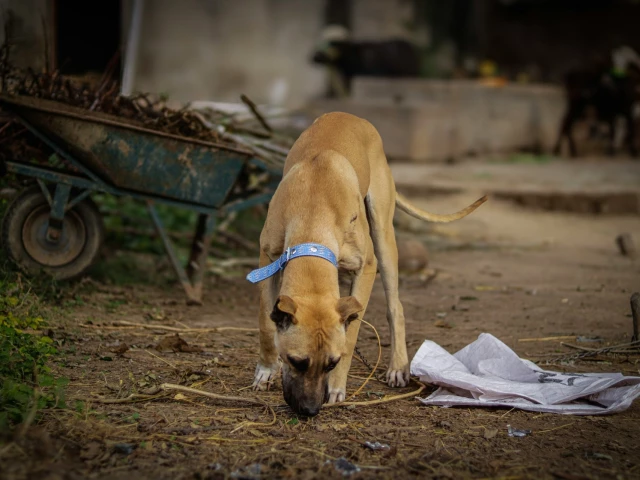
Data indicates that 150,000 people in Punjab were bitten by dogs in the last six months.
LAHORE:
The growing population of stray dogs in Punjab has become a major concern for public safety and animal welfare, as incidents of dog bites rise alongside reports of inhumane killings, highlighting gaps in the implementation of existing policies.
In a recent case, Yasir Khan, a father of four from Umerkay Kalan in Sambrial tehsil, Sialkot, allegedly died after being bitten by a stray dog. Official data indicates that nearly 150,000 people in Punjab have been bitten by dogs in the last six months.
Residents say packs of stray dogs pose a growing threat to daily life. Farah Shehzad, a resident of Garhi Shahu, said, “Stray dogs roam in packs. Children and adults cannot go out of their homes safely.” Asifa Khan of Canal Road added: “Killing dogs is not a solution. The government must take effective and permanent measures to control their population.”
Read: The slaughter of a stray dog places the CDA in difficulty
Animal rights organizations highlight the Trap, Neuter, Vaccinate and Release (TNVR) policy, approved by the Punjab government in 2022, as a science-based approach to controlling stray dogs. “The purpose of TNVR is to protect citizens from dog bites and rabies,” said Aiza Haider, an animal rights activist. She added that the poor implementation of this policy contributed to public anger and the continued use of inhumane methods.
Dr Talha Yazdani, deputy director of Punjab Livestock Lahore and veterinarian at Burki Veterinary Hospital, said, “In the last few months, 300 dogs have been sterilized and 250 vaccinated at our center. Getting stray dogs out of the field is the responsibility of local governments, but dogs run away as soon as they see nets. The use of dart guns should be allowed to put them to sleep, as is the case with wild animals.”
He also explained that the increase in the urban dog population is linked to breeding patterns: “A male dog can mate with several females in a single season. Sterilizing male dogs could be a more practical and cost-effective approach.” Dr Yazdani highlighted the public health aspect, noting: “Pakistan has committed to becoming rabies-free by 2030, making large-scale vaccination of stray dogs inevitable.”
Learn more: LHC enables culling of stray dogs with humane methods
Earlier, in a landmark ruling, the Lahore High Court banned the killing of stray dogs by shooting, poisoning or other inhumane methods, declaring such actions illegal and unconstitutional across Punjab. The judgment prompted the provincial government to implement the Animal Birth Control (ABC) Policy 2021, which provides for the humane capture, vaccination, sterilization, tagging and release of stray dogs.
Dr Haider Ali Khan, spokesperson for the Livestock and Dairy Development Department, said municipal staff would capture the dogs and transport them to veterinary centers for sterilization before returning them to their localities.
Despite the Lahore High Court’s ban on the killing of stray dogs, complaints continue across the province about dogs being poisoned or shot. Experts and citizens say the problem requires scientific, human and political interventions rather than reactive measures, to ensure public safety while respecting animal rights.


