
ISLAMABAD:
The Ministry of Water Resources told the National Assembly that India’s continued silence on the Indus Water Treaty was attracting increasing international attention.
In a written reply submitted to the lower house, the ministry said India had unilaterally suspended the 1960 river-sharing treaty in April 2025 after a militant attack in held Kashmir.
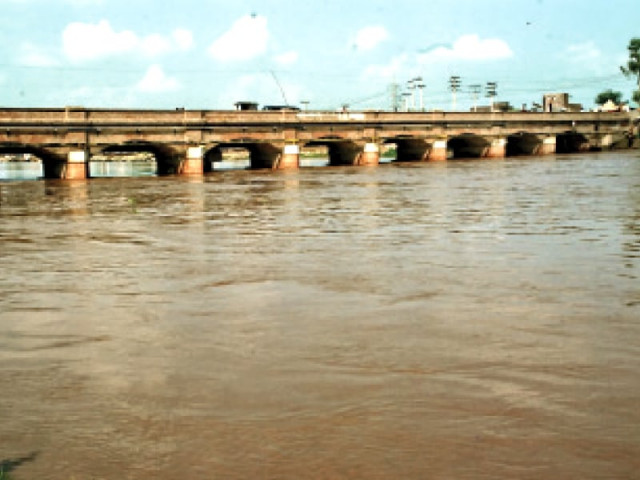
According to the ministry’s response, due to non-availability of water in the Chenab River, around 1.45 million acres of agricultural land located under the Upper Chenab Canal originating from the Marala Dam will be seriously affected.
Similarly, around 3.19 million acres of agricultural land located under the Chenab canal from the Khanki main works will be seriously affected.
Currently, the annual water availability per capita stands at 819 cubic meters. In 1951, per capita water availability exceeded 5,000 cubic meters.
By 2030, per capita water availability is expected to decline further to 744 cubic meters. This situation could give rise to serious social and economic challenges.
On Wednesday, the NA session began under the chairmanship of Vice President Syed Ghulam Mustafa Shah. The session started half an hour late.
Instead of addressing the concerns of Pakistan and UN experts over the suspension of the Indus Waters Treaty (IWT), India chose to remain silent.
The UN special representatives had asked India to respond to its actions regarding the IWT by December 16, 2026. However, even 34 days after the deadline was announced, no response has been received from New Delhi.
Five UN special rapporteurs and an independent expert examined India’s military response to the April 22 Pahalgam attack and the broader legal and humanitarian consequences of its actions in a report written on October 16, 2025 but released on December 15, 2025.
Experts have warned that any disruption to the implementation of the treaty could have serious consequences for the rights of millions of people in Pakistan who depend on the Indus river system for their drinking water, agriculture, food security and livelihoods.
Under the IWT, the three eastern rivers – River Beas, River Ravi and River Sutlej – were allocated to India while the three western rivers – River Indus, River Chenab and River Jhelum – were allocated to Pakistan.
In December 2025, Pakistan formally contacted India over its water aggression, seeking an explanation for an unusual reduction in the flow of the Chenab River.
“Pakistan seeks explanation from India over the unusual reduction in the flow of the Chenab River,” the Office of the Pakistani Indus Water Commissioner said in a Dec. 12 statement.
According to the press release, hydrological surveys in the first half of December confirmed that an extraordinary reduction in flows was observed at the Chenab River, persisting from December 10 to 16.
During this window, the river flow frequently declined and the lowest flow observed was 870 cusecs, which was significantly below the 10-year historical minimum range of approximately 4,018 to 4,406 cusecs for these dates.
“In order to assess the reason for the extraordinary reduction in flows from Chenab Main to Marala, a significant reduction in the area of Baglihar was observed on satellite imagery of December 8, 2025 which was augmented as per the imagery of December 13, 2025,” it said.


