
“By joining, Pakistan contributes, alongside other Muslim nations, to supporting peace in the region”
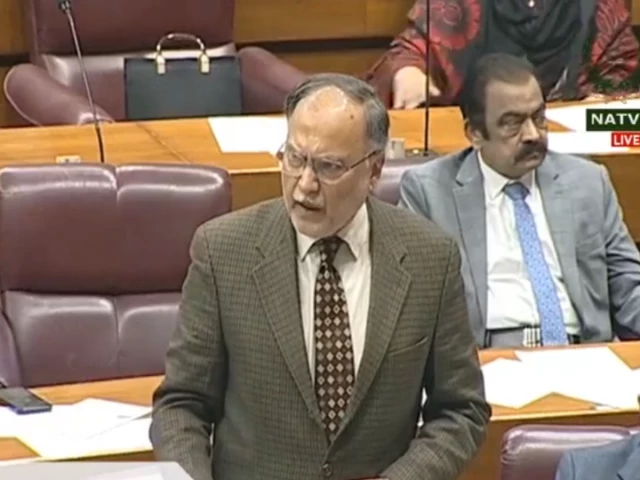
Minister of Planning and Development Ahsan Iqbal speaking at the National Assembly PHOTO: YouTube/National Assembly of Pakistan
ISLAMABAD:
Planning Minister Ahsan Iqbal on Friday responded to remarks by JUI-F leader Maulana Fazlur Rehman, defending Pakistan’s decision to join the Peace Council and stressing that the country’s participation strengthens efforts to support peace in Gaza and the Muslim world at large.
Pakistan accepted Trump’s invitation a day ago to join his Peace Council, a new international mechanism aimed at supporting the implementation of the Gaza Peace Plan. The Foreign Ministry did not provide details on the composition of the Peace Council or its operational arrangements, but officials said the forum was expected to play a facilitating role in coordinating ceasefire agreements, humanitarian aid and post-conflict reconstruction, while supporting a broader political track under UN auspices.
The signing ceremony of its charter was held yesterday in Davos.
Speaking in the National Assembly, Iqbal reaffirmed Pakistan’s principled stance towards Israel, saying: “Israel is a brutal country, and there is no change in this principled stance. Pakistan has set an example of independence and sovereignty. The United States has made five appeals to prevent nuclear explosions, but we decided with courage, despite the whole world. We are the guardians of Pakistan’s security and sovereignty.”
He said Pakistan’s “heart is torn” over Gaza, adding: “If Pakistan had not participated in the Peace Council, they would have said Pakistan was alone.” » By joining, the country contributes alongside other Muslim countries, including Saudi Arabia, Turkey, Qatar and the United Arab Emirates, to support peace in the region.
Read: Authorities deny deployment of Pakistani troops in Gaza
Further, he said, “With the PML-N in power, no one can cast a malicious eye on the security and stability of Pakistan. It is easy to make speeches in the cool and heated halls of the Assembly, but we criticize the actions celebrated by the Palestinian people.”
He added that Pakistan’s important role today represents a diplomatic success, noting: “Saudi Arabia, Turkey, Bahrain and the United Arab Emirates are not only Muslim nations, but also Pakistan’s closest allies, offering the country a chance to contribute to peace in the Muslim world.”
During Thursday’s National Assembly session, JUI-F leader Maulana Fazlur Rehman criticized the government for joining the Peace Council without consulting the National Assembly. He said Trump formed the board according to his own wishes, deciding its composition himself and remaining the president. “If we then associate hopes of peace, economic stability and a better future for the Palestinians with such a council, it would only be deceiving ourselves,” he said.
He also questioned Pakistan’s foreign policy, saying it had been shaped under external pressures and that the country had never pursued policies based on its own national interests. He further questioned whether the current leadership was following Quaid-e-Azam’s stance towards Israel, recalling that Muhammad Ali Jinnah had called Israel an “illegitimate state”.
Learn more: Fazl, PTI criticize govt’s decision to join Trump Peace Council without parliamentary input
The JUI-F leader also questioned whether the National Assembly had been consulted on the issue. “You’re supposed to represent 250 million people there. Have you even considered taking this House into confidence for a moment?” he asked, adding that although he did not consider the Assembly to be a true representative of the people, it nevertheless claimed this status.
Describing the problem as serious, he said no importance was being given to the Assembly and all its seats were indeed vacant. He also questioned whether the decision had been presented to cabinet, describing it as the executive arm of government. “Even the cabinet was not taken into confidence,” he added.
The Pakistan Tehreek-e-Insaf (PTI) also rejected the government’s decision, saying it was international in scope and should not have been taken without transparency and wide-scale political consultation. In a statement released on the


