
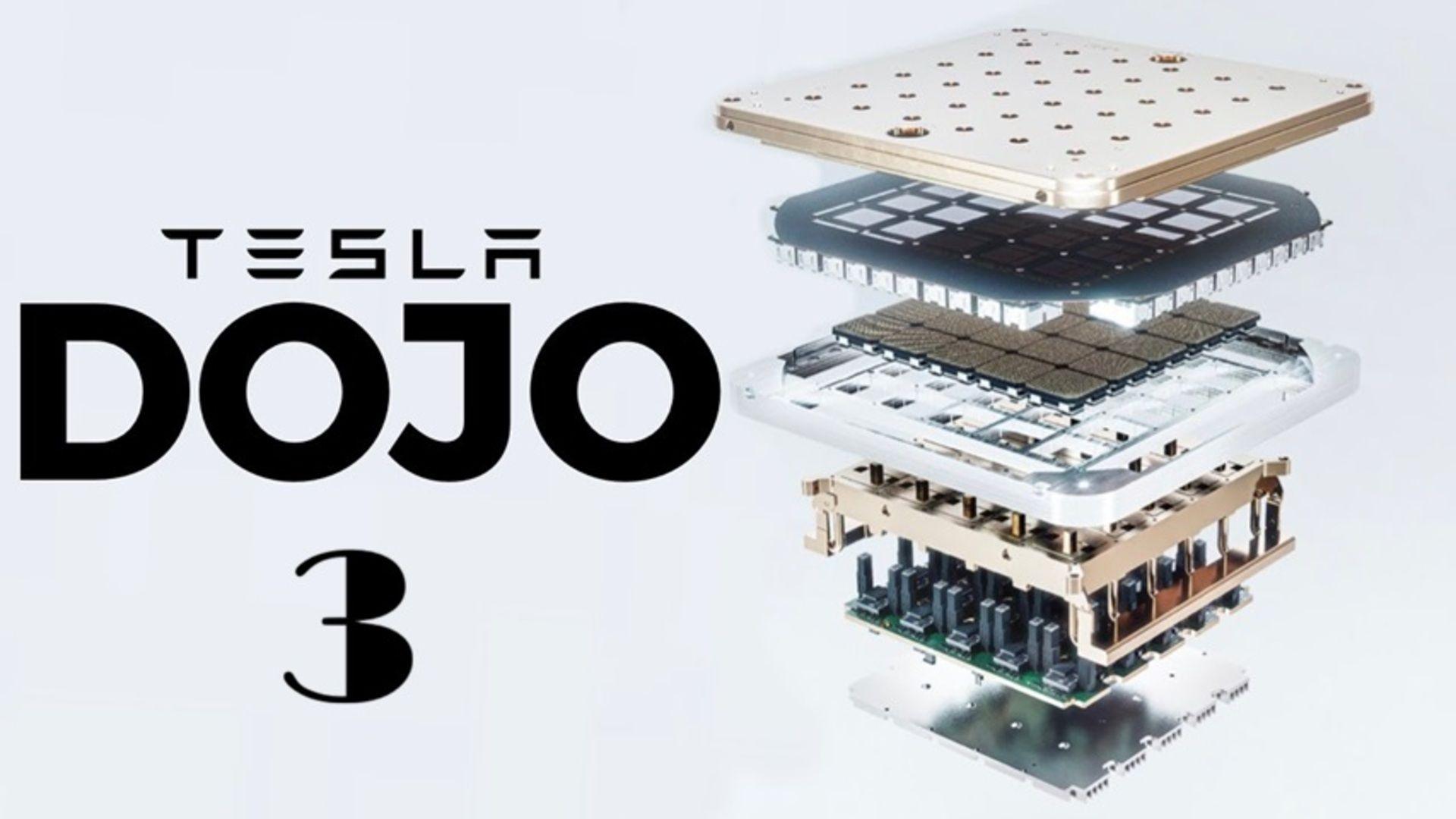
- Tesla restarts Dojo 3 after previous supercomputer projects failed to meet expectations
- AI5 chip performance would rival Nvidia Hopper while consuming less power
- Future chips, AI6 and AI7, should experience gradual technical evolution
Tesla has restarted development of its Dojo 3 supercomputer project after scrapping or abandoning earlier versions.
Elon Musk confirmed the decision on X, directly linking the reboot to progress on Tesla’s in-house AI5 chip.
The Dojo’s previous efforts failed to live up to expectations, with Dojo 1 quickly losing relevance compared to Nvidia and Dojo 2 systems are canceled before the end.
Now that the AI5 chip design is in good shape, Tesla will restart work on Dojo3. If you’re interested in working on what will be the largest volume of chips in the world, send a note to [email protected] with 3 chips on the toughest technical problems you’ve solved.January 18, 2026
Tesla reboots Dojo 3 with ambitious in-house AI chips
Dojo 3 is being touted as an attempted recovery rather than a clear breakthrough, as Tesla says the technical foundations are now strong enough to justify reallocating engineers and capital to the project.
Dojo 3 is expected to be Tesla’s first supercomputer built entirely on in-house hardware, without relying on Nvidia components.
Dojo had already designed a mixture of Tesla silicon with external components GPU products, limiting differentiation and control, while the new approach aligns chip design, system architecture and software under one roof.
Tesla has openly recruited engineers to increase chip production, signaling its mass manufacturing ambitions.
At the heart of Dojo 3 is Tesla’s plan to release custom AI chips every nine months, although this will likely test the company’s resolve.
In terms of application, the AI4 and AI5 chips are related to autonomous development and humanoid robotics, and AI6 is related to Optimus and large-scale data center deployments.
Future iterations, including AI7, are already planned, although expectations point to incremental evolution rather than radical redesigns.
Beyond vehicles and robots, the supercomputer could support Tesla’s broader ecosystem of AI tools, including training models that compete with established cloud providers.
These claims place Dojo 3 in direct competition with mature AI infrastructure providers.
According to social commentator Nic Cruz Patane, “Tesla’s chipset is no joke,” noting that the AI5’s performance is roughly comparable to Nvidia’s Hopper on a single chip, approaches Blackwell levels when paired together, and runs at around 250W compared to the H100’s 700W or Blackwell’s 1,000W+ with full specs.
Tesla says its chip designs deliver similar power at lower power, but maintaining the planned release cycle will test its discipline and consistency of execution.
Its technical promises are ambitious and financially focused, especially given the rising cost of external AI hardware.
Dojo 3 could reduce Tesla’s reliance on third-party silicon, but success will require consistency that previous projects lacked.
Follow TechRadar on Google News And add us as your favorite source to get our news, reviews and expert opinions in your feeds. Make sure to click the Follow button!
And of course you can too follow TechRadar on TikTok for news, reviews, unboxings in video form and receive regular updates from us on WhatsApp Also.


