
Reduced transport costs of Rs9; Export Financing Program rate reduced to 4.5 percent
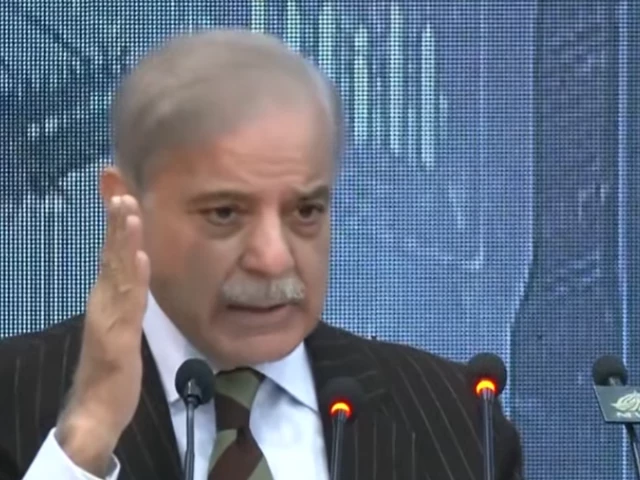
Prime Minister Shehbaz Sharif speaking at the ceremony honoring Pakistan’s top businessmen and exporters in Islamabad PHOTO: YouTube/PTV
Prime Minister Shehbaz Sharif on Friday announced that electricity tariffs for the industrial sector have been reduced by Rs 4.04 per unit, transportation charges reduced by Rs 9 per unit and the Export Finance Scheme rate for exporters reduced from 7.5 per cent to 4.5 per cent.
Speaking at a ceremony in Islamabad in honor of Pakistan’s leading businessmen and exporters, the prime minister said: “If it were up to me, I would have reduced this amount by another 10 rupees, but my hands are tied.” »
The event was attended by Deputy Prime Minister Mohammad Ishaq Dar, federal ministers, entrepreneurs and other business leaders. Awards were given to the best exporters and business personalities for their performance in 2024 and 2025.
He highlighted that the measures are aimed at supporting Pakistan’s export sector and industrial growth, with the reduced rate of the Export Finance Program providing a substantial boost to businesses.
The announcement follows news that power consumers could face an additional 48 paisa per unit under the Fuel Cost Adjustment (FCA) for December 2025.
Read: Electricity tariff may increase by 48 paisa/unit
Data from the Central Power Purchasing Agency (CPPA) shows that electricity consumption increased by 22%, mainly driven by the industrial and agricultural sectors. Industrial usage increased from 2 billion units in December 2024 to 2.4 billion units in December 2025.
At a NEPRA hearing yesterday, industry representatives criticized the proposed increase, saying electricity prices are already high and further adjustments would harm competitiveness. One of them said: “Instead of reducing electricity prices, a hidden increase is imposed. The industry cannot survive with the current tariff structure.”
Power sector officials said FCA may increase in the short term, but quarterly adjustments are expected to decline, providing some relief in the coming months. They added that hydel power generation declines in winter, increasing dependence on expensive fuels, but improves in summer, helping to reduce FCA.


