
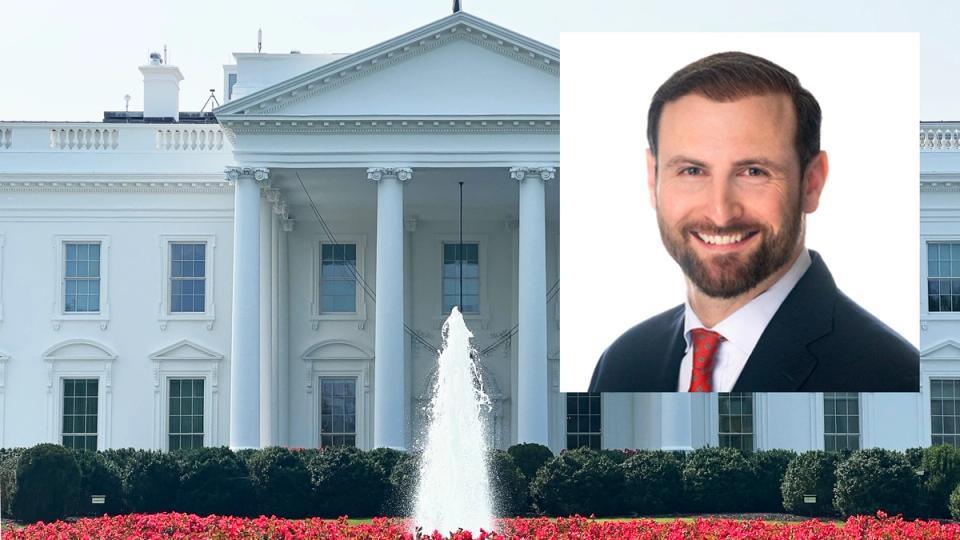
At a White House meeting held to melt the ice between crypto companies and Wall Street bankers, enthusiastic crypto insiders — who were vastly outnumbered by bankers — came away feeling like the banks were dragging their heels on reaching a deal on crypto market structure legislation.
The White House has given them all new marching orders, according to people familiar with the negotiations: reach a compromise on new language on stable coin yields before the end of the month.
The crypto industry’s top policy priority is still struggling to make progress in the U.S. Senate, and the longer it takes to get a vote in the full Senate, the less likely it is to happen this year.
Monday’s meeting – led by Patrick Witt, a crypto adviser to President Donald Trump – focused largely on whether stablecoins should be associated with yield and rewards. Policy experts from the crypto industry and Wall Street banks gathered in the White House Diplomatic Reception Room for more than two hours to discuss how to revise the bill’s most sensitive provisions, the sources said.
Discussions will continue with a smaller group, the sources said, and the White House has asked them to come to the table ready to agree on actual changes to the bill’s language. One of the people said bank representatives were members of trade associations and might need buy-in from their members before they could move forward with negotiations.
For their part, banking sector players said in a joint statement that they were ready to continue “to contribute to the development of a thoughtful and effective policy”.
“We must ensure that any legislation supports local lending to families and small businesses that drives economic growth and protects the safety and soundness of our financial system,” said the banking groups, including the American Bankers Association and the Financial Services Forum, which represents top Wall Street CEOs.
Despite the lack of an immediate compromise on returns, Cody Carbone, who leads the Digital Chamber that is pushing for crypto policy in Washington, called the meeting “exactly the kind of progress needed to find a resolution to one of the biggest issues blocking the next steps in legislative progress on market structure.”
“Inaction is not an option, and we are committed to rolling up our sleeves and working hard to ensure that legislative progress does not punish innovators or consumers who view digital assets as the foundation of their financial future,” Carbone said in a statement just after the meeting.
And another negotiator, Blockchain Association CEO Summer Mersinger, said Monday’s event was “an important step in finding solutions to achieve bipartisan legislation on the structure of the digital asset market, and we applaud it.” [crypto adviser] Patrick Witt and the administration’s leadership in bringing stakeholders together to address one of the key remaining issues: stable rewards.
On the crypto side, the meeting also included representatives from Coinbase, Circle, Ripple, Crypto.com, and the Crypto Council for Innovation.
Legislation governing US crypto markets has progressed through the congressional process, having passed the House of Representatives last year and approved by one of two necessary Senate committees last week. What remains is still a complex series of legislative steps, including passage through the Senate Banking Committee. It was the work of this committee that first highlighted the various points of separation in multi-party negotiations involving Republican and Democratic lawmakers, the crypto industry, bankers and the White House.
The debate over stablecoin yield is in conflict between the digital assets industry and traditional bankers, who argue that such yield could catastrophically compete with the deposit industry, which is the heart of U.S. banking and credit. But Democrats are also making other demands, including anti-corruption provisions targeting Trump’s crypto businesses, a requirement that the Commodity Futures Trading Commission be made up entirely of commissioners from both parties, and stronger protections against illicit financing to prevent the sector from contributing to crime.
Democrats’ push for an ethics provision to prevent top officials from profiting from crypto could be further complicated by a Wall Street Journal report that a United Arab Emirates intelligence chief secretly bought nearly half of Trump-linked company World Liberty Financial Inc.
As the White House hosted Monday’s meeting, the federal government had once again fallen into partial shutdown due to Congress’ inability to get a funding plan approved. This raises questions about how much work the White House and congressional staff can accomplish on these items when the doors of government are supposed to be closed. A currently negotiated plan is expected to come to an end Tuesday, which could reopen the government while leaving room for separate debate over Department of Homeland Security spending.
Trump urged House lawmakers to approve reopening the government without making further changes to the bill that would do so.
“We need to open the government, and I hope every Republican and Democrat will join me in supporting this bill and send it to my desk WITHOUT DELAY,” the president said in a social media post. “There can be NO CHANGE at this time.”
Read more: Crypto bill passes major milestone in US Senate despite opposition from Democrats
Nikhilesh De contributed reporting.
UPDATE (February 2, 2025, 9:22 p.m. UTC): Adds meeting details and comments from the Blockchain Association.
UPDATE (February 2, 2025, 10:32 p.m. UTC): Adds details on the composition of banking participants.
UPDATE (February 2, 2025, 10:46 p.m. UTC): Adds a declaration of banking groups.


