
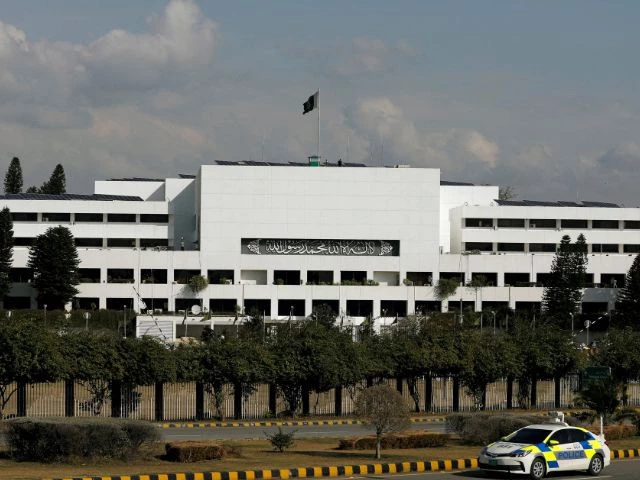
Lawmakers from all parties voiced concerns about activism and politics during a heated NA session.
ISLAMABAD:
The National Assembly continued debate on the security situation in Balochistan on Tuesday, with lawmakers from across parties questioning anti-terrorism responses, governance failures and policy direction, while unanimously passing resolutions condemning terrorism and expressing solidarity with the armed forces and victims.
Opening the debate, JUI-F MP Alia Kamran raised questions about official claims related to recent security operations, asking why responses to the attacks were delayed and what happened to the remaining terrorists if 177 had been killed. Stressing that her party does not support any form of terrorism, she called for a review of the factors pushing women in Balochistan to commit suicide attacks and urged the state to protect the youth of the province by addressing the root causes of militancy.
MQM-P MP Sofia Saeed said there should be no leniency towards terrorists or those who sympathize with them, adding that national unity against terrorism required an effective local government system.
Highlighting socio-economic grievances, JUI-F MP Usman Badini said the hostile forces had filled the vacuum created by the state’s failure to provide basic rights and opportunities to the youth of Balochistan. He questioned disparities in electricity supply, access to CPEC scholarships and the state’s response to coordinated attacks in several districts. He said denying these rights would provoke backlash and highlighted the lack of basic infrastructure, including fuel facilities, in much of the province.
The debate intensified when opposition MP and former National Assembly Speaker Asad Qaiser said terrorism in Balochistan and Khyber-Pakhtunkhwa could not be fought through convictions alone. He argued that when the state failed to act responsibly and ignored public grievances, alienation ensued.
Referring to political developments, he questioned the message sent by the continued imprisonment of what he described as the country’s most popular leader and said public trust in institutions, including the justice system, was eroding.
Qaiser also highlighted what he called political double standards, questioned foreign policy priorities and called for dialogue with neighboring countries, including Afghanistan. He said the opposition supported the National Action Plan but demanded inclusion and confidence building in security policy.
Read: Terror wave triggers call for troop build-up in Balochistan
MP Ijazul Haq, speaking later, questioned the effectiveness of measures against oil smuggling, wondering how the fuel continued to travel from border regions to major cities despite the presence of security forces. He alleged foreign involvement in Balochistan, raised concerns over supply of arms to terrorists and called for accountability over the use of development funds and the province’s share in the NFC award.
Recalling past insurgencies, Haq spoke of military operations and reconciliation efforts of previous decades, saying inclusive policies and blanket amnesties had previously resulted in prolonged peace. He called for the formation of a national advisory committee to address the crisis and called on the government to review its strategy.
After the debate, the House unanimously adopted a resolution condemning the recent terrorist attacks in Balochistan, terming them as inhumane crimes targeting innocent civilians, including women and children. The resolution commended the armed forces, law enforcement agencies, the Balochistan government and the civil administration for their response, expressed solidarity with the families of the martyrs and injured and called for zero tolerance and decisive action against terrorist networks.
The resolution said available evidence in several incidents pointed to external sponsorship, raised concerns about India’s alleged role and called for a coordinated national response incorporating political, diplomatic, military, intelligence and legal measures. He stressed that the fight against terrorism required cross-party unity and reaffirmed the state’s commitment to public and national security.
Besides, the assembly also unanimously adopted a resolution on the occasion of Kashmir Solidarity Day, reaffirming Jammu and Kashmir as an international dispute to be resolved in accordance with UN Security Council resolutions. The House condemned the human rights violations in Indian illegally occupied Jammu and Kashmir, rejected India’s unilateral actions of August 5, 2019, welcomed the recent debates in the British Parliament on the issue and urged the international community to play an active role in resolving the dispute.


