
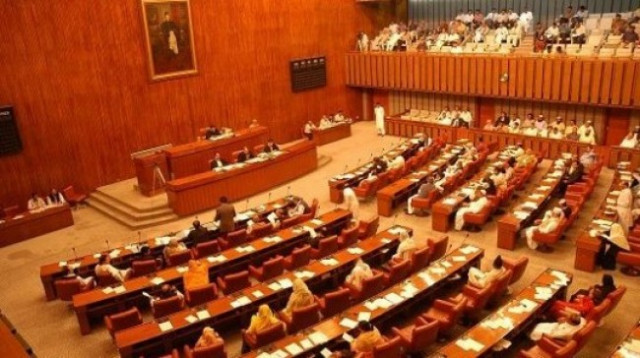
The upper house of Parliament on Friday made amendments to the Senate’s Rules of Procedure and conduct of business to limit “judicial interference” in parliamentary affairs, after rejecting a government request to postpone the matter.
A motion seeking amendment of Article 166(5) was moved by senators belonging to Pakistan People’s Party (PPP), Pakistan Muslim League-Nawaz (PML-N) and Muttahida Qaumi Movement (MQM).
During the session, PML-N’s Rana Sanaullah, special assistant to the prime minister on political affairs, conveyed Law Minister Azam Nazeer Tarar’s request that the motion not be taken up before discussing it with him.
However, PPP Senator Saleem Mandviwala, who initiated the move and chaired the session, said “court interference” in the deliberations of House committees was the reason behind the change. “We don’t want to delay it any further.”
Sanaullah questioned the urgency, to which Mandviwala replied that the functioning of the committees was affected. He said the amendment, unanimously approved by the relevant standing committee, was in the interest of the Senate and its committees.
Stressing that it was the wish of the House, Mandviwala said he had already discussed the matter with the Law Minister and the Attorney General of Pakistan (AGP). Sanaullah insisted that the matter be postponed until Monday, but Mandviwala did not budge.
Senator Abdul Qadir moved the motion, which was adopted by the House by a majority. Supporters of the amendment said the change would leave no legal room for the judiciary to interfere in parliamentary matters.
Rule 166(5) prohibited applications relating to matters within the jurisdiction of the courts or tribunals. The latest amendment expands the definition of public petitions that can be considered by Senate committees.
It states that a public petition submitted under Rule 277 may be presented on “any matter of public importance,” including grievances involving the public interest, systemic concern, regulatory oversight, or protection of rights.


