
According to him, the burden of the 466,000 solar energy users should not fall on the more than 37.6 million consumers who depend on the national grid.
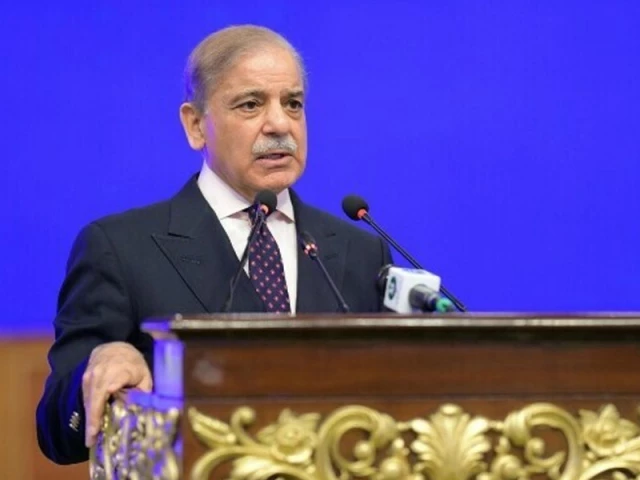
Prime Minister Shehbaz Sharif. Photo: File
Prime Minister Shehbaz Sharif on Wednesday asked the power division to immediately file an appeal with the National Electric Power Regulatory Authority (Nepra) to review the new solar regulations in a bid to protect existing contracts for current solar users, said a statement issued by the Prime Minister’s Office.
Nepra on Monday abolished the trading of electricity units in solar net metering and replaced it with a net metering framework under the Consumer Regulations 2026, drawing widespread criticism from politicians, former officials and energy experts, who say it will deter the adoption of rooftop solar and worsen inefficiencies in the power sector.
Currently, the feed-in rate for net solar generation is Rs 25.9 per unit, which can be reduced to Rs 11 per unit. The duration of the contract was reduced from seven to five years. The burden of capacity payments is now shifted to solar consumers.
Under the new rules, utilities will be required to purchase excess electricity from prosumers, households, businesses and industries generating up to one megawatt at the national average energy purchasing price, while reselling the electricity to them at the applicable consumer rate, thereby ending individual net metering.
A special high-level meeting, chaired by Prime Minister Shehbaz Sharif, was held in Islamabad today to discuss the release of the new regulations by Nepra.
The meeting was attended by Deputy Prime Minister and Foreign Minister Ishaq Dar, Federal Ministers Ahad Khan Cheema, Attaullah Tarar, Ali Pervaiz Malik, Sardar Owais Khan Laghari, State Minister Bilal Azhar Kiani, Privatization Advisor Muhammad Ali and other senior officials.
Read: The solar dream fades as net metering comes to an end
The Prime Minister stressed that the burden of the 466,000 solar energy users should not fall on the more than 37.6 million consumers who rely solely on the national grid. A comprehensive plan will be developed by the Energy Division to resolve this issue, the statement added.
The new buyback rate is yet to be officially notified, but was discussed at Rs11 per unit during stakeholder consultations. Net solar consumers will have to pay the net difference to the discoms once the unit trading scheme ends.
The policy will not apply to existing consumers, but after the contract expired, nightclubs were allowed to either terminate the agreements or switch users to the new policy framework.
The electricity regulator has overhauled the country’s net metering regime, moving rooftop solar and other small generators to a new ‘net metering’ system under the NEPRA (Prosumer) Regulations, 2026, fundamentally changing the way power producers are paid and repealing the decade-old framework.
Under the new rules, notified by Nepra on Monday, utilities will be required to purchase excess electricity from prosumers – households, businesses and industries generating up to one megawatt – at the national average power purchase price, while selling the electricity back to them at the applicable consumer tariff, thereby ending individual net metering.
Learn more: Energy minister defends decision to abolish net metering as legal amid Senate fury
The regulations apply to solar, wind and biogas systems and come into force immediately, replacing the Nepra Distributed Generation and Net Metering for Alternative and Renewable Energy Regulations, 2015.
Energy Minister Awais Leghari defended the move on Tuesday, saying: “This is a change in regulation, and it is the duty of the regulator to amend it in accordance with the law and the Constitution. »
He said this was not the first time the regulations had been changed. “NEPRA has not changed anyone’s agreement and we have not said anything to the existing 466,000 net metering consumers,” Leghari added.
The Energy Minister said the issue of net metering was not even part of the existing agreement. He said the government had told consumers that in future, anyone who installed solar power would be bought electricity at the revised tariff.


