
Interior minister reviews 85% completed facility, says new prison will provide comprehensive medical care amid health conflict in Imran
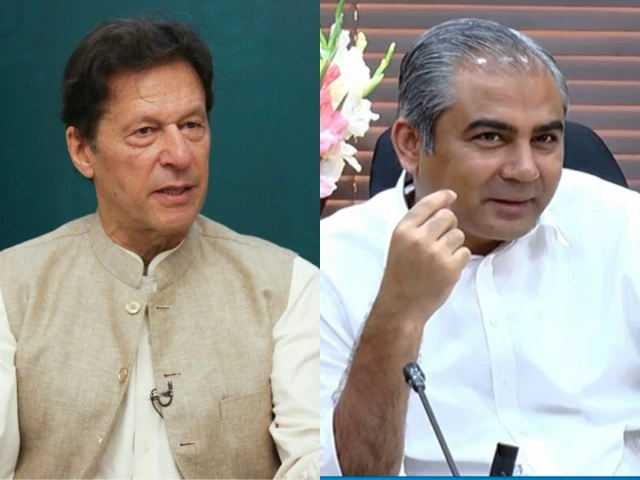
Combined image of Pakistani Tehreek-e-Insaf founder Imran Khan and Interior Minister Mohsin Naqvi. PHOTO REUTERS/RADIOPAK
ISLAMABAD:
Interior Minister Mohsin Naqvi on Friday said that Pakistan Tehreek-e-Insaf (PTI) founder Imran Khan may be transferred to Islamabad’s new model jail under construction.
The project, initially launched in 2011, has experienced continuous delays over the past 14 years. Its initial estimated cost of Rs 3.9 billion has increased to Rs 18.2 billion and is expected to cross Rs 20 billion by the end of January 2026. The Islamabad Model Prison is being constructed on 90 acres of land in Sector H-11. The prison should have a capacity to accommodate 2,000 inmates.
It was decided last year to partially activate the prison by December 31, 2025, by completing special barracks No. 3 as an emergency. The high security barracks were meant for the transfer of PTI founder and former Prime Minister Imran Khan from Adiala Prison, where he is staying. currently incarcerated. However, the special barracks could not be completed, once again delaying its transfer.
Speaking to the media after a visit to the under-construction jail, the interior minister was asked if Imran would also be transferred to the new facility, to which he replied: “If he has been convicted by Islamabad, then he will come here.” [sentenced in] Islamabad will be brought here.
About the prison facilities, Naqvi said it would have comprehensive medical facilities, including an advanced hospital. He said all facilities would be available in the new prison.
Naqvi’s remarks come amid a political storm surrounding Imran’s health. Earlier in the day, Parliamentary Affairs Minister Tariq Fazal Chaudhry said the government would not tolerate any negligence in Imran’s eye examination and medical treatment, adding that arrangements would be made wherever ordered.
Learn more: Islamabad Model Prison misses completion deadline, cost likely to exceed Rs20 billion from original Rs3.9 billion
PTI lawyer Salman Safdar on Thursday submitted a Supreme Court-mandated report after meeting the former prime minister in Adiala jail earlier this week. Imran informed Safdar that his right eye was now functioning at only 15 per cent capacity after undergoing a medical procedure at the Pakistan Institute of Medical Sciences last month.
Subsequently, a two-member bench comprising Chief Justice of Pakistan Yahya Afridi and Justice Shahid Bilal Hasan ordered that Imran be given access to his personal doctors in Adiala jail and be allowed to have telephone contact with his sons. The revelations about his eye condition sparked outrage among opposition ranks and other politicians.
The Tehreek-e-Tahaffuz-e-Ain Pakistan also staged a sit-in outside Parliament, vowing to continue the protest until Imran is admitted to a hospital in Islamabad. Protest leaders said no compromise would be made on the health of the PTI founder.
Inspection of prison facilities
The Home Secretary today visited the prison and the new National Police Academy trainee officers’ hostel, where he reviewed progress on key security infrastructure and training projects. Officials informed him that the jail project is now more than 85 percent complete in the first phase and is expected to become functional within two months.
Read: Damning SC report on Imran’s health fuels political storm
The facility will include two security walls, a digital surveillance system and a centralized control room. During his inspection, Naqvi visited the barracks and expressed satisfaction with the pace and quality of construction, ordering authorities to speed up the work through double-shift operations.
The Home Minister also inspected the model hostel room being constructed for assistant superintendents undergoing training at the National Police Academy, giving instructions to ensure high standard accommodation for police officers. He observed that improving infrastructure at the academy would improve the quality of police training nationally.
Designed to accommodate both convicted and undertrial prisoners, the facility includes large, separate barracks for female and juvenile inmates. It will also include a school for staff children, a 22-bed hospital for inmates and staff, a mosque, an imambargah, a church, a library and an auditorium.
The cost of the project skyrocketed due to persistent delays and sharply rising prices for construction materials. Over the years, numerous meetings regarding the project took place during the tenures of former prime ministers.


