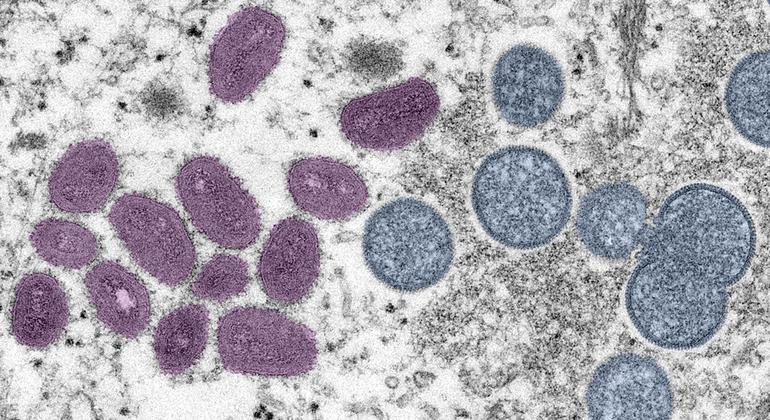
The WHO has confirmed that two cases of a recombinant strain – combining genomic elements from clades Ib and IIb of monkeypox virus (MPXV) – have been identified to date: one in the UK and one in India. Both patients had recently traveled and neither suffered serious illness.
No secondary cases were detected following contact tracing.
WHO has released a detailed update on the two cases and the national responses.
Recombination is a natural process This can happen when two related viruses infect the same person and exchange genetic material, producing a new variant.
According to the WHO, detailed genomic analysis shows that the two individuals “became ill several weeks apart with the same recombinant strain”, suggesting that other undetected cases may exist.
What is mpox?
Mpox is an infectious disease caused by monkeypox virus (MPXV), part of the genus Orthopoxvirus, which also includes the virus that causes smallpox.
It is spread through close physical contact, including sexual contact, and in some cases through contaminated materials or respiratory droplets.
Symptoms usually include fever, swollen lymph nodes, and rash and/or sores.
Click here for the WHO fact sheet on mpox.
Two cases detected
THE UK cases was detected in December 2025 in a traveler returning from a country in the Asia-Pacific region. Initial laboratory tests identified the virus as clade Ib, but full genome sequencing later revealed that it contained genetic regions from both clade Ib and clade IIb strains. Repeat sequencing confirmed the results and demonstrated that the virus “can replicate and has the potential for further transmission.”
In Indiaa patient who developed symptoms in September 2025 was initially classified as infected with clade II MPXV. However, following updates to global genomic databases, the virus has been reclassified as the same recombinant strain identified in the United Kingdom. The Indian case represents the first known detection of this strain.
“Due to the small number of cases discovered to date, conclusions on the transmissibility or clinical characterization of mpox due to recombinant strains would be premature, and it remains essential to remain vigilant in the face of this development“, said the WHO.
The clinical presentations in both cases were consistent with known MPox infections.
Risk assessment unchanged
WHO overall risk assessment remains unchanged: Risk is assessed as moderate for men who have sex with men with new and/or multiple partners and for sex workers or others with multiple casual sex partners, and low for the general population without specific risk factors.
At the same time, the WHO warned that clade differentiation PCR tests “may not reliably identify recombinant MPXV strains,” meaning genomic sequencing is essential for detection.
“All countries should remain alert to the possibility of genetic recombination of MPXV,” WHO said, calling for continued epidemiological surveillance, sequencing, vaccination of at-risk groups, and infection prevention and control measures.
The WHO has indicated that no travel or trade restrictions are warranted based on current information.