
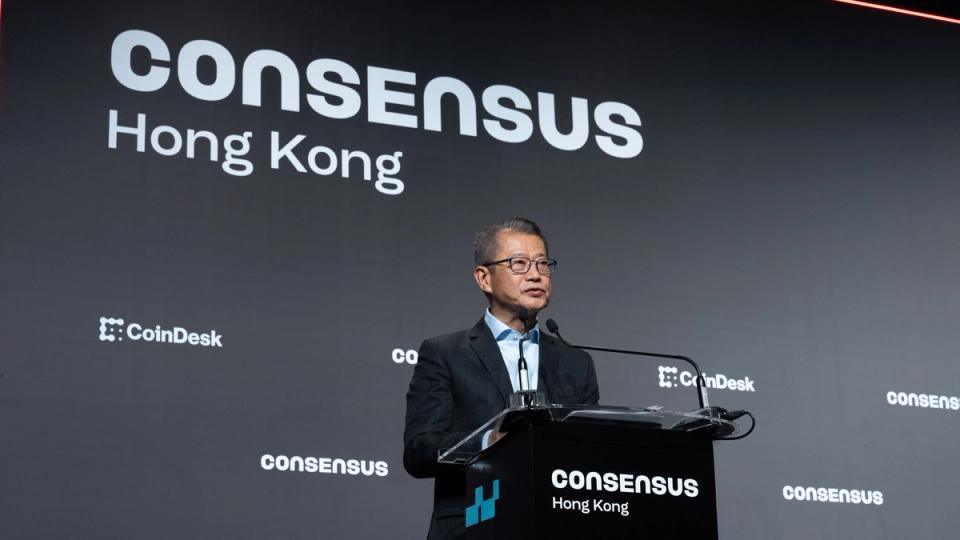
The Hong Kong Consensus ended on a high note as policymakers announced new initiatives aimed at growing the digital assets sector.
You’re reading State of Crypto, a CoinDesk newsletter that examines the intersection of cryptocurrency and government. Click here to subscribe to future editions.
The story
Policymakers at Consensus Hong Kong have announced a series of initiatives aimed at strengthening the local digital asset ecosystem.
Why it matters
From a philosophical perspective, the question of why we still care about this industry remains a priority. The consensus showed that despite sometimes ridiculous projects and unachievable hype cycles, companies still have real use for the technology.
Break it down
Hong Kong regulators are trying to encourage the growth of the local digital asset ecosystem, unveiling a framework for perpetual contracts and announcing that stablecoin licenses will be announced in the coming month.
“This certainty of direction gives many companies the confidence to invest in Hong Kong and continue their development,” said Jason Atkins, chief commercial officer at crypto trading firm Auros.
Although the Special Administrative Region of China is not yet close to approving all applicants and activities, the fact that regulators such as the Securities & Futures Commission and the Hong Kong Monetary Authority are willing to engage and adapt their approaches to digital assets is still significant, he told CoinDesk. They’re asking businesses what they should do to encourage investment, he said.
“We’ve been to the SFC several times, spoken with the HKMA in focus groups, panels and groups where they were literally trying to understand how our businesses operate and what we need to invest even more in the city, which is really positive,” he said.
Regulators have been engaging positively, trying to discern what businesses need to operate in the region. That involves asking whether certain regulations need to be adjusted to meet market needs, he said.
“So they are thinking about ways to relax them or make them lighter for certain types of categories of investors,” he said.
This fits with a broader trend of more traditional institutions wanting to get into crypto – or at least blockchain.
Several panelists, representing companies like Franklin Templeton and Swift, said they are using or exploring blockchain technology to streamline their operations. This is reminiscent of the “blockchain, not Bitcoin” era of 2018, but these entities are executing, rather than just announcing pilot projects.
The fact that a growing number of traditional entities are moving to blockchain could be the story of 2026, said Rodrigo Coelho, CEO of Edge & Node.
Companies are “rushing to figure this out,” he told CoinDesk. “Companies are looking for advice and expertise.”
Singapore Gulf Bank’s Shawn Chan described these types of rails as superior in terms of value transfer.
Although international regulatory hurdles must be overcome, he believes that businesses will increasingly adopt blockchain tools over the next decade.
This week
- Congress and federal regulators will not hold any crypto-related hearings this week.
If you have any ideas or questions about what I should discuss next week or any other comments you would like to share, please feel free to email me at [email protected] or find me on Bluesky @nikhileshde.bsky.social.
You can also join the group chat on Telegram.
See you next week!


