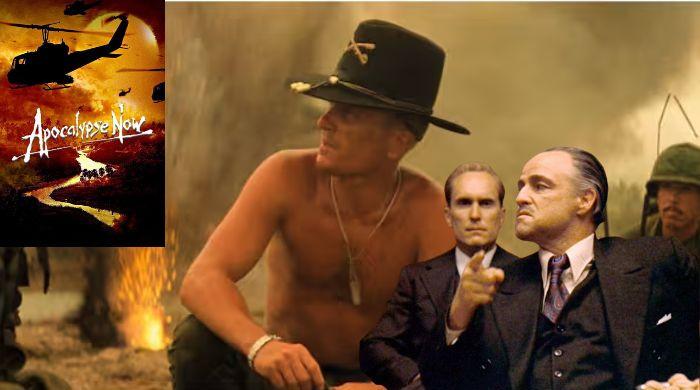
One of the most referenced and iconic lines of dialogue in cinema history that has truly taken on a life of its own is “I love the smell of napalm in the morning.”
These timeless lines were performed by Robert Duvall in Francis Ford Coppola’s 1979 Vietnam War classic. Apocalypse now.
It’s this frightening monologue that is once again causing buzz on social networks after the death of the Oscar-winning actor for Tender merciesdied at his home in Middleburg, Virginia, on Sunday, February 15.
Let’s find out why, decades later, the monologue has become one of the most quoted lines in cinema history.
So said Lt. Col. Bill Kilgore, a daring and eccentric cavalry officer, when he ambushed a Vietnamese village by helicopter.
Colonel Kilgore calmly reflects on the ashes left after the napalm bombing, finally accepting that it smells like “victory.”
The line is: “Napalm, son. Nothing else in the world smells like that. I love the smell of napalm in the morning. You know, one time we bombed a hill for twelve hours. When it was all over, I walked up. We found none, not a single stinking body of drink.
“The smell, you know, the smell of gasoline, the whole hill. It smelled…of victory.”
What follows is: “One day this war will end. »
It was a quiet introspection into what war takes and steals from human lives.
Why does the line continue to resonate?
The dialogue took on a life beyond the film, becoming a symbol of glorification of the chaos, dark irony and arrogance of the battlefield.
Cultural critics refer to it in pop culture, memes, viral trends, and television shows, often using it with a taste of sarcasm to introspect obsession, destruction, or self-indulgence.
Above all, Robert Duvall’s iconic performance in the film, particularly in the immortal sequence, has remained engraved in the memory of moviegoers, as long as the shadows of war continue to hover over our planet.