
A new Q4 2025 survey from tokenization platform Brickken suggests that the majority of real-world asset (RWA) issuers are using tokenization to raise capital rather than unlock liquidity in the secondary market, according to a report shared with CoinDesk.
Of those surveyed, 53.8% said capital formation and fundraising efficiency were the main reason for tokenization, while 15.4% said the need for liquidity was their main incentive. 38.4% said liquidity was not needed, while 46.2% said they expected secondary market liquidity within six to 12 months.
“What we are seeing is a shift from tokenization as a buzzword to tokenization as a financial infrastructure layer,” Jordi Esturi, chief marketing officer at Brickken, told CoinDesk. “Issuers are using it to solve real problems: access to capital, investor reach and operational complexity.”
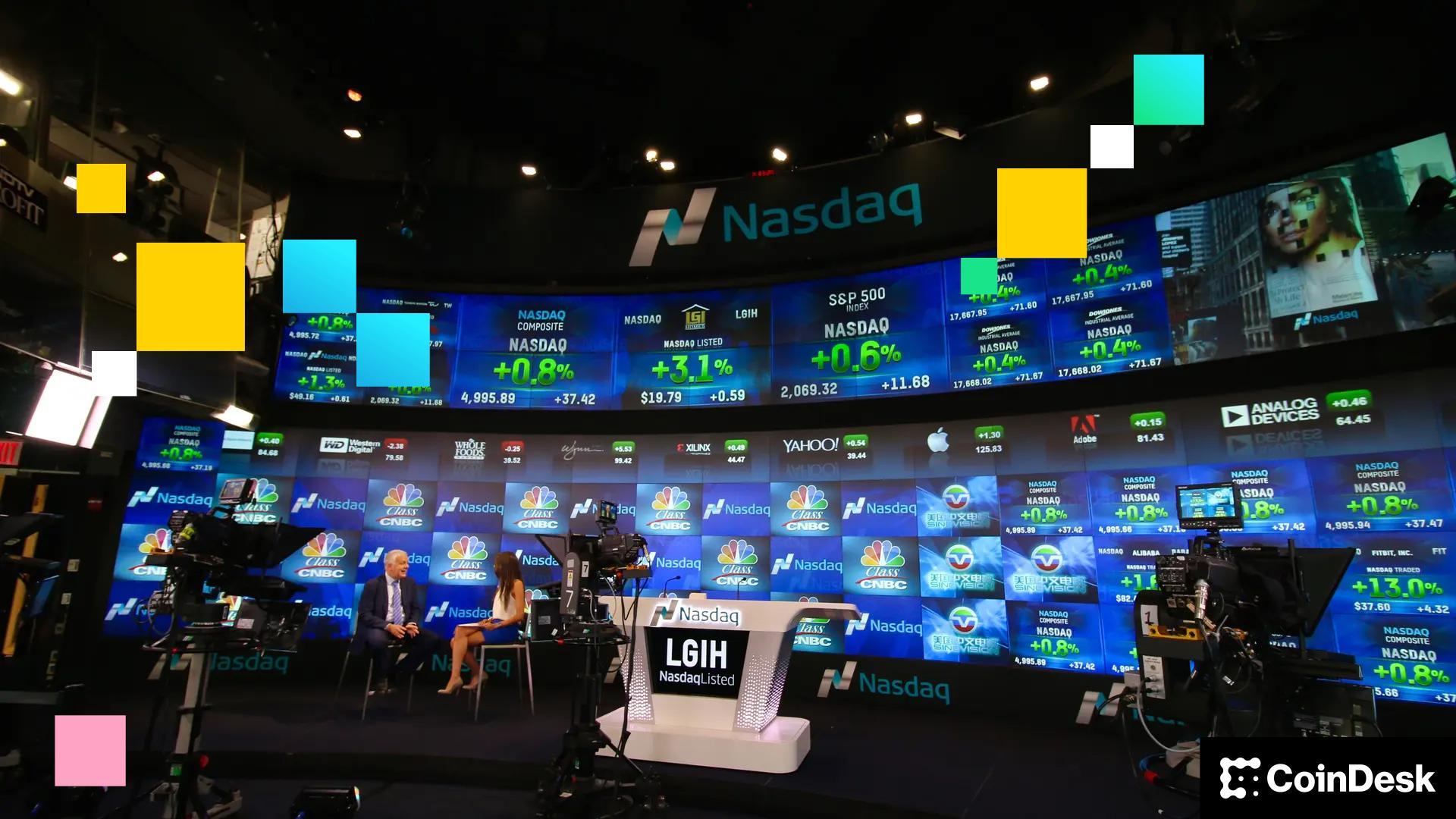
Brickken’s report comes as major US exchanges announce plans to expand trading models for tokenized assets, including 24/7 markets. CME Group said it would offer 24-hour trading for its crypto derivatives by May 29, while the New York Stock Exchange (NYSE) and Nasdaq shared plans to offer 24/7 tokenized stock trading.
Esturi said the exchanges’ plans have more to do with the evolution of the business model than with a disconnect from issuer demand. “It’s less about anticipating demand than about changing the economic model of the stock exchanges,” he said. “Exchanges increase revenue by increasing trading volume, and extending trading hours is a natural lever.”
At the same time, many issuers are still in what he described as the validation phase, during which they verify regulatory structures, test investor appetite and digitize issuance processes. “Liquidity is not yet their primary focus as they are building foundations,” he emphasized, adding that they view tokenization as “the upstream engine that powers trading platforms.”
Brickken’s CMO also said that without compliant, structured and high-quality assets entering the market, secondary trading platforms have nothing meaningful to trade. “The real value creation happens at the emission level,” Esturi noted.
Optional versus mandatory liquidity
While 38.4% of issuers surveyed said liquidity was not required, Esturi highlighted the difference between “optional liquidity and mandatory liquidity,” noting that many private market issuers operate on long-term horizons. “Liquidity is inevitable, but it must evolve alongside issuance volume and institutional adoption, not before. »
Ondo, which started with tokenized U.S. Treasuries and now has more than $2 billion in assets, focuses on stocks and ETFs specifically because of their “strong price discovery, deep liquidity and clear valuation,” said chief strategy officer Ian de Bode in a recent interview with CoinDesk.
“You tokenize something either to make it easier to access or to use as collateral,” de Bode said. “Stocks are a good fit for both, and they’re priced for assets that people actually understand, unlike a building in Manhattan. If TradFi goes 24/7, that’s a bargain,” de Bode added. “It’s our biggest bottleneck.”
The survey shows that tokenization is already operational for many participants: 69.2% of respondents said they have completed the tokenization process and are online, 23.1% are in progress and 7.7% are still in the planning phase.
Regulation remains a problem
Regulation is a top concern among respondents: 53.8% of respondents said regulation slows down their operations, while 30.8% reported partial or contextual regulatory friction. In total, 84.6% experienced some level of regulatory drag. For comparison, 13% cited technological or development challenges as the most difficult part of tokenization.
“Compliance is not something issuers have to deal with after launch; it is something they consider and configure from day one,” said Alvaro Garrido, founding partner of Legal Node. “We are seeing a growing demand for legal structures tailored to the specific needs of the project and the underlying technology. »
The report also suggests that tokenization extends beyond real estate. Real estate accounted for 10.7% of assets tokenized or planned for tokenization, compared to 28.6% for equity/equity and 17.9% for intellectual property and entertainment assets. Respondents span sectors such as technology platforms (31.6%), entertainment (15.8%), private credit (15.8%), renewable energy (5.3%), banking (5.3%), carbon assets (5.2%), aerospace (5.3%) and hospitality (5.2%).
“The real bridge between TradFi and DeFi is not ideological,” said Patrick Hennes, Head of Digital Asset Services at DZ PRIVATBANK. “It is an issuance infrastructure that translates regulatory requirements, investor protection and asset management standards into programmable systems.”


