
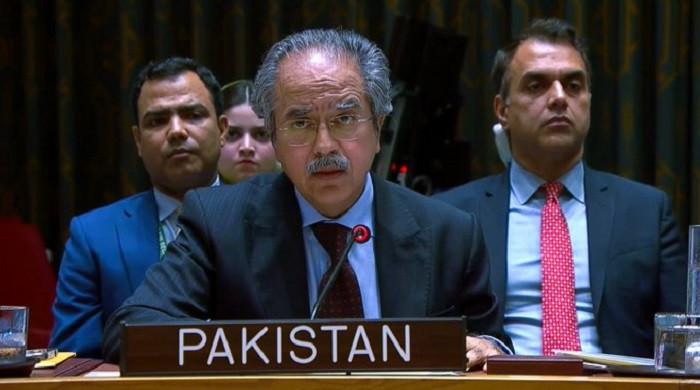
- The Envoy says funding shortfalls could affect troop readiness and rapid deployment.
- Pakistan has deployed 250,000 personnel in 48 missions over six decades.
- Reform must make missions agile while protecting civilians.
NEW YORK: Pakistan’s permanent representative to the United Nations, Ambassador Asim Iftikhar Ahmad, has warned that peacekeeping operations are being directly undermined by a growing UN liquidity crisis, which has also drawn stern warnings from UN Secretary-General Antonio Guterres.
Earlier this month, Guterres said the world body could face “imminent financial collapse” unless member states pay their dues in full and on time or revise budget rules that require the UN to return unspent funds even when it is short of cash.
At the end of 2025, the UN had a record $1.57 billion in unpaid dues, a deficit that threatens program delivery and peace operations globally.
Ambassador Iftikhar, speaking at the opening of the Special Committee on Peacekeeping Operations, warned that the financial gap was affecting the execution of mandates, the protection of civilians, deterrence against violence and the security of peacekeepers.
“UN peacekeeping operations remain an indispensable instrument for maintaining international peace and security, but they face increasing political, operational and financial pressures that require collective action,” the ambassador said.
Recalling Pakistan’s contribution, the Ambassador said, “The country hosts one of the oldest United Nations peacekeeping missions, the United Nations Military Observer Group in India and Pakistan, and has been among the largest and longest-serving troop contributors for over six decades.
Paying tribute to the 182 Pakistani peacekeepers who lost their lives under the UN flag, he said more than 250,000 Pakistani peacekeepers had served in 48 missions across four continents.
The envoy warned that declining financial commitments and reducing missions without clear strategic direction could affect the readiness of troop-contributing countries, including standby arrangements, rapid deployment capabilities and specialized units.
Calling reform necessary, he said peacekeeping must become more agile, more focused and better equipped to deal with changing threats, including through technology and stronger partnerships.
He stressed that protecting civilians, deterring violations, and monitoring and verifying the ceasefire remain essential tasks, adding that the lack of political progress should not serve as a pretext for withdrawing missions.
What is the UN chief asking member states?
Without naming the United States, U.N. spokesman Stéphane Dujarric said earlier this month that the U.N.’s “cash flow problem” could be resolved if member states, which have an obligation to pay, paid.
The crisis comes as US President Donald Trump launched a “Peace Council” of which he himself is president for life, which some fear could undermine the UN, a body of 193 member states formed in the ashes of World War II that works to maintain international peace and security.
Under Trump, in addition to refusing to make mandatory payments to the UN’s regular and peacekeeping budgets, the United States reduced voluntary funding of UN agencies from its own budgets and moved to withdraw from American organizations, including the World Health Organization.
In December, the UN called for a 2026 aid budget of only half of what it had hoped for in 2025, acknowledging a drop in donor funding at a time when humanitarian needs have never been greater.
Guterres last year launched a reform task force, UN80, seeking to cut costs and improve efficiency. The approved regular budget for 2026 is about $200 million higher than what he proposed, but about 7 percent lower than the approved 2025 budget.
Guterres warned in his letter that the UN could run out of cash by July and cited a “Kafkaesque” demand that it re-credit hundreds of millions of dollars in unspent debts to states every year, even though it never received the money. U.N. officials hope to revise the “bizarre” rule, which Guterres called a “race to bankruptcy.”


