
- Writing a full 4.8TB glass disk takes more than 18 days — much too slow for daily operations
- Cheaper borosilicate glass reduces costs but cannot solve practical limitations
- Microsoft’s statement signals closure rather than commitment to future development
Microsoft has proposed a new update to Project Silica, its long-running effort to store digital information in glass plates for centuries.
The company says new research published in Nature shows that borosilicate glass – similar to the material used in oven doors and Pyrex glassware – can retain data much longer than conventional archiving systems such as hard drives, SSDs or magnetic tape.
Laboratory tests suggest a viable lifespan of over 10,000 years, far beyond the limits of current physical storage media.
Innovating with borosilicate glass
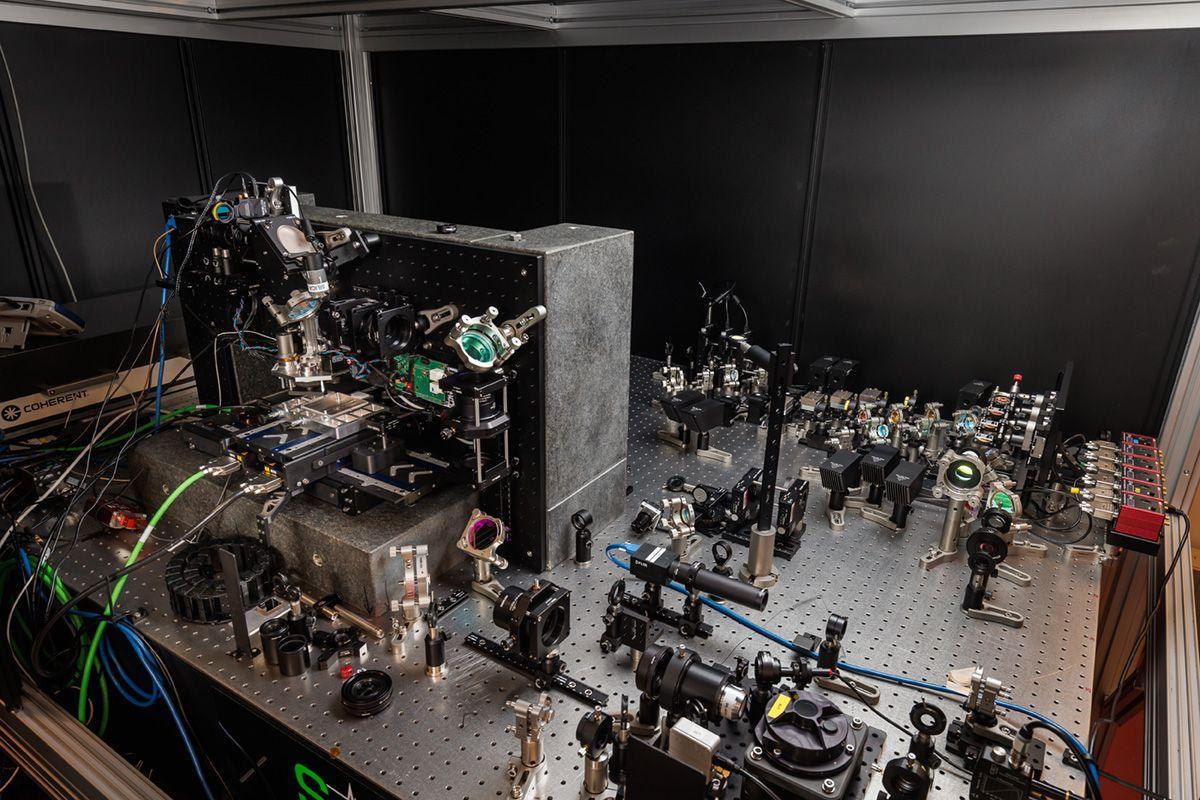
The concept relies on femtosecond lasers that encode data as three-dimensional microscopic structures called voxels inside the glass.
Previous experiments depended on expensive fused silica, which limited practicality, storing 4.84 TB per 2 mm thick wafer.
The latest work replaces this material with cheaper borosilicate glass while maintaining long-term durability.
Microsoft reported encoding 258 layers of data totaling approximately 2.02 TB on a 2mm thick plate.
The company achieved write speeds ranging from 18.4 to 65.9 Mbps, depending on the number of parallel laser beams used.
This maximum speed is higher than the 25.6 Mbps previously achieved with fused silica, although the density of borosilicate is less than half that of fused silica.
Sustainability remains at the heart of glass’s appeal, as conventional storage media inevitably degrade.
Microsoft performed accelerated aging tests to simulate long-term degradation, and the borosilicate plates remained structurally intact without major loss of encoded data over millennia.
While this technology is fascinating, from a practical standpoint it barely holds up: writing a full 4.8 TB disk at 25.6 Mbps, or about 3 MB/s, would take about 18.5 days.
Even the faster speeds of 65.9 Mbps are slow for anything beyond long-term archives – this could be useful if you want to lock data for millennia and never access it again, but it’s a small niche that most companies aren’t willing to invest in on a large scale.
Even with cheaper borosilicate glass, simplified hardware, and phase-based voxels that reduce complexity, the economics don’t make sense.
You’re still talking about precision lasers, multiple layers of coding, and careful calibration.
It’s not just a question of production cost: the workflow is slow and any mistake can ruin a plate that took days to write.
Microsoft isn’t showing much enthusiasm – the future of Project Silica remains uncertain, and its fate may already be sealed, as the company’s recent statement on Project Silica feels more like a polite conclusion than a plan for the future.
“The research phase is now complete and we continue to consider learnings from Project Silica as we explore the continued need for long-term, sustainable preservation of digital information. We have added this article to our published work so that others can draw inspiration from it,” the company said in a blog post.
This statement suggests that the company is closing the chapter while allowing others to continue the work.
There is no indication of scaling, no roadmap to commercialization, and no indication that the company sees a viable market for this technology.
Sharing research is valuable to the scientific community, but it does not demonstrate internal commitment.
Overall, the language feels like a step backwards, making it reasonable to believe that Project Silica may never make it beyond the lab.
Follow TechRadar on Google News And add us as your favorite source to get our news, reviews and expert opinions in your feeds. Make sure to click the Follow button!
And of course you can too follow TechRadar on TikTok for news, reviews, unboxings in video form and receive regular updates from us on WhatsApp Also.


