- Tehran says it will defend itself against American action.
- Araghchi expects further Iran-US negotiations in Geneva.
- Tehran is preparing a draft agreement to avoid conflict.
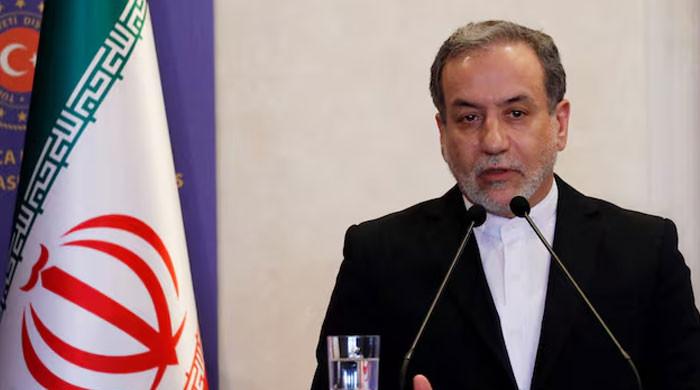
PARIS: Iran’s top diplomat said on Sunday his country would retaliate against US interests in the Middle East if attacked, although he still saw a chance of reaching a diplomatic resolution.
Speaking to an American channel CBSForeign Minister Abbas Araghchi said he expected further discussions on the details of a deal “probably” on Thursday, amid fears of a resumption of conflict after Washington made a major redeployment of its military assets in the region.
U.S. threats of military action have increased since a nationwide protest movement sparked a major crackdown that rights groups say has killed thousands.
“If the United States attacks us, then we have every right to defend ourselves,” Araghchi said, referring to American interests in the region as potential targets.
Nevertheless, he added, “there is a good chance of reaching a diplomatic solution.”
After a recent round of negotiations in Geneva, Iran said it was preparing a draft deal proposal that would avoid military action.
“I think that when we meet again, probably this Thursday in Geneva, we will be able to work on these elements, prepare a good text and quickly reach an agreement,” Araghchi said. CBS.
Axios previously reported, citing an unnamed senior US official, that if Iran submitted its proposal within the next 48 hours, Washington was prepared to meet again later in the week “to begin detailed negotiations.”
The United States has sent two aircraft carriers to the Middle East in recent weeks, along with other planes and ships, and has also strengthened its air defenses in the region to support its threats of military intervention.
US President Donald Trump’s chief Middle East negotiator, Steve Witkoff, said in a statement on Saturday Fox News interview according to which the president wondered why Iran had not yet given in to American pressure.
“It’s curious why they didn’t capitulate…I don’t want to use the word ‘capitulated,’ but why didn’t they capitulate?” he said.
“Why, under this pressure, with the amount of sea power there, why didn’t they come to us and say, ‘We say we don’t want weapons, so here’s what we’re prepared to do’?”
Western governments fear that Iran’s nuclear program is aimed at developing a bomb, something Tehran has long denied, although it insists on its right to enrich uranium for civilian purposes.
On the subject of enrichment, Araghchi said on Sunday: “As a sovereign country, we have every right to decide for ourselves.”
Fears of war
Last year, a previous diplomatic cycle was interrupted by Israel’s bombing campaign against the Islamic republic.
That sparked a 12-day conflict in June that the United States briefly joined in by striking nuclear facilities.
Despite recent Oman-brokered talks, Iranian fears of renewed conflict have increased.
“I don’t sleep well at night, even when taking medicine,” said Hamid, a Tehran resident. AFPsaying he was worried about “the health of his family… my children and grandchildren.”
Mina Ahmadvand, 46, a computer technician, believes that “at this stage, war between Iran and the United States as well as with Israel is inevitable and I have prepared for this eventuality.”
“I don’t want a war to break out, but we must not be mistaken with the realities on the ground.”
These concerns have prompted several foreign countries to urge their citizens to leave Iran, including Sweden, Serbia, Poland and Australia, which warned that “commercial flights are currently available but this could change quickly.”