
ISLAMABAD:
Aleema Khan, sister of the incarcerated Pakistan Tehreek-e-Insaf (PTI) founder, has sharply criticized the party leadership, warning that anyone who cannot carry the narrative of Imran Khan should step down.
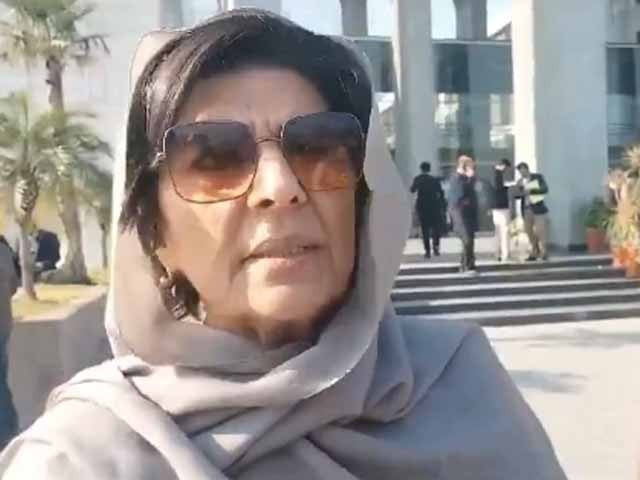
Speaking before the Islamabad High Court (IHC), Aleema Khan issued a stern warning to the party leadership, asking them not to make any statement regarding the founder’s health without the permission of the family.
Imran Khan developed an eye disease while he was incarcerated in Adiala jail. Prison authorities took him to the Pakistan Institute of Medical Sciences (PIMS) twice for treatment. However, the PTI insists that the treatment must be carried out in the presence of one’s family and personal doctors.
“The party leadership seems relaxed, as if Imran Khan’s treatment is over,” Aleema Khan told reporters. “Those who cannot bear the burden of Imran Khan’s narrative should step aside,” she warned.
She alleged that government doctors who treated Imran Khan were under pressure. She also criticized Interior Minister Mohsin Naqvi’s remarks regarding Imran’s treatment, saying the PTI was unable to counter Naqvi’s statements.
“The information reaching the family through Naqvi should have been conveyed through PTI chairman Barrister Gohar Ali Khan,” she said. She added that communication within the party should not be done only through internal channels. She is committed to presenting messages publicly.
Referring to the legal proceedings involving the PTI founder, she wondered why the party’s lawyers were not holding court hearings in these cases. She said family members were prepared to sit in court for long hours and criticized delays in listing cases.
Party sources indicated growing differences within the PTI over future protest strategies. Divisions have reportedly emerged between the leaders of Punjab and Khyber Pakhtunkhwa over the planned agitations for the release of Imran Khan.
PTI Punjab leaders have reportedly expressed reservations over the KP leaders’ statements regarding the formation of a so-called ‘liberation force’. Sources said replacing dialogue with force-based plans could increase hardship for Punjab workers.
Senior party officials, apparently operating underground, warned that announcing such a force could jeopardize the sacrifices of jailed and underground leaders. Some sources also questioned how the party would ensure that protest campaigns remained free of violence.


