
ISLAMABAD:
Much like general elections in Pakistan, senior bar elections have increasingly become a source of controversy in recent years.
Once an internal professional exercise, it has now evolved into a series of regulatory and political confrontations in several provinces.
At present, several serious disputes remain unresolved regarding the elections of different bar associations. Questions are also being raised about the conduct of lawyer regulators, with allegations of bias in resolving election disputes.
Bar politics remain sharply divided between two dominant factions. The Independent Group – which holds the majority in the Pakistan Bar Council (PBC) and is widely considered the pro-government section of lawyers – and the Professional Group, which strongly opposed the 26th and 27th constitutional amendments.
The Independent Group’s majority within the PBC, the legal community’s supreme regulatory body, gives it a decisive advantage in election-related disputes.
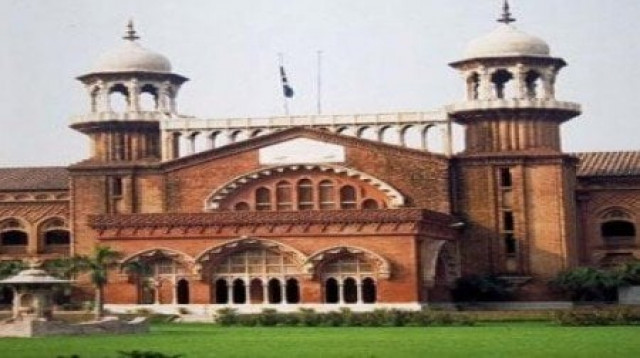
The latest controversy erupted following the Lahore High Court Bar Association (LHCBA) elections held on Saturday.
The Independent Panel refused to accept the LHCBA results until a forensic audit of the biometric system used in the election was conducted.
Meanwhile, the election committee notified the result declaring Professional Group candidate Babar Murtaza Khan as LHCBA president with a margin of three thousand votes.
Subsequently, the Punjab Bar Council, where the Independent Group also holds a majority, suspended the notification of the election board to the extent of the presidential result.
The two groups have now agreed to form a committee headed by PBC vice-chairman Masood Chishti and Shafqat Chohan to conduct a forensic review of the biometric system. The committee’s first meeting is scheduled for Tuesday.
A similar dispute continues over the Islamabad High Court Bar Association (IHCBA) elections.
Wajid Gilani, supported by the pro-government lawyers section, was declared president of the IHCBA.
However, his opponent Ashraf Gujjar claims to have won by nine votes and challenged the result before the Islamabad Bar Council.
Gujjar is now accusing the council of failing to resolve the dispute quickly.
It is noteworthy that the majority of Islamabad Bar Council members supported Wajid Gilani during the election campaign.
Meanwhile, the Pakistan Bar Council has stopped the Sindh Bar Council from holding the Karachi Bar elections, which have already been delayed by three months.
A member of the Professional Group alleges that the delay is intended to favor the executive.
Aamir Nawaz Waraich, a staunch opponent of the 26th and 27th constitutional amendments, is considered the favorite to become the president of the Karachi Bar Association again.
According to critics, the executive does not want him to be re-elected, which explains the delay in the elections.
“Illegal interference”
The most serious institutional confrontation, however, took place in Balochistan, where the Balochistan Bar Council (BBC) formally accused the Bar Council of Pakistan of exceeding its legal mandate and engaging in “unlawful interference” in provincial affairs.
The dispute centers on a January 14 order of the PBC appeal committee approving the unopposed election of the Quetta Bar Association.
The BBC argues that the order circumvents legal procedure, violates established legal standards and undermines the autonomy guaranteed to provincial bar councils by law.
The confrontation officially escalated when the BBC secretary, acting on the instructions of his vice-president, sent a strong letter to the chairman of the PBC Balochistan Appeal Committee, registering a formal protest against the committee’s decision to directly inform the president and cabinet of the Quetta Bar Association.
It is learned that the BBC had earlier suspended the unopposed election of the Quetta Bar Association. The aggrieved party then addressed the CLCC appeal committee, which issued the contested directive.
The Professional Group-led BBC has already protested the Judicial Commission of Pakistan’s decision to remove Additional Justice Ayub Tareen from the Balochistan High Court due to his brother’s political affiliation. In contrast, the PBC is run by the Independent Group.
In its letter, the BBC said the PBC appeal committee’s order was “without legal authority, beyond jurisdiction, ultra vires the Legal Practitioners and Bar Councils Act 1973, and a flagrant intrusion into the exclusive statutory domain of the BBC”.
“The power to supervise, regulate and notify elections and members of the Bar Councils rests solely and exclusively with the Provincial Bar Council. The Appellate Committee has no legal mandate to inform the office bearers, assume administrative control or override the statutory functions of the Balochistan Bar Council.”
“The impugned action amounts to usurpation of statutory powers and is therefore void in the eyes of law. The Balochistan Bar Council is an autonomous, independent and self-regulated statutory institution. Any attempt to interfere in its internal administration, electoral control, notification process or disciplinary area is illegal, unconstitutional and unacceptable,” the letter said.
The BBC further argued that the January 14 order constituted a direct attack on institutional autonomy and set a dangerous precedent.
“It is further on record that the so-called unopposed election process of the Quetta Bar Association is and has been subjected to serious legal and procedural scrutiny due to multiple deficiencies, including verification of the electoral roll, eligibility of candidates, clearance of dues, neutrality and legal constitution of the Election Board, and compliance with the mandatory rules of the Bar Council.”
“Until these legal requirements are fully met, no notice can legally be issued. The Appellate Committee cannot compel the Balochistan Bar Council to approve or legitimize a process that is legally questionable and under review,” the BBC said.
The letter emphasized that politics, group affiliations, personal loyalties and outside pressures must stay out of the affairs of the bar, asserting that bar institutions are not political arenas.
He warned that any perception of political maneuvering or favoritism seriously undermines the credibility of the legal profession and objected that the PBC appeal committee had made its order without giving the BBC an opportunity to be heard, in violation of the principles of natural justice and due process.
The BBC formally warned the appeal committee against further interference and said any continued encroachment on its legal domain would require it to seek appropriate legal remedies before a competent forum to safeguard its autonomy and institutional integrity.


