
After 17 years of delay, the AI surveillance network is operational; expansion announced to three districts
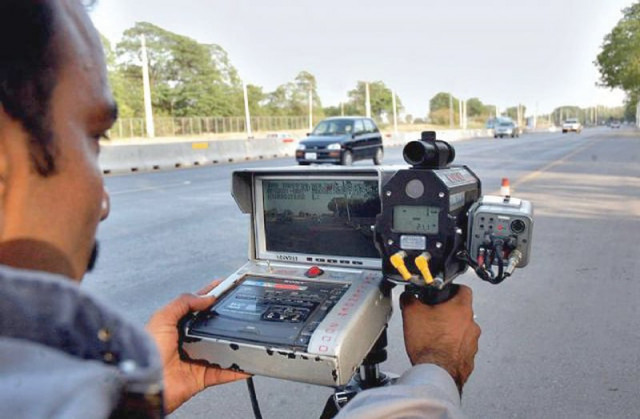
Secure urban cameras will soon be installed and will be able to easily read the new license plates. photo: express
PESHAWAR:
After a delay of 17 years, the much-awaited Safe City project in Peshawar has been officially inaugurated, ushering in a new era of technology-driven law enforcement for the provincial capital.
The inauguration ceremony was attended by Khyber-Pakhtunkhwa Chief Minister Sohail Afridi and Inspector General of Police Zulfiqar Hameed, who described the milestone as a significant achievement for public safety and modern policing in the province.
In its initial phase, the project installed around 700 to 750 state-of-the-art surveillance cameras at 130 key locations across the city. Special surveillance systems have been activated at entry and exit points, while vehicle tracking, issuance of e-challan in case of traffic violations and AI-enabled cameras have been integrated into the network. These features should enable rapid detection of traffic violations and criminal activities.
A modern control room has been established within the Peshawar Police Lines, operating 24/7 to oversee real-time surveillance across the city.
The Chief Minister described the official launch of the Safe City project in Peshawar as a day of immense joy and pride, realizing the vision of Pakistan Tehreek-e-Insaf (PTI) founder Imran Khan.
Speaking at the inauguration ceremony, the Chief Minister announced that the Safe City initiatives in Bannu, Lakki Marwat and Dera Ismail Khan would be completed in the next 40-45 days.
This expansion aims to strengthen security systems in sensitive areas of the province.
He acknowledged that security conditions remain unsatisfactory in many areas, citing a recent tragic incident in Balochistan as deeply regrettable. Paying tribute to the KP Police for foiling a major terror attack, he lauded their frontline role in protecting the public despite difficult circumstances.
The Prime Minister revealed that his discussions with federal representatives focused on a single agenda: prioritizing state and political interests to avoid a deterioration of the situation. He proposed sending a delegation comprising representatives of the KP government, tribal elders and federal authorities to Afghanistan for direct talks to resolve outstanding issues.


