
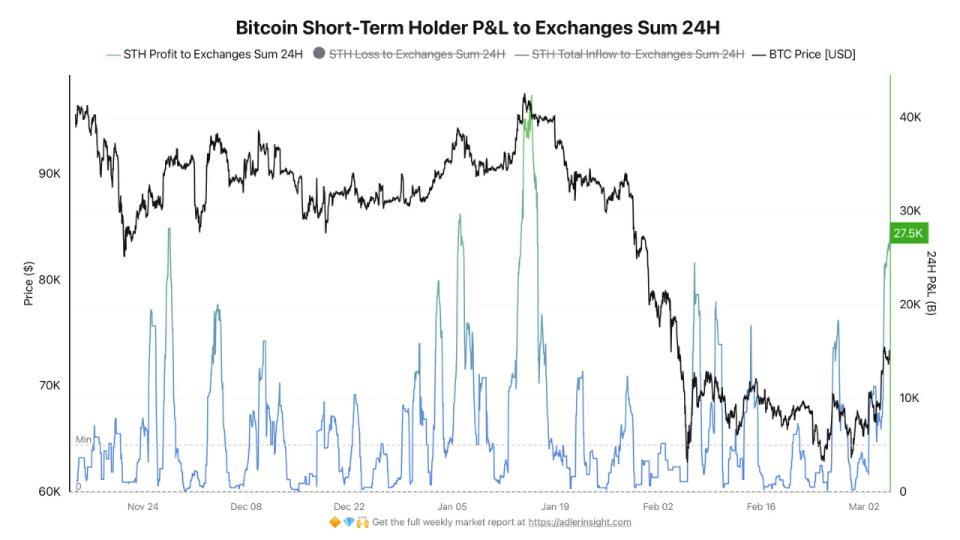
Bitcoin’s surge to a one-month high of $74,000 this week sparked a wave of profit-taking from short-term traders, according to data from CryptoQuant.
The largest cryptocurrency is trading around $69,000 after losing momentum since Wednesday’s breakout above $70,000.
CryptoQuant analyst Darkfost says short-term holders moved more than 27,000 BTC ($1.8 billion) to exchanges at a profit in the last 24 hours – one of the biggest spikes in recent months.
The only short-term investors currently making profits are those who accumulated bitcoin a week to a month ago, with a realized price of around $68,000, suggesting that some recent buyers are choosing to lock in their gains rather than expand their positions.
Short-term holders are generally the most reactive group in the market, and their selling reflects continued caution in light of the ongoing war in Iran.
CoinDesk analysis on Wednesday identified a potential bull trap as the price action mirrored that of January, when the price reached $98,000 before declining.
And that decline happened on Friday, accelerated by comments from U.S. President Donald Trump who demanded that Iran surrender unconditionally — a move that also sent the price of oil soaring.
Despite the profit-taking, broader factors are helping to support bitcoin’s rally, according to Adrian Fritz, chief investment strategist at 21Shares.
Fritz said traders are increasingly betting that the Clarity Act, a U.S. bill on digital asset market structure, could be passed by the end of the year. Prediction markets currently put the probability at around 70%, although Fritz pointed out that these markets are relatively illiquid.
He also highlighted rising geopolitical tensions and strong institutional demand as key factors.
Some investors increasingly view bitcoin as a “beta gold” transaction, turning into an asset after gold’s recent rally. At the same time, spot Bitcoin ETFs have shown resilience, with holdings down only about 5% during the recent pullback and more than $700 million in net inflows this week.
While political developments may have helped spark this move, Fritz said the rally was supported by geopolitical hedging and growing institutional conviction in the asset.


