
Shehbaz examines fuel price pressures, orders salary cuts, vehicle restrictions and spending curbs at institutions
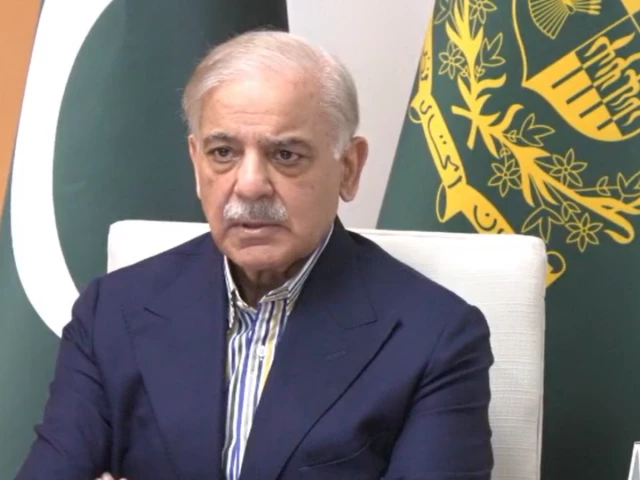
Prime Minister Shehbaz chairs a meeting on austerity measures. PHOTO: SCREENSHOT
Funds saved through the government’s austerity measures will be used to provide relief to the people in the current circumstances, Prime Minister Shehbaz Sharif announced on Saturday.
The announcement followed a meeting chaired by Prime Minister Shehbaz Sharif in Islamabad to review the impact of the regional situation on prices of petroleum products and the implementation of government cost-cutting measures.
Last week, Prime Minister Sharif unveiled several energy-saving and austerity measures to avoid fuel shortages and said he would not further increase prices of petroleum products after a massive 55 rupees per liter hike, seeking to placate a nervous public while bearing the cost of the price hike.
The measures announced by the prime minister in a pre-recorded national television address were aimed at saving fuel and raising funds to partly offset any further increases in diesel and petrol prices. The remaining deficit is expected to be met from the Finance Ministry’s Rs390 billion contingency fund.
The meeting discussed policy measures aimed at maintaining oil price stability as well as progress on austerity measures and their potential impact.
According to the press release, all savings generated by the government’s austerity campaign will be allocated to public aid.
Read: “Audacity to provoke major military power”: Zardari denounces Taliban drone attacks
As part of these measures, the salaries of employees of state-owned enterprises and autonomous institutions operating under government patronage will be reduced in stages from 5 to 30 percent, similar to the reductions already applied to government employees.
The meeting also decided that government officials serving on the boards of companies and other institutions would not receive directors’ fees, which would instead be added to the savings pool.
The Prime Minister directed Pakistani embassies across the world to observe National Day celebrations on March 23 with simplicity.
According to the PMO statement, officials said the four-day work week policy would not apply to law enforcement agencies or the Federal Board of Revenue (FBR), who will continue to follow their existing working hours.
Learn more: Pakistani forces intercept Afghan Taliban drones, pledge tough response to cross-border terrorism
The meeting also reviewed the decision to reduce fuel allocations for government vehicles by 50% over the next two months and ground 60% of official vehicles, with the implementation to be subject to third-party audit.
Participants were also informed of the total ban on purchasing new government vehicles and restrictions on other government procurement.
Over the next two months, the salaries of cabinet members, ministers, advisers and special assistants will also be redirected towards savings for public welfare.
The ban on foreign visits by ministers, advisers, special assistants and government officials will remain in place, with teleconferences and online meetings to be prioritized.
The Prime Minister asked concerned secretaries to ensure implementation and monitoring of all austerity measures and submit daily reports to a review committee.
Federal Ministers Attaullah Tarar, Muhammad Aurangzeb and Ali Pervaiz Malik, State Minister Bilal Azhar Kayani, Chairman Federal Board of Revenue and other senior officials attended the meeting.


