Pakistan’s economic managers had begun celebrating signs of economic stability, including falling inflation, rising foreign exchange reserves, a stable currency and a current account surplus recorded after a decade.
The recent escalation between the United States, Israel and Iran, however, casts doubt on this fragile progress. Growing tensions in the Persian Gulf have important implications for Pakistan.
The Gulf countries are not only the main source of energy imports, but also the destination for millions of Pakistanis in the diaspora and a key source of financial support in times of economic crisis. Any instability in the region therefore directly translates into fragility in Pakistan’s external sector.
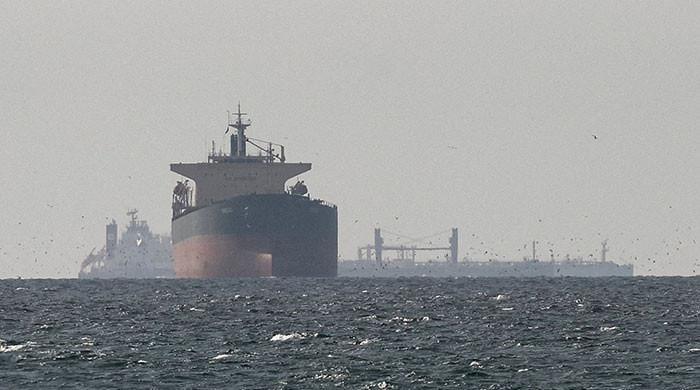
The choking of the Strait of Hormuz and attacks on Gulf countries have had a negative impact on global oil supplies. Pakistan, which makes about 81% of its oil imports from the Persian Gulf through the Strait of Hormuz, represents the most immediate route of vulnerability. Trade data shows the extent of this dependence.
The ITC trade map shows that imports from Gulf countries were worth about $17.1 billion in 2024. Of this, about $13.96 billion represented crude oil and petroleum products. Energy alone therefore accounts for almost 81.6% of Pakistan’s imports from the Persian Gulf and around 24.7% of Pakistan’s total import bill in 2024.
Brent crude was trading at nearly $70 a barrel in late February, before the war. Within days, prices rose about 34% to $106 per barrel. Pakistan imports more than four-fifths of its oil needs. Any fluctuation in international energy markets quickly translates into higher import costs. This concentration shows us how closely Pakistan’s balance of payments is linked to developments in the Gulf energy markets.
Any disruption to shipping routes passing through the Strait of Hormuz or any sustained increase in oil prices immediately affects Pakistan’s foreign exchange position. The current hike of $36 per barrel, as expected, will significantly increase Pakistan’s oil import bill.
In addition to the direct increase in oil costs, the rise in marine insurance premiums and the revaluation of transport costs have further pushed prices up. These developments could complicate the economic management of a country which is still rebuilding its foreign exchange reserves.
After oil imports, remittances are the second largest channel and a lifeline for the country’s foreign exchange reserves. The country relies heavily on these flows to manage its chronic balance of payments difficulties. According to recent SBP statistics, Pakistan received around $38.3 billion in remittances in FY2025.
Of the $38.3 billion, nearly 54.5 percent, or $20.89 billion, came from the six Gulf Cooperation Council (GCC) countries. Saudi Arabia was the largest source of remittances in the corridor, accounting for approximately $9.35 billion (24.4 percent of the total), followed by the United Arab Emirates with $7.83 billion (approximately 20.4 percent). Additional flows came from Oman ($1.32 billion), Qatar ($1.06 billion), Kuwait ($0.85 billion) and Bahrain ($0.48 billion).
According to the United Nations Department of Economic and Social Affairs, Pakistan had around 6.9 million migrants living abroad in 2024. Of these, GCC countries host around 3.85 million, or around 55.7% of the Pakistani diaspora. The diaspora sent remittances, which have traditionally stabilized Pakistan’s economy during times of domestic crisis.
During periods of high inflation and economic hardship, overseas Pakistanis sent more money to support their families back home, a phenomenon described as countercyclical. These flows help support consumption and support the exchange rate. This also partly offset the country’s persistent trade deficit.
The current situation, however, presents a different challenge. Economic uncertainty is emerging in the very region that generates the majority of these remittances. Slowdowns in Gulf economies can affect sectors that employ large numbers of migrant workers. The construction, transport and service sectors represent a significant share of migrant employment.
The composition of Pakistan’s migrant workforce reinforces this vulnerability. Data from the Bureau of Emigration and Overseas Employment shows that most Pakistani workers going abroad for work are in low- or semi-skilled occupations. In 2025, laborers accounted for 465,138 registered workers, or about 61% of the total. Drivers make up the second largest category, with 163,718 workers, or approximately 21.47%.
Together, these two professions account for more than four-fifths of Pakistan’s migrant workforce. Other categories include supervisors or foremen (14,305 workers), technicians (12,703 workers), managers (11,777 workers), cooks (10,503 workers) and salespeople (9,034 workers). Skilled trades, such as electricians (6,475 workers), engineers (5,946 workers), masons (5,700 workers), mechanics (4,961 workers) and carpenters (4,078 workers), account for smaller shares of overseas migration.
Construction and manual service workers often rely on project-based employment. Economic uncertainty can slow infrastructure activity and reduce labor demand. Migrant workers in these sectors are frequently laid off or see their income decline during recessions. The rising cost of living in Gulf cities also reduces expatriates’ ability to save and send remittances.
Previous crises show how quickly such pressures can affect Pakistan. During the Gulf Crisis of the early 1990s, many Pakistani workers returned home as job opportunities declined, reducing remittances and increasing unemployment. A similar scenario today could also trigger such difficulties for the country.
Pakistan’s relations with GCC economies extend beyond energy and remittances. Saudi Arabia and the United Arab Emirates have frequently provided financial support to the country during periods of economic stress. They made deposits in the State Bank of Pakistan and provided oil deferred payment facilities, which stabilized the economy during previous crises.
Regional instability may reduce the likelihood of such assistance.
The question is: has Pakistan recently achieved macroeconomic stabilization through structural changes or by implementing austerity measures and demand squeezes?
The country lacks structural changes, which is a deep concern for the economy. Fiscal space remains very limited and the country’s dependence on energy imports, remittances and external financing continues to shape its economic performance. These structural features make Pakistan vulnerable to external shocks. The rise in oil prices will exacerbate inflation, which has recently been brought under control. Weak remittances will put significant pressure on foreign exchange reserves.
Pakistan’s economic outlook remains closely linked to developments in the Gulf. Pakistan will face a host of problems, including a high import bill due to rising oil prices and a likely reduction in remittances. These pressures reveal the extent to which the country depends on external conditions that it cannot control. So what is the way forward? The country should not put all its eggs in one basket, and this is why diversification of export and import markets is the need of the hour.
When it comes to energy, the country needs to encourage renewable energy sources, such as solar installations, since it relies on fossil fuels for 62% of its energy production. This step can significantly reduce your import bill. The country must also accelerate the CASA-1000 project and the TAPI pipeline to diversify its energy needs.
To deal with the remittance shock, upskilling expatriates will be enough, as skilled workers are less prone to shocks. Long-term stability requires reducing these dependencies. Without improving domestic capacity, the country will find itself in hot water every time. Each episode of regional instability will continue to threaten Pakistan’s fragile economic stability.
Dr Junaid Ahmed is Head of Research at PIDE. He can be reached at: [email protected] Wajid Islam is a research economist at PIDE. He can be reached at: [email protected]
Disclaimer: The views expressed in this article are those of the author and do not necessarily reflect the editorial policies of PK Press Club.tv.
Originally published in The News