
The government says reserves are sufficient for now as daily monitoring begins amid soaring oil prices and supply risks.
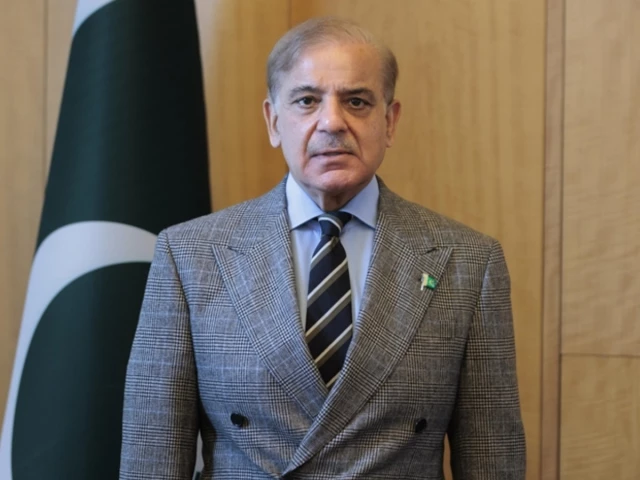
Prime Minister Shehbaz Sharif. Photo: File
Prime Minister Shehbaz Sharif on Tuesday asked the Oil Minister to take steps to further improve Pakistan’s oil import supply chain and all relevant departments should remain ready to take emergency measures until the situation stabilizes, according to a statement issued by the Prime Minister’s Office.
The Prime Minister chaired a meeting to review the implementation of fuel-saving and austerity measures in light of the regional situation. The meeting was briefed on the progress of the measures, with officials confirming that “the directives issued by the Prime Minister are indeed being implemented.”
The meeting was attended by Deputy Prime Minister Ishaq Dar, Federal Minister for Economy Auhd Khan Cheema, Federal Minister for Finance and Revenue Muhammad Aurangzeb, Minister for Petroleum Ali Pervaiz Malik, Federal Minister for Information and Broadcasting Atta Ullah Tarar, Federal Minister for Climate Change Dr Musaddiq Malik, Federal Minister for Information Technology and Telecommunications Shaza Fatima, Minister of State for Finance and Railways Bilal Azhar Kiani, Special Assistant Tariq Bajwa and Governor State Bank. Jameel Ahmad and other senior officials.
According to the press release, the Intelligence Bureau will provide “regular monitoring reports on the implementation of all measures.” At the same time, press briefings confirmed that “the country has sufficient reserves of petroleum products to meet current needs.”
Officials also confirmed that “all situations are closely monitored and records of petroleum products are maintained to ensure that any irregularities are immediately identified.”
The press release notes that “cabinet members have voluntarily given up their salaries” and that “positive results of fuel reductions in government ministries are being observed,” with the measures expected to “help provide relief to the public under current conditions.”
Read: Pakistan has oil reserves for days, not months
The briefings also confirmed that “sufficient supplies of essential medicines are available to meet national needs” and that special connectivity arrangements have been made by the Ministry of Information Technology and Telecommunications “to facilitate working from home through government e-offices”.
Pakistan currently has sufficient reserves of crude oil for 11 days, diesel for 21 days, gasoline for 27 days, LPG for nine days and jet fuel (JP-1) for 14 days, the Oil Secretary informed the Senate Standing Committee on Petroleum on Monday.
The Oil Secretary also warned that Pakistan may face a severe gas shortage after April 14 due to disruption in LNG supplies. Meanwhile, the government has decided to provide a subsidy of 23 billion rupees to motorcycle and rickshaw owners using savings generated by its austerity policy.
The government has decided to conduct a daily review of oil reserves to closely monitor the energy situation.
A committee monitoring petrol prices was told that Pakistan remains “adequately positioned in terms of fuel availability”, with March requirements fully guaranteed and supply cover available until mid-April under current freight planning.
According to a statement issued by the Ministry of Finance, the committee reviewed the national inventory of crude oil and refined petroleum products, import modalities and supply chain logistics.
Officials told the meeting that the country had “comfortable stocks of crude oil and key petroleum products for March, with sufficient planning in place to ensure continued availability in April.” Efforts are also underway to expand coverage towards the end of April.
On March 6, the government sharply increased diesel and gasoline prices by Rs 55 per liter, or 20 percent, marking the first in a series of similar hikes in the coming days due to the ongoing war between the United States, Israel and Iran, which has disrupted supply chains and pushed crude oil prices to their highest level in two years.
Learn more: PM Shehbaz says oil prices to remain unchanged despite rise in international market
The increase in gasoline prices was greater than that of the international market, as the government chose to collect more money than necessary from motorcyclists and car owners to subsidize the use of diesel, mainly in public transport and the agricultural sector.
Oil Minister Ali Pervaiz Malik announced the new tariffs with immediate effect after Prime Minister Shehbaz decided to increase prices of petroleum products on a weekly basis.
The new price of high-speed diesel will be Rs 336 per liter and petrol will be Rs 321 per litre, Malik said in a pre-recorded speech. He was accompanied by Deputy Prime Minister Ishaq Dar and Finance Minister Muhammad Aurangzeb.
The government also increased the oil tax on petrol to a record high of Rs 105.4 per liter but reduced it to Rs 55 per liter for diesel.


