
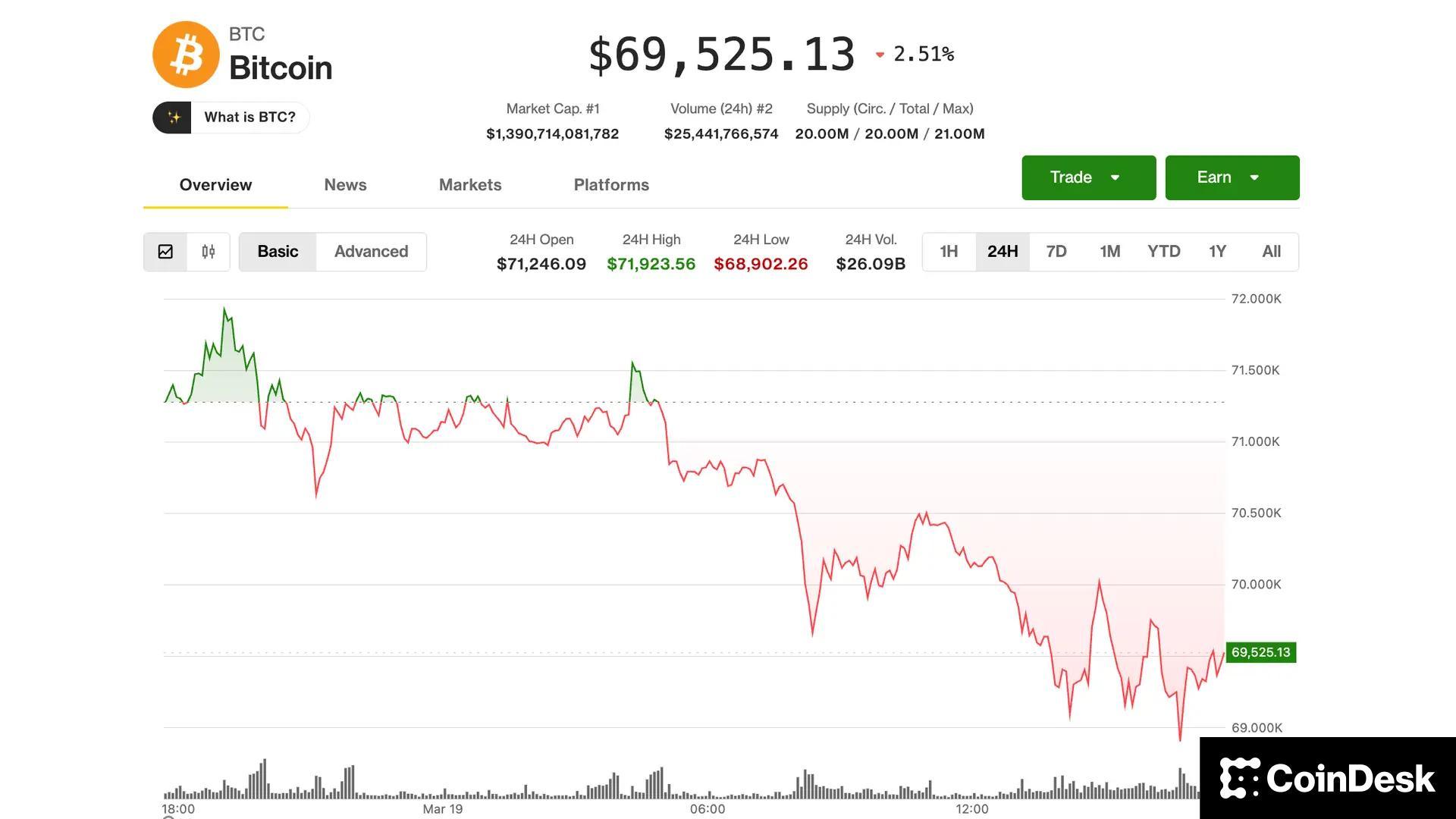
Bitcoin drifted toward $69,000 on Thursday as the worsening conflict in Iran intensifies across the Middle East, hitting energy infrastructure and reverberating through global markets.
Oil remained in focus as investors retreated from risk amid new headlines about attacks on energy infrastructure. Prices returned to $100 a barrel after a Politico report said the United States was not considering banning crude exports, reversing earlier declines and fueling inflation fears.
This context weighed on traditional markets, especially as investors began to consider that central banks could delay rate cuts, or even consider rate hikes, wary of inflationary pressures linked to an energy shock and supply disruptions. The S&P 500 and Nasdaq slipped nearly 1% in morning trading, both hitting new 2026 lows.
The most notable movement, however, came from metals. Gold fell 5% to around $4,500 an ounce, its lowest level since early February, while silver fell 6.6%, extending its sharp decline after weeks of outsized gains.
In comparison, crypto seemed relatively stable. Bitcoin last traded around $69,400, down about 2.6% on the day. Most major tokens including Ether (ETH), XRP (XRP), BNB and solana (SOL), were all lower, but losses remained less than 3%, and the broader CoinDesk 20 index was down about 2.1%.
Crypto-related stocks also fell, but not to the same extent as seen elsewhere. Crypto exchange Coinbase (COIN) fell 1.7%, cash firm Bitcoin Strategy (MSTR) fell 2.6%, while stablecoin issuer Circle (CRCL) fell 6%, giving up ground after more than doubling over the past three weeks.
Bitcoin holds strong in its risk aversion movement
The simultaneous decline in gold and Bitcoin indicates a broad reduction in risk rather than a rotation toward safe havens, said Alvin Kan, COO of Bitget Wallet. Rising energy prices are fueling inflation expectations, boosting prospects of “higher for longer” interest rates and tightening liquidity – a tough combination for risky assets, he added.
Still, bitcoin outperformed gold by about 20% during the initial phase of the Iran conflict, noted Bryan Tan, a trader at Wintermute, an unusual dynamic for an asset typically treated as a riskier tech name. But the lack of follow-through above $75,000 suggests markets remain cautious and range-bound.
“When sentiment varies with each headline on the conflict and the correlation with oil prices is so high, remaining stable is a strong position,” he said. “We tend to reserve dry powder until we see significant confirmation one way or the other or a significant change in market conditions.”


