
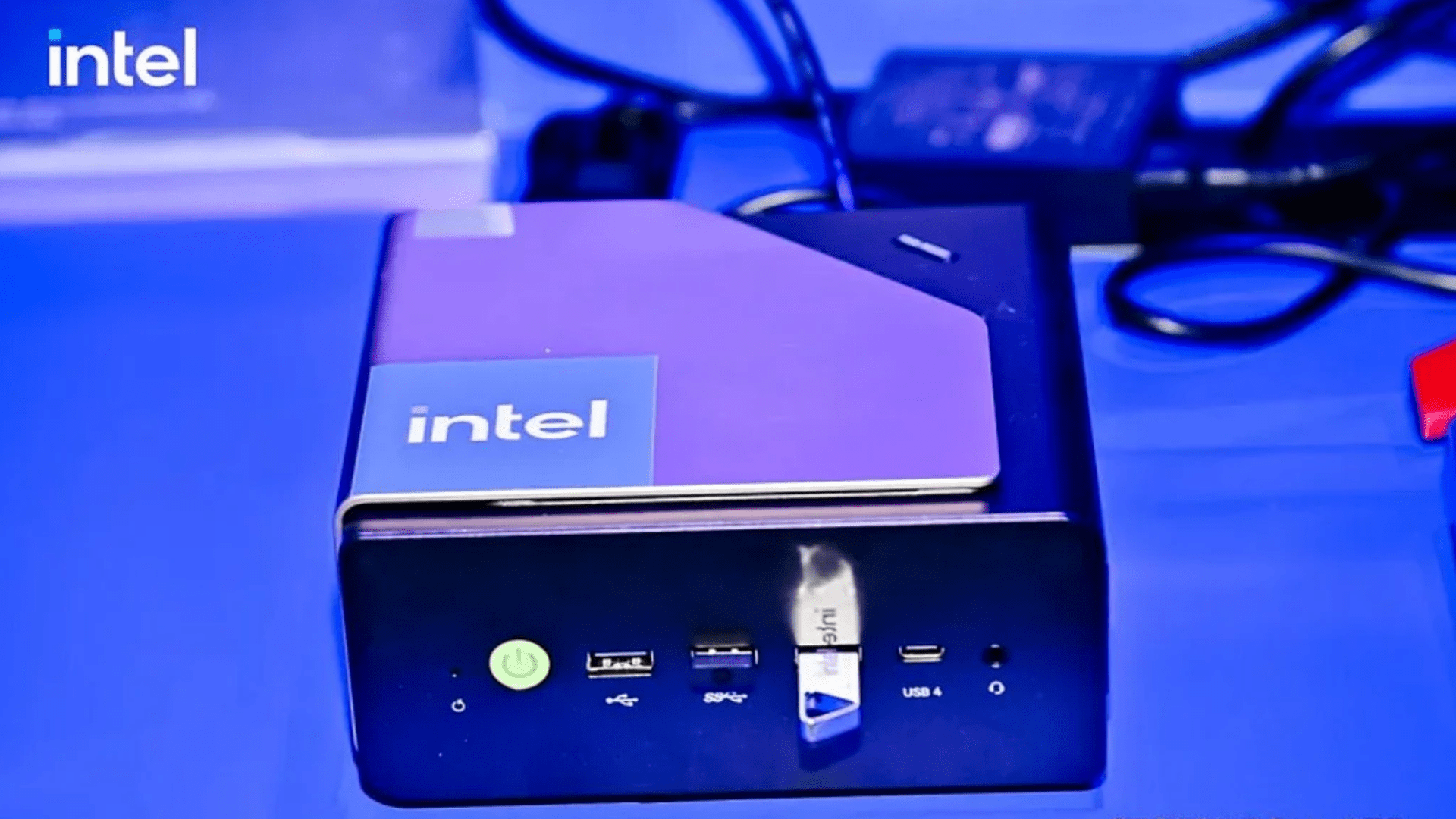
- GMKtec EVO-T2 Mini PC Reaches 180 TOPS Using Combined CPU, GPU, and NPU Acceleration
- Its PCIe 5.0 storage introduces data speeds in excess of 10 GB per second
- Local AI models run without relying on external cloud infrastructure
At a recent launch event, GMKtec introduced the GMKtec EVO-T2, a compact desktop system designed for on-premises AI computing.
According to the company, the device features third-generation Intel Core Ultra processors and claims up to 180 TOPS of computing capacity.
It combines CPU, GPU and NPU resources and allows local execution of large language models up to 70 B parameters without depending on external cloud infrastructure.
Article continues below
Compute Architecture and AI Workloads
The EVO-T2 is based on Intel’s Panther Lake architecture and is manufactured using the 18A process node, integrating RibbonFET transistors and a rear power supply.
These design elements are associated with improved efficiency and transistor density, although most of the performance data referenced remains tied to internal benchmarks.
The company claims that complex workloads such as code generation and document processing can be performed quickly with this device.
For certain tasks, GMKtec claims the EVO-T2 completes them in seconds under controlled conditions.
Graphics capabilities are handled by the integrated Intel Arc B390 GPU, which includes twelve Xe cores and support for DirectX 12 Ultimate, real-time ray tracing, and AI-assisted upscaling.
This setup allows the system to expand beyond AI inference into areas such as rendering and visual content workflows.
Despite its small footprint, the device includes two M.2 storage slots supporting PCIe 5.0 and PCIe 4.0, with a total capacity reaching up to 16TB.
PCIe 5.0 SSDs are theoretically capable of achieving sequential speeds in excess of 10 GB/s, with some exceeding 15 GB/s, while PCIe 4.0 drives typically reach around 7 GB/s under optimal conditions.
For connectivity, it includes USB4 with 40Gbps bandwidth and OCuLink support for external GPUs.
Additionally, the system supports dual Ethernet configurations, offering both 10 GbE and 2.5 GbE networking.
To address memory constraints, Phison collaborated with GMKtec to integrate aiDAPTIV+ AI SSD technology.
This system dynamically expands available memory by distributing workloads between DRAM and storage, allowing large models to be segmented during execution.
Active parts are processed on the GPU, while less active data remains stored in the memory and SSD layers.
This “pseudo-memory” mechanism is described as reducing bottlenecks when processing large models.
However, its implications for long-term performance under sustained workloads have not been independently verified.
GMKtec states that it “effectively breaks the traditional limitations of DRAM”, a claim that may require independent validation.
The system comes with a pre-configured AI environment, allowing immediate access to AI tools and models without manual configuration.
This is another Chinese device supporting OpenClaw, similar to the Minisforum N5 Max, despite warnings from the Chinese government about its security flaws.
OpenClaw allows the EVO-T2 to run autonomous AI agents locally, performing tasks ranging from data processing to content generation without relying on cloud services.
However, the software has known weaknesses that can be exploited to steal sensitive data and has previously been used to distribute malware through GitHub repositories.
Microsoft even advised against running OpenClaw on standard personal or corporate devices, leaving the prudence of GMKtec’s decision open to question.
Follow TechRadar on Google News And add us as your favorite source to get our news, reviews and expert opinions in your feeds. Make sure to click the Follow button!
And of course you can too follow TechRadar on TikTok for news, reviews, unboxings in video form and receive regular updates from us on WhatsApp Also.


