
ISLAMABAD:
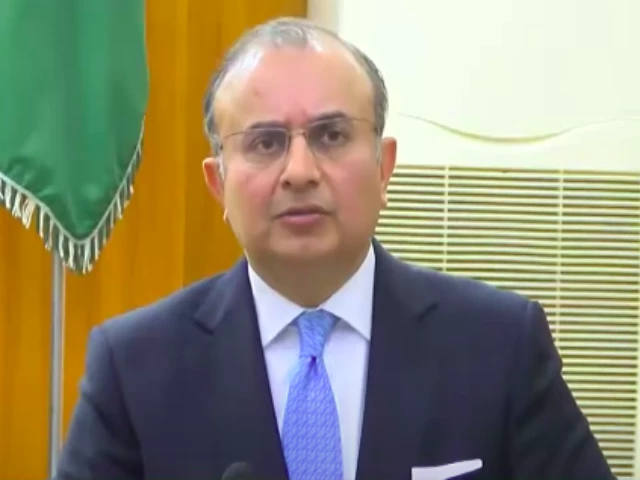
Former Supreme Court justice Mansoor Ali Shah has proposed a comprehensive roadmap to counter “autocratic tendencies”, warning that judicial independence often erodes due to “concentrated power” and calling for stronger legal, institutional and cultural safeguards to avoid such a collapse.
The former supreme court justice spoke at the NYU Research Symposium on Legal Empowerment and Autocracy in Accra, Ghana.
“I speak today as someone who resigned from the Supreme Court of Pakistan on November 13, 2025, because I could no longer uphold the oath to protect a Constitution in a court that had been stripped of the authority to protect it,” Justice Shah said.
“The Varieties of Democracy Project tells us that autocracies now outnumber democracies worldwide for the first time in twenty years – 91 compared to 88. The global average level of democracy has fallen to its 1985 level,” he added.
“Freedom is in retreat, and those who go backwards fall back faster than those who advance. This room – this symposium on autocracy and legal autocracy – is exactly where the counter-strategy must be built.”
The former Supreme Court justice notes that the 26th and 27th constitutional amendments, although adopted by a two-thirds parliamentary majority, amounted to a “destruction of the Constitution.”
“Formally, these were constitutional acts. In substance, they constituted the destruction of the Constitution. This is autocratic legalism in its most sophisticated form: using the forms of democracy to empty its content,” he said.
Justice Shah, outlining a roadmap for citizens, lawyers, judges and institutions, suggests rebuilding legal education as the foundation of democratic education to counter autocracy.
“Law schools must stop producing technically excellent servants of power and start producing constitutionally grounded democratic citizens. That means political philosophy, constitutional history, the sociology of judicial capture – as a core curriculum, not an optional enrichment. And it means immersing future judges and lawyers in the cultural tradition of resistance: the poetry, the art, the music of those who refused. The lawyer who has never been touched by poetry will not be moved by a constitutional argument at two in the morning when it is so much easier to remain silent.”


