
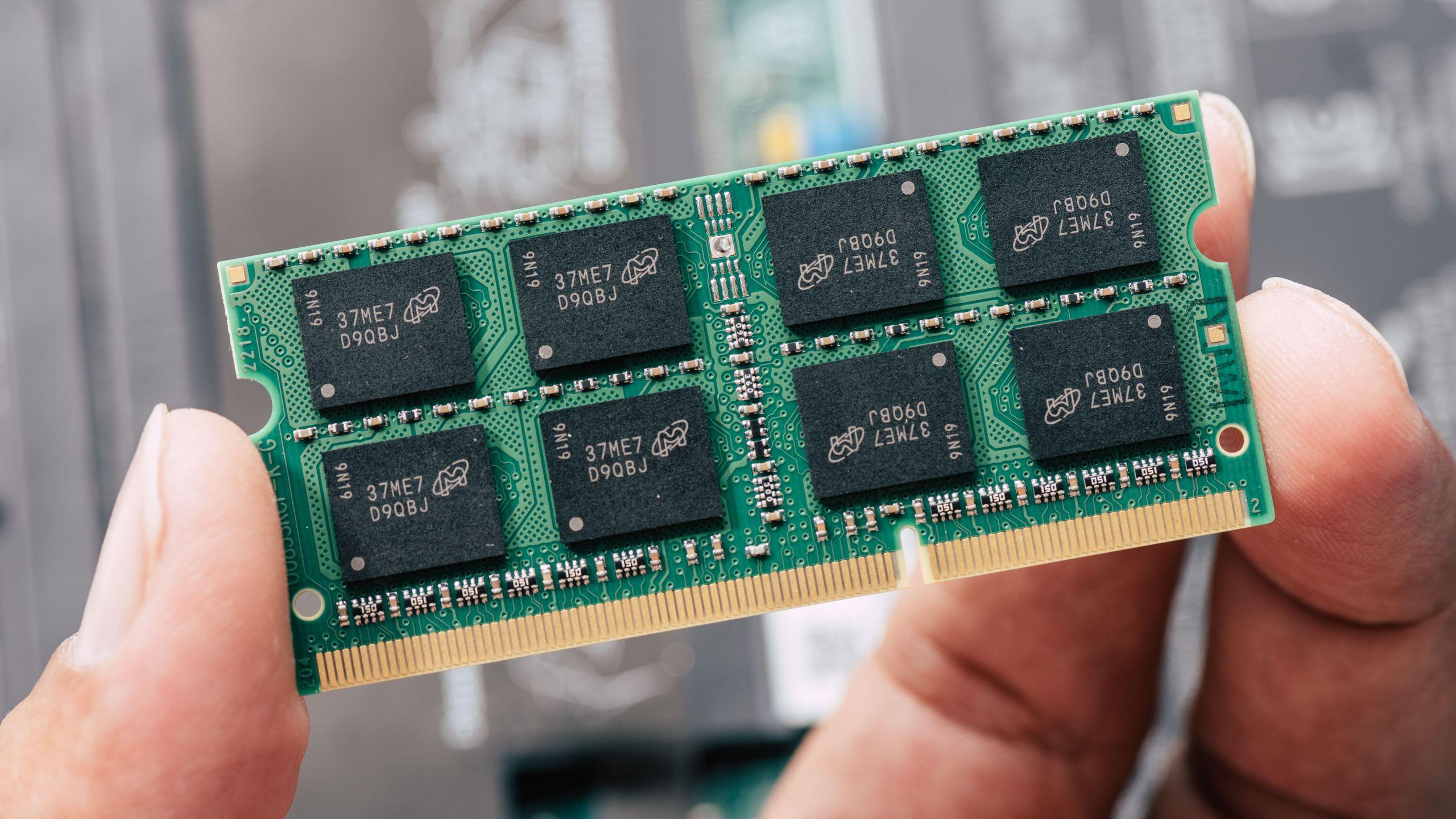
- Micron CEO says company can’t meet current demand
- DRAM production is a priority for AI and data centers
- Consumers are reeling from the cheap RAM of yesteryear
Micron Technology Inc. CEO Sanjay Mehrotra said the company “is only able to supply, to our core customers in the medium term, approximately 50% to two-thirds of their needs.”
Mehrotra’s statement reflects data centers’ growing demand for AI computing-related components, which risks worsening memory supply.
The CEO added that to meet demand, the company will have to spend a lot of money on production.
Article continues below
The RAM crisis won’t ease anytime soon
Mehrotra’s statements come after Micron reported strong second-quarter results, largely driven by data centers looking for components to meet the ever-increasing demand for AI, with specific reference to high-bandwidth memory, namely dynamic random access memory (DRAM) and NAND memory.
But demand has far outstripped supply, with Mehrotra saying: “We are only able to supply, for our core customers in the medium term, about 50% to two-thirds of their needs,” Mehrotra told CNBC’s “Squawk on the Street.”
Mehrotra also added that there is currently an “unprecedented gap between supply and demand” and that “we continue to expect supply and demand conditions for DRAM and NAND to remain tight beyond 2026.”
This was the catalyst for the “RAM crisis” experienced by consumers, with manufacturers shifting production to meet the more profitable demands of AI, driving up memory prices across the board. TrendForce predicted that the price of DRAM will likely double quarter-over-quarter in its Q1 2026 memory industry survey.
Storage in general to take a hit
Since DRAM and NAND production share similar production environments, resources for NAND memory production are cannibalized by DRAM production, especially since DRAM offers a much higher profit margin.
This has further impacted investment in NAND production, with remaining supply taken up by enterprise demand for high-speed memory.
But the repercussions don’t stop there. Lack of RAM also forces new devices such as mobile phones and laptops to ship with what is widely considered the bare minimum in RAM, forcing software developers to respond to reduced memory reserves, leading to increased virtual memory usage.
Virtual memory uses a portion of a device’s solid state drive (SSD) storage as a substitute for RAM. Constantly writing and rewriting temporary data to the SSD can cause it to fail much faster than its warranty suggests, adding additional cost to the consumer on top of the increased price of the devices.
Will China seize the opportunity?
There is, however, an opportunity for smaller companies, particularly those in China, to fill the gap in the market. Several Chinese companies have accelerated timelines for building new NAND and DRAM production facilities.
Yangtze Memory recently brought forward the completion of its Wuhan Phase III NAND fab from 2027 to the second half of 2026, and ChangXin Memory is expanding its Shanghai DRAM facility to reach production of 300,000 wafers per month by the end of 2026.
The good news for consumers – especially now that the United States has removed both companies from its restricted list – is that the market may soon see an influx of cheaper, higher-capacity DRAM and NAND memory. The only downside is that the products won’t come from a recognizable brand, so time will only tell us their quality.
The best cloud storage for every budget
Follow TechRadar on Google News And add us as your favorite source to get our news, reviews and expert opinions in your feeds. Make sure to click the Follow button!
And of course you can too follow TechRadar on TikTok for news, reviews, unboxings in video form and receive regular updates from us on WhatsApp Also.


