
ISLAMABAD:
The government is working on a comprehensive set of quota-based fuel supply systems aimed at ending subsidies at all levels.
A meeting was held within the oil and gas regulatory system to finalize a plan to allocate gasoline distribution through a quota system for customers aimed at saving energy supplies.
The meeting brought together officials from the IT ministry, finance and petroleum divisions to finalize a plan.
The Ministry of IT, Finance, Petroleum, etc. held a joint meeting to finalize a quota-based fuel supply system.
During the meeting, it was informed that the finance and foreign ministries are leading parallel efforts regarding Iran and Saudi Arabia to manage the situation. The system is being ramped up to ensure consistency across all pumps and avoid operational deviations.
The government claimed to have provided a subsidy of Rs 69 billion to petrol and diesel consumers in the last two weeks and is now planning a direct subsidy for two and three wheelers.
Four-wheeler owners may not be eligible for the subsidy.
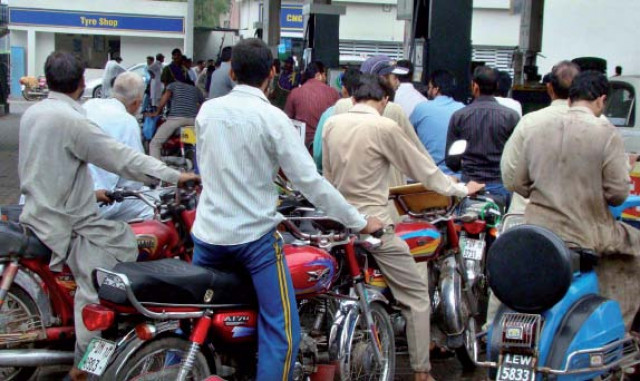
The meeting finalized a mobile app-based quota system for fuel for two- and three-wheelers, which could potentially include vehicles up to 800 cc, to ensure targeted subsidy to low-income sections and minimize oil consumption through pricing signals.
The application will help implement the direct subsidy system through the allocation of gasoline quotas. The system will be app-based and fully automated. A free, pre-installed app will be provided to retail operators, while consumers will use a separate open app.
Material distribution
The government requires a minimum of two mobile phones per point of sale to operate the system. The IT Ministry is coordinating with manufacturers to provide specialized phones.
Initial costs are estimated at Rs 36,000 per unit, with a retail price of around Rs 72,000. Outlets are required to deposit funds into a designated government account to ensure immediate delivery of the devices.
The account number will be communicated by Ogra.
Quota and voucher mechanism
Vehicle-based quotas (e.g. 20 liters for motorcycles) will be linked to the user’s application via registration number and CNIC. Users will generate a digital voucher through the app.
Retailers will scan/enter the voucher into their app; the system will automatically validate the available quota (for example, if a user requests 20L but has a quota of 15L, only 15L will be distributed).
This mechanism is similar to the Ramadan Package model, which was very successful.
Government subsidies and pricing
The government provides subsidies for 2 and 3 wheels.
Retailers will dedicate specific dispensers or nozzles to 2 and 3 wheels in order to facilitate the distribution of subsidized fuel. Clarification is pending on whether subsidies will continue for 4-wheelers or be removed.
The government has ensured that prices are set in a timely manner to protect retailers from licensing issues and price hikes, aiming to avert the 2020 crisis. 5. Submission of focal person by OMCs.
Although OGRA already has information on retail outlets, oil marketing companies (OMCs) are required to submit details of the focal person for each retail location, including the name of the focal person, CNIC and mobile number of the contact.
Implementation and monitoring
Retailers should immediately share contact details of the focal person and contact numbers for coordination. The IT Ministry will provide demos and video tutorials on how the system works.
In the event of an emergency, a waiver system is available for approvals through a designated process. The government faces critical conditions regarding fuel supply chains.


