
RAWALPINDI:
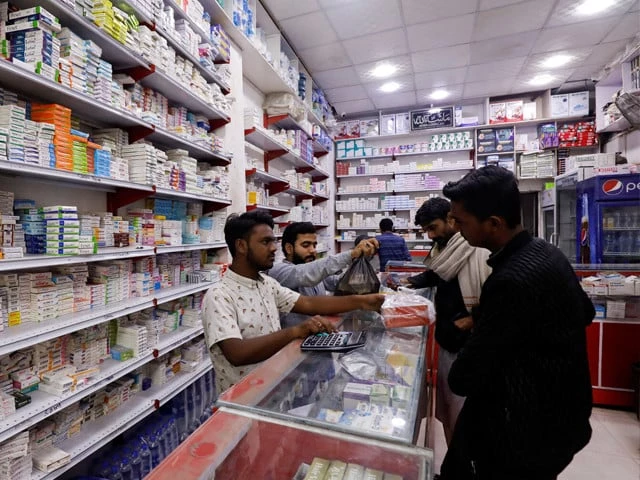
Prices of a wide range of medicines have risen sharply in the open market and at the pharmaceutical wholesale center in Rawalpindi’s Bohar Bazaar, with increases ranging from 50% to 500%.
Essential medicines, including those for diabetes and hypertension, antibiotics, gastrointestinal conditions and cough remedies, have all seen significant price increases.
In the open market, the price of an insulin injection device has increased from Rs 2,200 to Rs 4,720, an increase of over Rs 2,500.
The cost of vitamin B supplements has also increased from Rs 100 to Rs 600 from Rs 500. Similarly, a packet of medicines for indigestion and acidity has increased from Rs530 to Rs620 after an increase of Rs90. Nutritional supplements and vitamin tablets have increased from Rs480 to Rs510 per packet.
A particularly strong increase was recorded for thyroid medications, which rose from Rs85 to Rs290. Meanwhile, a commonly used typhoid treatment increased from Rs805 to Rs930 following an increase of Rs125. Prices of several other life-saving drugs have also been increased.
Critics have called the hike “unbearable”, noting that insulin devices costing between 2,000 and 5,000 rupees effectively deprive low-income patients of access to essential treatments, and called for immediate government intervention.
Arif Ali, secretary of the Medical Store Retailers Association, along with Dr. Zeeshan, say pharmaceutical companies have implemented “staggering” increases for several products.
They added that the price of insulin, essential for diabetes management, has more than doubled.
BOX
Pindi hospitals to equip themselves with specialized filtration clinics
our correspondent
RAWALPINDI. The authorities concerned have submitted PC-1 proposals to the Punjab government for setting up state-of-the-art filtration clinics in three government hospitals in the city, through the provincial department of specialized health care and medical education.
The introduction of these filter clinics is expected to bring a significant improvement to the healthcare system within these hospitals.
Recognizing the long-standing need for such facilities, the decision was made to establish filter clinics in three major public hospitals in the city. The aim is not only to ensure accurate assessment of patients’ condition before admission indoors, but also to provide necessary treatment where appropriate and discharge patients directly from filter clinics, thereby reducing unnecessary hospitalizations. This will help ensure rapid diagnosis and treatment while easing the burden on domestic services.
Each filter clinic will have a dedicated building, a separate waiting room, all essential medicines, electro-medical equipment, as well as qualified doctors and support staff.
A PC-1 worth Rs88 million has been prepared for Holy Family Hospital (HFH) Filtering Clinic, Rs41.8 million for Rawalpindi Teaching Hospital (RTH) and Rs51.5 million for Benazir Bhutto General Hospital (BBGH), all of which have been submitted for approval.
The PC-1 proposals for the three hospitals will be presented before the Punjab Planning and Development Wing, where after approval, funds will be allocated and work on the projects will begin.
It is pertinent to note that the emergency departments, outpatient departments (OPDs) and indoor admission departments of the three hospitals are currently facing severe overcrowding due to exceptionally high influx of patients.
As a result, the healthcare system is under considerable pressure, often preventing patients from receiving timely, quality treatment tailored to the nature of their illness.


