- Climate change is worsening drought and water stress.
- The government is seeking a proactive, risk-based response.
- The workshop aims to finalize the operational framework.
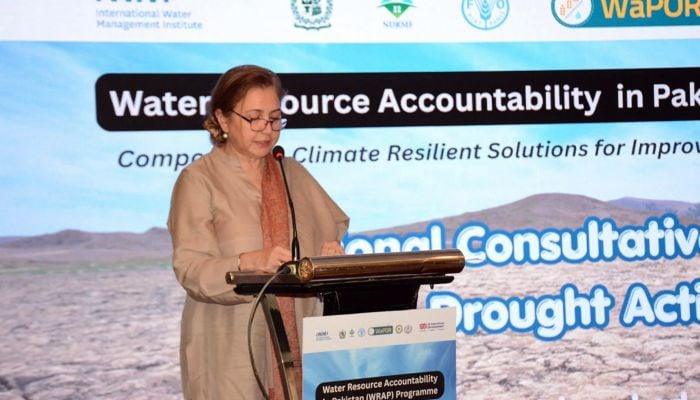
ISLAMABAD: Federal Secretary for Climate Change and Environmental Coordination Aisha Humera Moriani has highlighted the urgent need for Pakistan to move from a reactive to a proactive, risk-based approach to drought management, warning that climate change is making droughts more frequent and severe.
Addressing a national consultative workshop on the National Drought Action Plan in Islamabad, she said drought was no longer a distant or occasional threat but an increasingly persistent challenge driven by rising temperatures, water stress and climate variability.
“Pakistan is already among countries facing high water risk and drought directly affects agriculture, water resources, food security, ecosystems and livelihoods,” she said, adding that past responses had largely focused on post-impact relief rather than preparedness.
Moriani stressed the need for a coordinated institutional and policy framework to translate data into actions. She recognized the role of the International Water Management Institute, Pakistan Meteorological Department and its partners in the development of Pakistan’s drought management system, which provides real-time monitoring and early warning capabilities.
“This is an important step forward. However, data alone is not enough. We need systems that ensure timely, data-driven, evidence-based decisions and on-the-ground implementation,” she said.
The Secretary informed the participants that the Ministry, with the support of the United Nations Convention to Combat Desertification and following extensive consultations, had developed a National Drought Action Plan. The plan is structured around key pillars including planning and resource mobilization, governance and policies, early warning systems, local mitigation actions and capacity building.
The workshop, attended by representatives from the federal and provincial governments, development partners and organizations including IWMI, PMD, Food and Agriculture Organization and the UK Foreign, Commonwealth and Development Office, aimed to finalize an operational framework for the implementation of the plan.
Participants discussed the identification of priority sectors, the definition of institutional roles and responsibilities and the development of a roadmap for short, medium and long term actions.
Moriani stressed that effective drought management required strong coordination between federal and provincial governments, technical agencies and development partners.
“Drought is a cross-sectoral challenge and requires a whole-of-government and whole-of-society approach,” she stressed.
The Secretary of the Ministry of Climate Change and Environmental Coordination reiterated her ministry’s commitment to facilitate coordination with key stakeholders, including the National Disaster Management Authority (NDMA), PMD and provincial departments, and urged participants to provide technical inputs to finalize a practical, national action plan.
The expected outcomes of the workshop included an operational framework document describing institutional roles and coordination mechanisms, identification of priority sectors for drought risk reduction and proposals for the establishment of a national drought management committee and a technical advisory committee. A roadmap for implementation, including deadlines and reporting structures, is also expected.