
Fuel supply remains stable, reserves are adequate and a coordinated strategy to deal with economic pressures
ISLAMABAD:
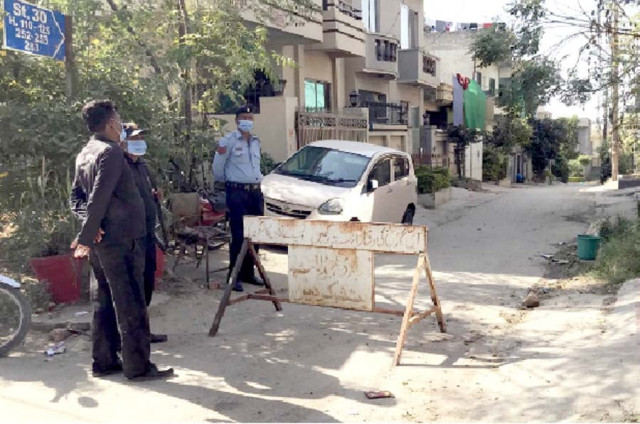
A high-level consultative session at Aiwan-e-Sadr on Monday decided not to impose a nationwide smart lockdown, following disruptions in global fuel supplies caused by the ongoing war in the Middle East.
Monday saw a series of high-level meetings outlining the federal government’s overall strategies to protect citizens from growing economic pressures, ensure uninterrupted fuel supplies and address regional security concerns amid growing global uncertainty.
One such meeting was chaired by President Asif Ali Zardari and was attended by Prime Minister Shehbaz Sharif, top federal ministers, the four provincial chief ministers, as well as leaders of Gilgit-Baltistan and Azad Jammu and Kashmir, among others.
The meeting focused on the national economy, energy security and regional developments, with participants reviewing current challenges and formulating coordinated responses. Sources said the proposal for a nationwide smart lockdown was also discussed.
The sources added that the provincial administrations opposed the proposal, after which the federal government decided not to implement such restrictions. They added that the president had ordered the authorities to accelerate measures to relieve the population.
According to a document from the president’s office, the meeting was briefed on rising energy prices, pressure on oil and gas supplies and ongoing regional developments. Zardari stressed that no economically vulnerable segment would be left without support during difficult times.
Provinces have signaled active measures to control inflation, guarantee essential commodities and minimize hardship for citizens. Participants agreed that a nationally coordinated strategy would ensure greater efficiency and better institutional alignment between government ministries.
Earlier, the President held a separate meeting with the Prime Minister, which was attended by the National Security Advisor (NSA) and key ministers. They stressed the need to manage domestic economic pressures while continuing diplomatic efforts to maintain regional stability.
President Zardari and Prime Minister Shehbaz Sharif held in-depth discussions on the country’s political, security and economic situation, agreeing on a comprehensive and coordinated approach to address the current challenges, according to an official document.
The participants were informed that despite global and regional pressures, Pakistan’s fuel supply has remained uninterrupted, reserves are adequate and preparations for possible contingencies are underway.
Zardari stressed that all possible measures should be taken to reduce the impact of price hike on essential goods and services while maximizing relief for citizens. He also called for public awareness campaigns promoting fuel savings and increased use of public transport.
Separately, Prime Minister Shehbaz chaired a session to assess oil availability, domestic reserves and public relief initiatives. Officials confirmed that timely government interventions had prevented any interruption in fuel supplies despite the volatility triggered by the Gulf crisis.
Detailed briefings covered conservation measures, future planning and current stock levels, with authorities confirming adequate reserves to meet immediate and future national needs.
Coordination with provincial governments to expedite ownership registration of motorcycles and rickshaws was also emphasized, allowing a wider segment of transport users to benefit from targeted assistance programs.
The prime minister highlighted the importance of austerity in his “Save and Simplicity” campaign, citing spending cuts, development budget reductions and blocking 60% of official vehicles as measures to reallocate savings to public welfare.
Proposals to increase fuel prices have been repeatedly rejected, with the resulting savings redirected towards cushioning the impact of global energy costs on ordinary citizens, participants were told.
An Intelligence Bureau audit report confirmed compliance with austerity and fuel-saving measures, and officials said strict implementation was maintained in relevant departments.
Officials also informed the meeting that taxes on high-octane fuel for luxury vehicles had been increased, but jet fuel prices remained unchanged to avoid additional pressure on aviation and critical sectors. Sufficient stocks of essential medicines were also confirmed.
On the diplomatic front, Deputy Prime Minister and Foreign Minister Ishaq Dar briefed the participants on Pakistan’s active international engagement, including its recent contacts with Turkey, Saudi Arabia and Egypt, and briefed them on his upcoming visit to Beijing.
After the meetings, Khyber-Pakhtunkhwa Chief Minister Suhail Afridi reiterated that no decision had been taken to impose a smart lockdown due to differences of views among the provinces. He highlighted Pakistan’s role in promoting peace, noting that the Muslim world turns to the country in times of crisis, and asserted that Pakistan would not participate in any war.
(WITH INPUT FROM THE APPLICATION)


